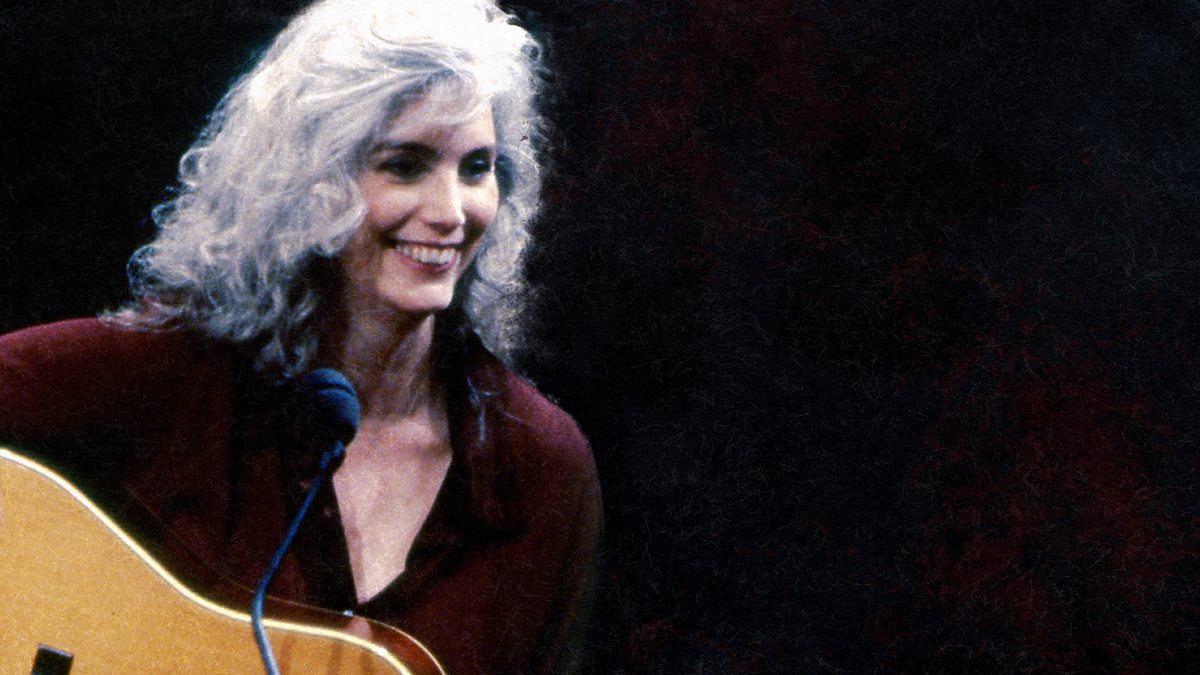
On All I Intended to Be, Emmylou Harris turns How She Could Sing the Wildwood Flower into a quiet reckoning with memory, lineage, and the fragile miracle of how old songs keep living long after the first voice is gone.
When Emmylou Harris released All I Intended to Be in 2008, she was no longer chasing the kind of spotlight that defines younger careers. She was writing and singing from deeper ground. The album arrived on June 10, 2008, and reached No. 4 on Billboard’s Top Country Albums chart and No. 22 on the Billboard 200, a strong showing for a record so inward, graceful, and unhurried. In the middle of that beautifully reflective album sits How She Could Sing the Wildwood Flower, one of those songs that does not raise its voice, yet says something lasting about time, inheritance, and the emotional work of remembering.
What makes the song so moving is that it is not simply another performance of Wildwood Flower. It is a song about what that older song represents. That difference matters. Emmylou Harris is not merely revisiting a standard from the past; she is meditating on the way a voice can become inseparable from a song, and the way a song can become inseparable from a life. In other words, this is not just about repertoire. It is about transmission. It is about how music is passed down in families, in communities, and in the private chambers of memory where one singer’s phrasing can stay with us for decades.
The historical shadow behind the song is essential. Wildwood Flower is one of the foundational pieces of country music history, made famous by The Carter Family in their 1928 recording, itself descended from the older nineteenth-century song I’ll Twine ’Mid the Ringlets. By invoking that title, Harris is calling up far more than a melody. She is summoning an entire inheritance: early country music, women’s voices at the center of tradition, and the old American habit of carrying songs hand to hand until they become part of a shared emotional language. Few artists have spent their career listening to that lineage as intently as Emmylou Harris. By 2008, she had already spent decades honoring the old while never sounding trapped by it, and this song shows exactly how she made that balance feel natural.
There is something unmistakably late-career about the wisdom in How She Could Sing the Wildwood Flower. A younger artist might have treated the past as something to revive or imitate. Harris, by this stage, understood that the past is more elusive than that. Memory does not arrive in perfect detail. It comes in flashes, in tone, in the remembered sound of one voice carrying a familiar song. That is why the song feels so poignant. It never behaves like a museum piece. Instead, it moves like recollection itself: tender, incomplete, reverent, and deeply human.
Musically, the performance fits that emotional world. The arrangement is restrained and roots-centered, allowing the song’s reflective core to remain in the foreground. Emmylou Harris does not oversing it, and that restraint is part of its power. Her voice, long admired for its clarity and haunted beauty, had by this period taken on even more texture and weathered grace. She sounds like someone who knows that not every truth needs to be announced. Some truths are better carried in hush, in patience, in the slight ache behind a line. That approach makes the song feel intimate, as though the listener has wandered into a room where memory is being handled carefully.
The title itself is one of the loveliest things about the piece. How She Could Sing the Wildwood Flower is full of admiration, but it is also full of distance. The woman in the title is not pinned down too tightly, and that openness gives the song unusual reach. She can feel like a mother, an elder, a family singer, a radio voice from long ago, or even a symbolic stand-in for the women who carried country music before the industry fully knew how to value them. That ambiguity is not a weakness. It is the song’s emotional design. Harris leaves just enough space for listeners to place their own remembered voices inside it.
And that is where the song’s meaning becomes larger than biography. At heart, it is about old-song inheritance. Not inheritance in a legal or commercial sense, but in the truest musical sense: what is handed down, what is absorbed, what is loved enough to survive. Emmylou Harris had always been a great interpreter, but one of the reasons her later work matters so much is that she became increasingly interested in what songs carry across time. In How She Could Sing the Wildwood Flower, she seems to ask a quietly profound question: what exactly is being remembered when we remember a song? Is it the lyric, the melody, the person who first sang it to us, or the whole vanished world that seemed to gather around that sound?
That is why this track lingers long after it ends. It does not depend on drama. It depends on recognition. Anyone who has ever heard an old song and felt a room return, a face reappear, or a vanished season stir back to life will understand what Harris is doing here. She is singing about music as remembrance, about tradition as an emotional chain, and about the quiet holiness of voices that remain with us even when the years have moved on.
On an album as rich and reflective as All I Intended to Be, that makes How She Could Sing the Wildwood Flower one of its deepest statements. It is not loud, and it was never built to be a hit in the ordinary sense. But it carries something more durable than fashion. It reminds us that in the hands of Emmylou Harris, an old country title can become a meditation on love, memory, and the songs we do not really own so much as borrow from those who sang before us.
