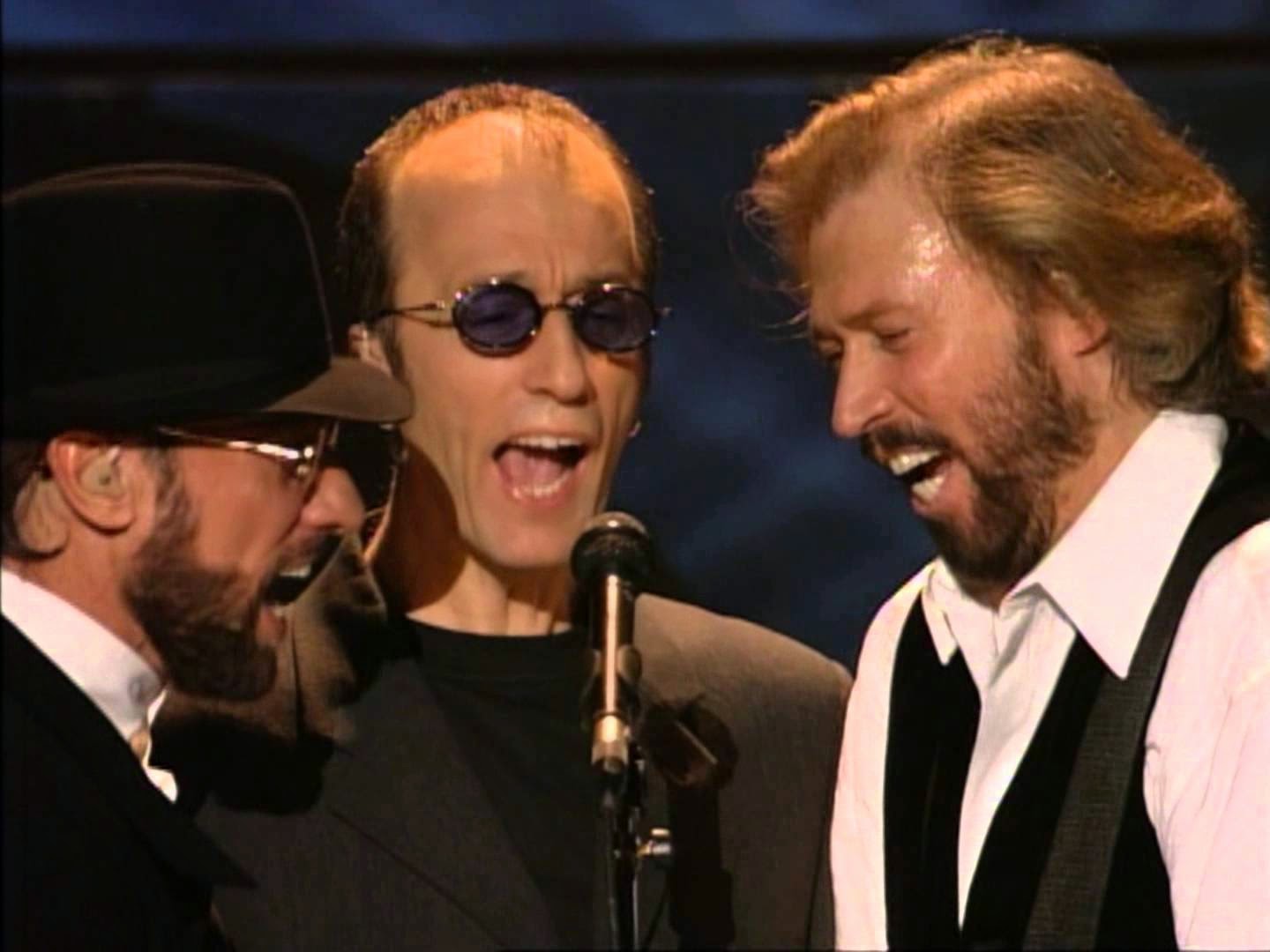
Kilburn Towers captures the Bee Gees at their most quietly evocative, turning a real London place-name into a mood of distance, mystery, and wistful urban poetry.
There are songs that dominate the radio, and then there are songs that seem to wait patiently for the right listener to find them. “Kilburn Towers” belongs to that second group. Recorded by the Bee Gees for their 1968 album Idea, it was never pushed as a major standalone single, which means it did not earn an individual chart position of its own. That alone has shaped the way it is remembered. While bigger songs from the brothers became part of the public soundtrack of the late 1960s, “Kilburn Towers” stayed in the shadows, where some of the most revealing Bee Gees music has always lived.
And yet that shadow is exactly what gives the song its lasting power. By 1968, the Bee Gees were already far more than hitmakers. Barry Gibb, Robin Gibb, and Maurice Gibb were writing songs filled with unusual titles, emotional ambiguity, and a kind of literary sadness that set them apart from many of their peers. On Idea, the group balanced melody with atmosphere, and “Kilburn Towers” is one of the clearest examples of that gift. It feels less like a commercial pop single and more like a scene half-remembered through rain on a bus window.
The title matters enormously. Kilburn, a district in northwest London, gives the song a rooted, earthly identity before a single note is even discussed. That choice is one reason the song still feels distinctive. The Bee Gees often wrote in a way that made ordinary names and places feel dreamlike, but here they did something especially striking: they took a location that sounds concrete and familiar and turned it into something hovering between memory and imagination. Even listeners who have never set foot in London can hear the city in it. There is a sense of stone, weather, distance, and lives happening behind windows.
Musically, “Kilburn Towers” belongs to the rich late-1960s Bee Gees world of baroque pop and chamber-pop elegance. The group had already mastered the art of pairing melancholy with beauty, and this song carries that signature with quiet confidence. The melody does not lunge for attention. It drifts, circles, and settles. That restraint is part of what makes it so moving. Rather than offering a large chorus built for immediate applause, the song creates an atmosphere, and the atmosphere does the emotional work. It is one of those recordings that seems to deepen with age because it asks the listener to lean in.
The story behind the song is also tied to where the Bee Gees were artistically at the time. Idea came during a period when they were stretching beyond straightforward pop structure and embracing a more reflective, often more English kind of songwriting. They were absorbing the texture of the world around them and reshaping it through harmony, arrangement, and mood. “Kilburn Towers” sounds like the work of young men already old enough, emotionally speaking, to understand loneliness in a crowded city. That emotional contradiction is one of the great Bee Gees signatures: songs full of beauty, but never comforted by beauty alone.
If one asks what “Kilburn Towers” means, the answer is not simple, and that is part of its charm. It does not unfold like a neat narrative with a single moral. Instead, it suggests isolation, observation, movement, and emotional remove. The song seems to stand at a distance from its own subject, as if looking across a neighborhood and sensing stories that can be felt but not fully known. That gives it a cinematic quality. It feels like a place-song, but even more than that, it feels like a song about how places hold emotion long after words have faded.
Because it did not chart as a single, “Kilburn Towers” has often been overlooked beside better-known Bee Gees classics. But that is also why it speaks so intimately now. There is no overfamiliarity around it. No exhaustion. No burden of constant replay. What remains is the song itself: carefully written, beautifully arranged, and filled with that unmistakable late-1960s Bee Gees sensitivity. On an album that also carried more widely recognized material, this track stands as proof that their depth was never limited to the hits.
In the end, “Kilburn Towers” endures because it preserves something fragile: a mood, a district, a passing emotional weather. It reminds us that the Bee Gees were not only masters of hooks and harmony, but also masters of suggestion. They could make a title sound like a memory and a melody feel like an unanswered thought. For listeners willing to wander a little farther into the catalog, “Kilburn Towers” remains one of the loveliest hidden rooms in the house of Idea.
