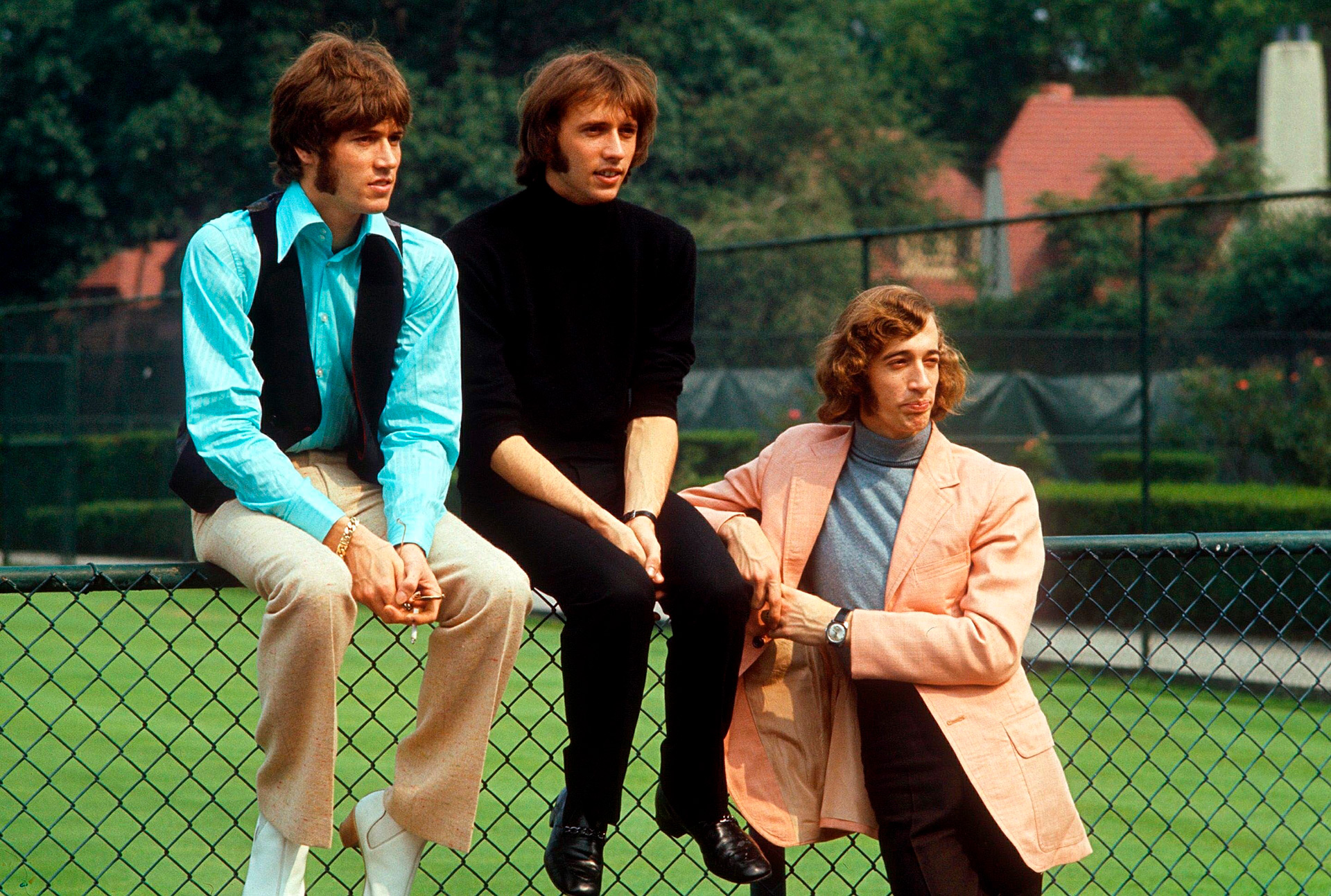
In the 2008 Remastered LP Version of Massachusetts, the Bee Gees sound like young men discovering that longing can be more powerful than spectacle.
For anyone who first knew the Bee Gees through the glitter of later years, the 2008 Remastered LP Version of Massachusetts can come as a quiet revelation. This is not a new performance, and it does not try to modernize the song’s soul. What it does is bring the original 1967 recording into sharper emotional focus. The harmonies feel closer, the ache in the lead vocal feels more exposed, and the entire record seems to breathe with a little more space around it. Heard this way, Massachusetts reminds us that before the era of world-conquering falsetto and dance-floor immortality, the brothers Gibb had already mastered something far harder to fake: tenderness, homesickness, and the kind of sorrow that arrives softly.
Its importance in the Bee Gees story is impossible to overstate. Released in September 1967, Massachusetts became the group’s first No. 1 hit on the UK Singles Chart. It also reached No. 1 in several other countries, including Germany and Japan, confirming that the trio had a truly international connection with listeners. In the United States, the song rose to No. 11 on the Billboard Hot 100, a strong showing even if it stopped just short of the Top 10. Those chart positions matter because they mark the moment when the Bee Gees ceased to be merely promising songwriters and became major recording artists with an unmistakable emotional identity.
The backstory has one of those wonderful ironies that pop history never runs out of. Massachusetts was reportedly written as a kind of emotional counterpoint to the flower-power dream surrounding songs like San Francisco. Instead of celebrating escape, communal bliss, and the bright promise of a faraway scene, the Bee Gees turned inward. Their song speaks from the other side of the dream, from the moment when glamour fades and the heart begins pulling backward toward home. Even more remarkable, the brothers wrote the song before they had ever visited Massachusetts. That detail has fascinated listeners for decades. Yet in a strange way, it explains the record’s enduring power. This is not a travel postcard. It is not about geography in any literal sense. Massachusetts is about emotional return, about the sudden realization that what we leave behind keeps living inside us.
That is why the opening lines still land with such force. There is no big theatrical gesture, no attempt to overwhelm the listener. The song moves with a gentle, almost fragile certainty. Robin Gibb’s voice carries the sadness with a particular kind of youthful vulnerability, while Barry and Maurice frame that feeling with harmonies that seem to hover between comfort and regret. In the 2008 remaster, those voices are one of the great rewards. You can hear more clearly how carefully the brothers shaped the mood, never rushing the melody, never pushing too hard. The sadness remains disciplined. It does not cry out. It simply stays with you.
There is also something deeply moving in the way the song uses a simple image to suggest a larger emotional collapse. The famous line about the lights going out in Massachusetts feels less like a report than a spiritual dimming, as if a whole idealized world has suddenly lost its glow. That is one reason the song has lasted. Its meaning is open enough for each listener to bring a different memory to it. Some hear it as a song about homesickness. Others hear disillusionment, the end of innocence, or the painful knowledge that distance changes us. Still others hear the old, aching truth that no city, no movement, no beautiful promise can protect the heart from loneliness.
As an LP version, this recording also gains something from context. Heard not only as a famous single but as part of the Bee Gees late-1960s artistic world, it reveals just how sophisticated they already were as composers and vocal arrangers. The brothers were still young, yet they understood pacing, restraint, and atmosphere at a level many artists spend a lifetime chasing. The melody is memorable, of course, but what lingers is the emotional architecture around it: the pauses, the hush, the way the harmonies gather and recede like thoughts that cannot quite settle. The 2008 Remastered LP Version does not rewrite any of that history. It simply lets modern ears hear the craftsmanship more plainly.
Another reason Massachusetts still matters is that it stands as an early sign of what made the Bee Gees special in every era. They were never only about style. They were never only about trend. At their best, they wrote songs that could hold contradiction without breaking it apart. Massachusetts sounds gentle, but there is tension in it. It sounds nostalgic, but it is not sentimental. It sounds personal, yet millions recognized themselves in it. That is the rarest kind of songwriting. It turns one private ache into a shared memory.
Perhaps that is why the song continues to feel richer with time. In youth, it may sound like a beautiful ballad. Years later, it sounds like something else entirely: a meditation on what it means to search the world and still feel the pull of where the heart belongs. The Bee Gees would go on to write and record many extraordinary songs, reshaping popular music more than once. But Massachusetts remains one of the clearest moments when their emotional intelligence first stood fully in the light. And in the 2008 remaster, that light may be a little clearer, but the feeling is unchanged. It is still the sound of distance, memory, and home calling from somewhere beyond the noise.
