
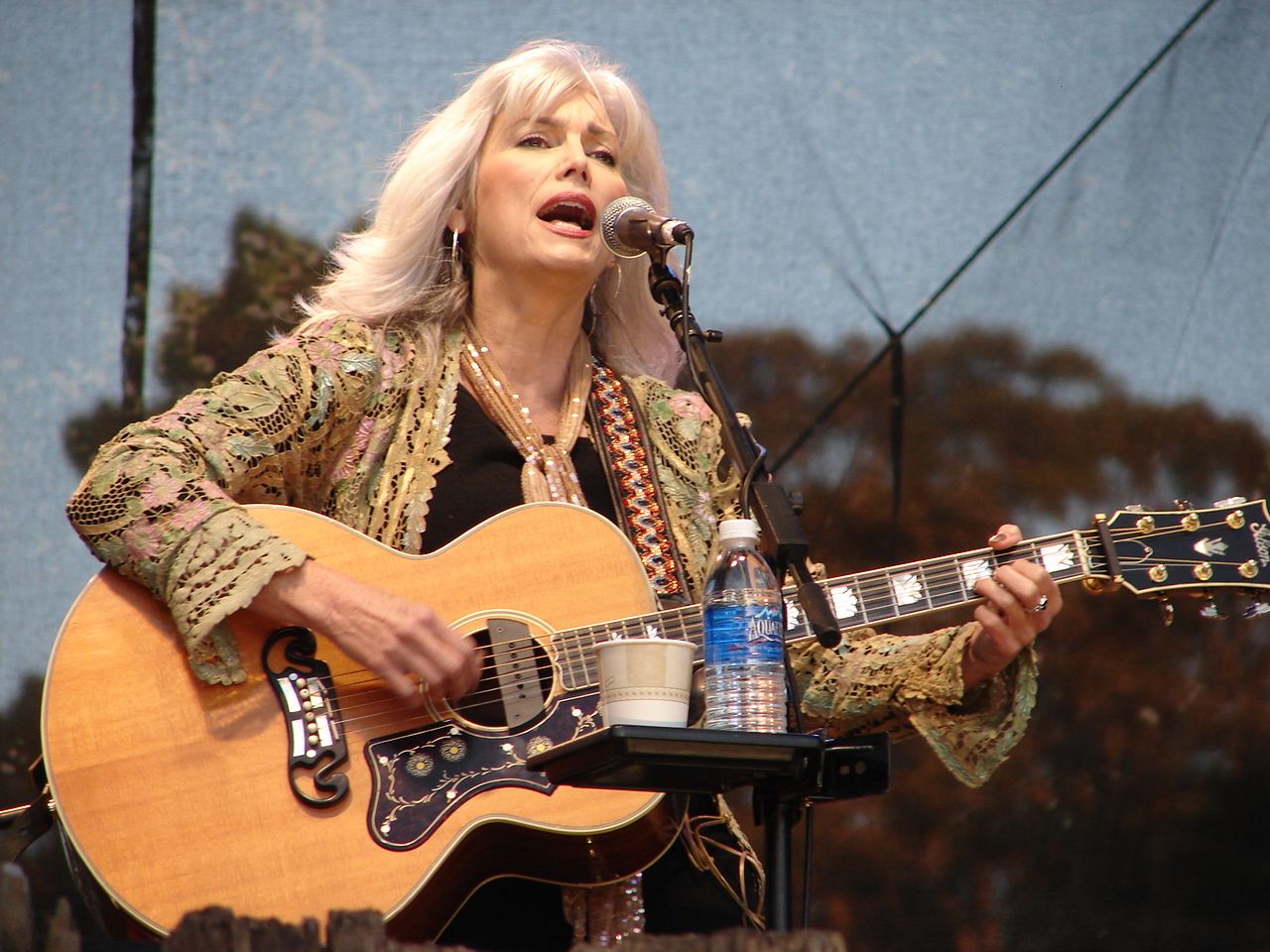
You Can’t Say We Didn’t Try is one of those quiet Emmylou Harris songs that does not plead for attention, yet leaves behind the ache of a love that failed honestly, tenderly, and without denial.
There are songs that arrive like a storm, and then there are songs that settle over the heart like evening light on an empty road. “You Can’t Say We Didn’t Try” belongs to that second kind. In the hands of Emmylou Harris, it becomes something more than a country song about separation. It becomes a mature reckoning, a deeply human acknowledgment that not every love story ends because no one cared. Sometimes it ends after effort, after patience, after hope, after every good intention has already been spent.
One important truth about “You Can’t Say We Didn’t Try” is that it was never one of Emmylou Harris’s big chart-defining hits. Unlike the songs that carried her to prominent places on the country charts in the 1970s and early 1980s, this one has lived more quietly in her catalog, cherished by listeners who have always known that her finest work was not limited to radio favorites. That lack of chart glare may actually be part of its power. The song feels private, almost confidential, as if it were sung not to an arena, but to one person sitting across a kitchen table after the last hard conversation.
That is where Emmylou Harris has always been extraordinary. So many singers can deliver heartbreak. Fewer can deliver resignation without bitterness. On “You Can’t Say We Didn’t Try”, she does not sound theatrical, and she does not reach for easy devastation. Instead, she gives the song a rare emotional balance: sorrow, yes, but also dignity. The title itself says so much. It does not claim victory. It does not claim innocence. It does not even ask for another chance. It simply asks that the truth be remembered. We loved. We tried. We gave this something real.
That emotional angle is what makes the song linger. In many breakup songs, the drama comes from accusation. In this one, the wound comes from recognition. The relationship did not fail because of indifference. It failed in spite of effort. For anyone who has lived long enough to understand that love is not always rescued by sincerity alone, that message lands with unusual force. The song speaks to the painful wisdom that trying your best is not always the same thing as saving what is slipping away.
Musically, the performance fits that truth beautifully. Emmylou Harris has always had one of the great interpretive voices in American music, a voice capable of sounding both celestial and worn-in at the same time. On a song like “You Can’t Say We Didn’t Try”, that quality matters more than vocal fireworks ever could. She sings with restraint, and that restraint is exactly what gives the song its authority. Nothing is oversold. The sadness is allowed to breathe. The pauses matter. The phrasing matters. The feeling comes not from excess, but from the quiet control of someone who knows that the hardest truths are often spoken softly.
It also fits a larger pattern in the artistry of Emmylou Harris. Across decades, whether she was singing country, folk, Americana, or something in between, she consistently gravitated toward songs with emotional weather inside them. She has always had a gift for finding material that feels lived in rather than manufactured. That is why a lesser-known recording like “You Can’t Say We Didn’t Try” can feel just as revealing as one of her best-known classics. It reminds us that her greatness was never only about chart numbers or famous collaborations. It was about taste, emotional intelligence, and that uncanny ability to sing as if memory itself had found a melody.
The deeper meaning of “You Can’t Say We Didn’t Try” lies in its refusal to reduce love to winners and losers. That may be the most moving thing about it. The song allows failure and devotion to exist in the same room. It suggests that the end of a relationship is not always proof that the feeling was false. Sometimes the love was real, the effort was real, and the ending is real too. That is a harder truth than simple betrayal, and it is one that Emmylou Harris delivers with heartbreaking grace.
For listeners who know her from landmark songs like “Boulder to Birmingham”, “If I Could Only Win Your Love”, or “Two More Bottles of Wine”, hearing “You Can’t Say We Didn’t Try” can feel like discovering a quieter chamber in the same house. It does not announce itself as a classic in the usual way. It grows. It returns. It stays. And over time, it can become one of those songs that means more because life has taught you what it is really saying.
That is why this recording remains so affecting. It honors the effort inside a broken love story. It gives language to the kind of parting that leaves no villains behind, only silence, memory, and the faint comfort of knowing the heart did not walk away too soon. In a career full of elegance and emotional depth, Emmylou Harris gave “You Can’t Say We Didn’t Try” the rare gift of truth without self-pity. And that is precisely why it still hurts, and why it still matters.
