
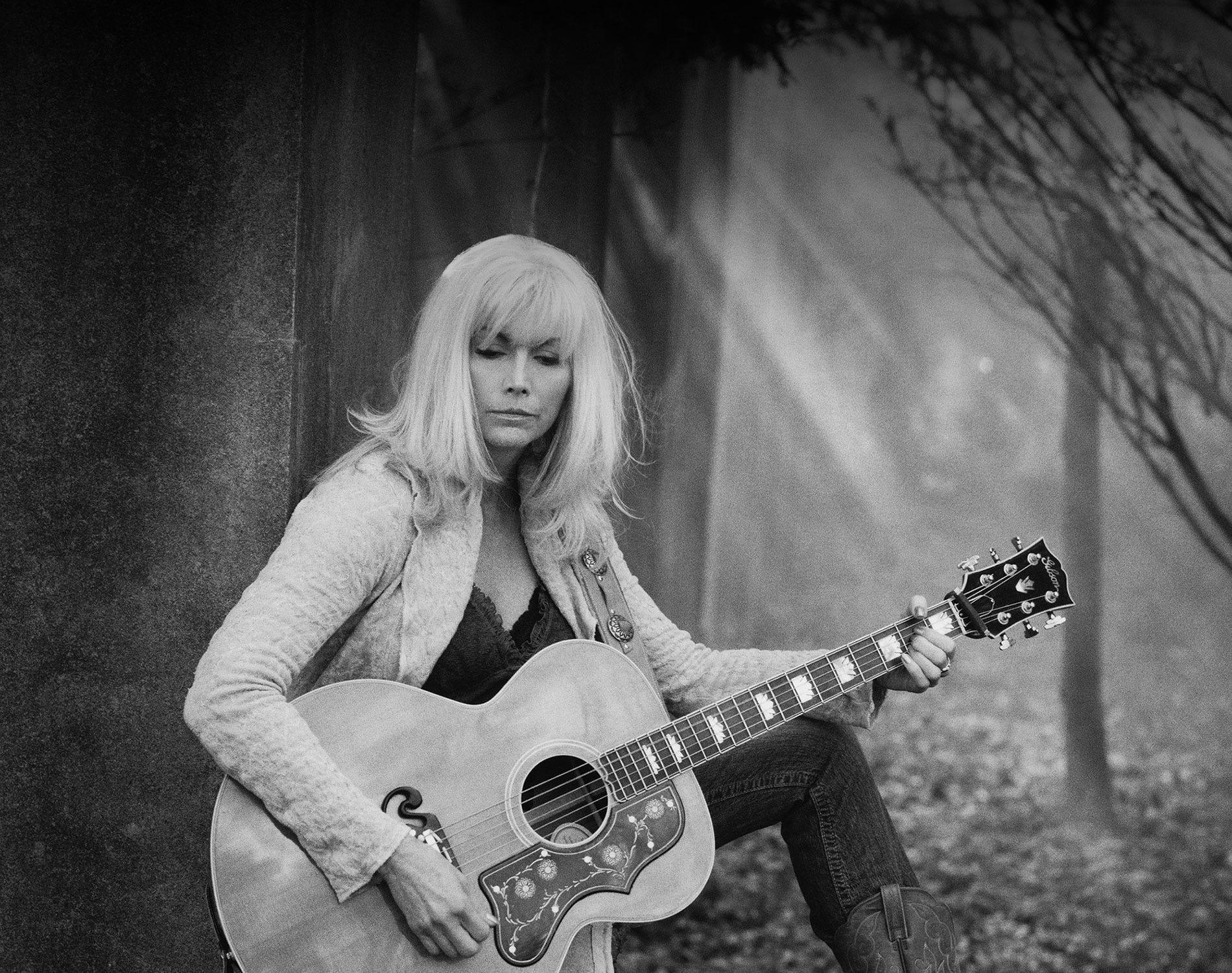
Save the Last Dance for Me may sound like a light promise at the edge of the dance floor, but Emmylou Harris turned it into a study in devotion, restraint, and the quiet ache that often hides inside love.
Released on Blue Kentucky Girl in 1979, Emmylou Harris‘s reading of Save the Last Dance for Me reached No. 4 on Billboard’s Hot Country Singles chart. That alone says something important. This was not a novelty cover, not a nostalgic detour, and not a singer borrowing a famous melody for easy recognition. It was a genuine country hit, and it proved once again that Harris had a rare gift: she could take a song people thought they already knew and uncover a more complicated emotional truth inside it. Long before her version, the song had been a pop landmark for The Drifters, whose 1960 recording of the Doc Pomus and Mort Shuman composition spent three weeks at No. 1 on the Billboard Hot 100. Yet Harris did not compete with that history. She listened to it, respected it, and then quietly reshaped it.
That mattered in the context of Blue Kentucky Girl. By the time the album arrived, Harris had already built a reputation as one of the most tasteful interpreters in American music, moving between country, folk, and roots music with unusual grace. Produced by Brian Ahern, the album leaned into a more traditional and reflective sound, and Save the Last Dance for Me fit that mood beautifully. In Harris’s hands, the song loses none of its elegance, but its center of gravity changes. What once felt buoyant and urbane becomes softer, slower in spirit, and far more wistful. She sings it not as a bright public declaration, but as if she were letting the words rise from somewhere private and long remembered.
The story behind the song helps explain why it has always carried more weight than its melody first suggests. Doc Pomus drew inspiration from his own wedding day. Because childhood polio had limited his mobility, he watched his bride dance with others, and out of that moment came one of the most unusual love songs of its era. It is tender, generous, even gracious on the surface: go out, dance, smile, enjoy the room. But at its core, the lyric is asking for something deeply human and deeply vulnerable. After all the attention, after the laughter, after the night has had its way with both of us, remember where your heart belongs. Save the last dance for me. That is not swagger. It is longing dressed in good manners.
And that is precisely where Emmylou Harris excels. She understood that the genius of Save the Last Dance for Me lies in its emotional balance. It is possessive without sounding harsh, romantic without turning sentimental, and wistful without collapsing into self-pity. Harris gives the lyric a kind of mature tenderness. There is no need for theatrical display. Her phrasing is controlled, luminous, and patient. She lets the ache arrive naturally. By doing so, she brings out something country music has always understood very well: that the most lasting pain is often the pain spoken politely.
It is also worth remembering that Harris was never simply a stylist. She was a reader of songs. She knew how to hear a line from the inside. On Save the Last Dance for Me, that instinct makes all the difference. The listener begins to notice how delicate the promise really is. The singer is not asking to be the center of the evening. She is asking not to be forgotten. That small shift changes the whole emotional weather of the song. What sounds carefree in passing becomes quietly devastating when you sit with it.
The contrast with the earlier The Drifters version is part of the pleasure. The original is elegant, rhythmic, and unforgettable, with a smooth pop-R&B confidence that made it a classic. Harris, however, reveals the shadows at the edge of the lyric. She does not erase the song’s sweetness; she deepens it. Her country interpretation makes room for hesitation, memory, and that familiar kind of heart-knowledge that comes only after life has humbled a person a few times. The result is a cover that honors the original while standing entirely on its own.
There is a reason this performance has endured among admirers of Emmylou Harris. It represents one of her most reliable strengths: the ability to make emotional complexity sound effortless. Many singers can deliver sadness. Fewer can sing with this much grace, where affection and uncertainty live side by side. On Blue Kentucky Girl, surrounded by material that cherished classic songwriting and emotional intelligence, Save the Last Dance for Me feels like a perfect fit. It belongs to that special class of recordings that do not shout their importance. They simply stay with you.
In the end, Harris reminds us that great songs survive because they can bear new truths. Save the Last Dance for Me began life as a hit, but it lasted because it was built on something far more enduring than chart success. It understands that love is rarely just joy or just ache; more often, it is both at once. Emmylou Harris heard that duality clearly, and her version remains so affecting because she never tried to force the song into a single feeling. She let it sway between warmth and sadness, between faith and fragility, between the dance everyone sees and the private prayer hidden inside it. That is why her recording still lingers long after the music fades.
