
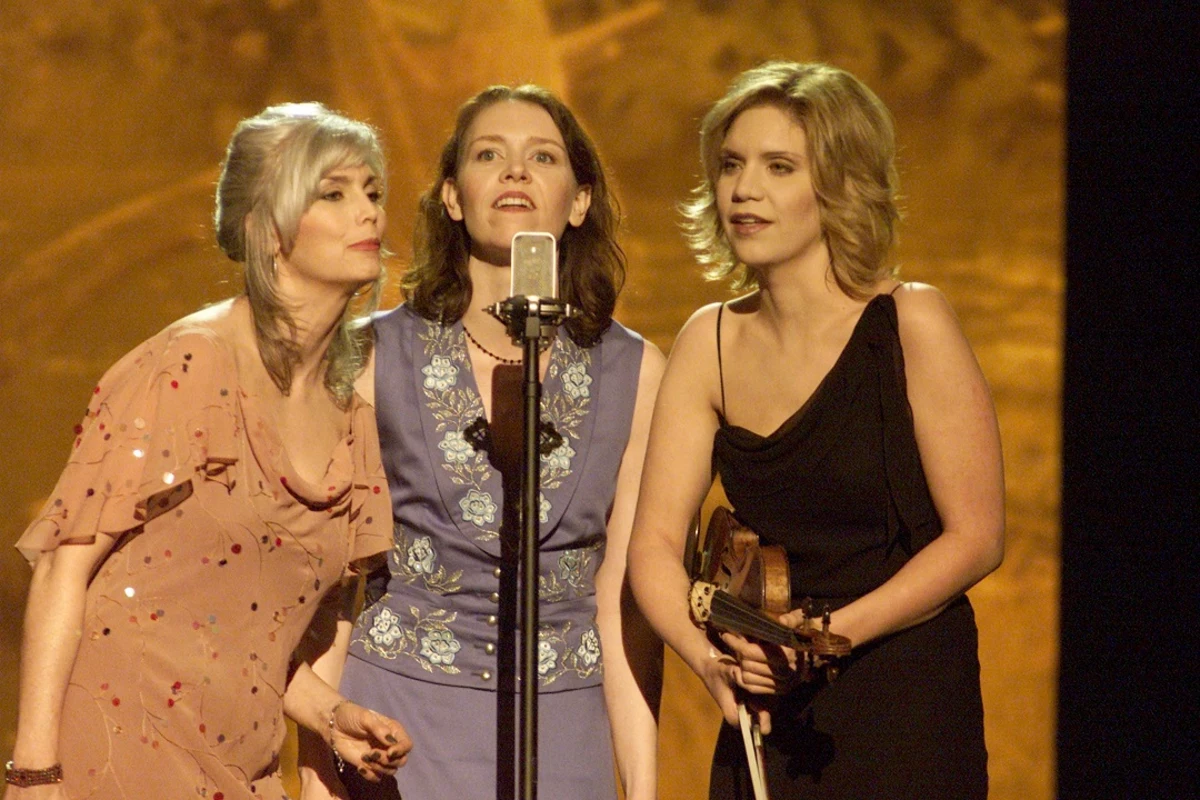
In “The Connection,” Emmylou Harris does not simply sing about closeness or distance. She sings the charged space between them—that aching place where desire, memory, and uncertainty touch each other without ever fully settling into peace.
More than a mood piece—that is exactly right. “The Connection” carries atmosphere, yes, but it is too sharply felt to live on atmosphere alone. The song appeared on Stumble into Grace, released on September 23, 2003, during a later creative period in which Harris was no longer chasing the old forms of country stardom so much as deepening her own interior world. The album reached No. 6 on Billboard’s Top Country Albums chart, a strong showing for a record so hushed, thoughtful, and inward-looking. In that setting, “The Connection” does not feel like filler or drift. It feels like one of the album’s emotional hinges—quiet, tense, and impossible to shake.
One of the most valuable facts behind the song is that Emmylou Harris did not write it. “The Connection” was written by Jack Routh and Randy Sharp, and it was first released by Randy Sharp in 2002 before Harris recorded her own version. That matters because Harris had long since become more than an interpreter, especially by the time of Red Dirt Girl and Stumble into Grace. So when she chose outside material in this period, it usually meant the song had found some unusually direct route into her emotional world. “The Connection” sounds exactly like that: not borrowed, but recognized.
And then there is the other fact that gives the song its special afterglow: Harris’s recording of “The Connection” won the Grammy for Best Female Country Vocal Performance at the 48th Annual Grammy Awards. That award is not the only reason the song endures, of course, but it does confirm that people heard something uncommon in the performance—something more than pretty melancholy, something more than tasteful sadness. They heard control under pressure. They heard tension turned into form.
That tension is the real heart of the song.
What makes “The Connection” so hauntingly beautiful is that Harris never tries to resolve the emotional unease inside it. She does not force the song toward confession, and she does not let it collapse into abstraction. Instead, she stays in that narrow, difficult corridor where intimacy and uncertainty live side by side. The title itself is simple enough, almost plain, but in her voice it begins to feel elusive. What kind of connection? Is it love remembered, love threatened, love still faintly alive, or merely the ghost of something that once felt certain? The beauty of the performance is that it refuses to answer too neatly.
That is why the song lingers more deeply than some listeners expect. Mood pieces can be lovely, but they often evaporate. “The Connection” does not evaporate. It leaves a pressure behind. Harris sings it with that rare late-career authority she had by then fully claimed—the authority of someone who no longer needs to dramatize emotion in order to make it devastating. Her voice does not push the feeling outward. It draws it inward, where it becomes stranger and more intimate.
The production matters too. Stumble into Grace was produced by Malcolm Burn, and the album was widely noted for continuing the seductive, quiet, textured atmosphere of Harris’s post-Wrecking Ball work. A contemporary Billboard item described the album as carrying the “sedate, enticing vibe” that had animated her recent studio records, and that phrase suits “The Connection” perfectly. But the song goes a step further: its calm surface keeps brushing against emotional unrest, so that what first feels gentle slowly begins to feel unsettled.
Perhaps that is what makes the performance so beautiful. Harris understands that some of the deepest emotional songs are not the ones that break apart in front of us, but the ones that hold themselves together while trembling underneath. In “The Connection,” she sounds neither defeated nor fully reassured. She sounds suspended. And that suspended feeling is one of the hardest things in music to convey without overstatement.
So yes, “The Connection” is more than a mood piece. In Emmylou Harris’s hands, it becomes a study in emotional tension—softly sung, carefully held, and all the more haunting because it never forces closure. It reminds us that beauty in music is not always born from resolution. Sometimes it comes from the ache of what remains unresolved, still shimmering in the air long after the song is over.
