
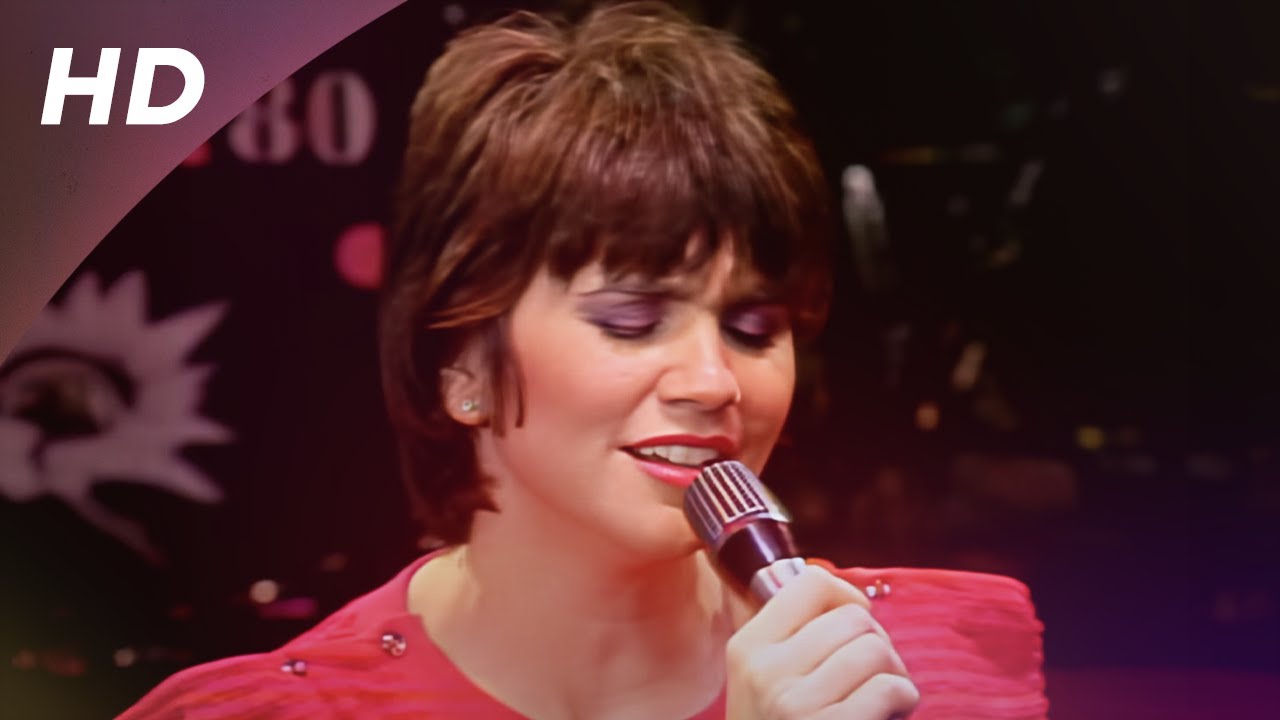
More devastating than Patsy Cline’s? Probably not in the historical sense — but Linda Ronstadt could make “I Fall to Pieces” feel lonelier, more fragile, and closer to the bone in a very different way.
That question stays alive because the song itself is already one of country music’s most delicate heartbreaks, and Patsy Cline set the standard so high that every later version has to walk straight into her shadow. Her 1961 recording of “I Fall to Pieces”, written by Hank Cochran and Harlan Howard, became her first No. 1 country hit and crossed over to No. 12 on the pop chart. It was not simply a great performance. It was a defining one, a record that helped turn the song into a standard and helped turn Patsy into Patsy.
What makes Cline so hard to surpass is the extraordinary balance in her version. She sounds wounded, yes, but never small. The heartbreak is visible, yet the poise never leaves her. That is the magic of Patsy Cline at her greatest: pain arrives dressed in elegance. Even the song’s history adds to that ache. It climbed slowly after a weak initial radio response, then became a major hit while Cline was recovering from the near-fatal car accident she suffered in June 1961. Knowing that does not create the emotion, but it deepens the aura around it.
So if the question is who owns the song in the deepest historical sense, the answer is still Patsy Cline.
But that does not mean Linda Ronstadt cannot hit harder for some listeners.
Linda had a way of taking familiar country pain and making it sound more exposed, less upholstered, less protected by polish. Patsy’s heartbreak often feels composed enough to survive the room. Linda’s heartbreak can feel as though the room has gone cold around it. That difference matters. Where Patsy gives the song classic dignity, Linda tends to bring a more immediate vulnerability, the feeling that the emotional wound is happening almost in real time. For some ears, that is more devastating because it feels less iconic and more human-sized.
It is also worth remembering that Ronstadt’s whole gift as an interpreter was built on this kind of transformation. She spent her career taking songs with strong histories and finding a new emotional temperature inside them, whether in country, pop, or folk repertory. Her artistry was not about erasing an original. It was about changing the light. That is the fairest way to hear her against Patsy: not as a replacement, but as a singer who could make the same heartbreak sound rawer, more intimate, and in some ways more modern in its sadness.
So my answer would be this:
Patsy Cline’s version is greater.
Linda Ronstadt’s version may feel more devastating to some listeners.
That is not a contradiction. Patsy’s “I Fall to Pieces” is the immortal one — the version with the deeper cultural claim, the one that established the song’s emotional architecture for everyone who came after. Linda, though, could make that architecture feel less monumental and more breakable. Patsy sounds like heartbreak made timeless. Linda sounds like heartbreak still happening.
And that is why the comparison remains so interesting. One performance is the standard. The other can feel, for the right listener on the right night, even more painful.
