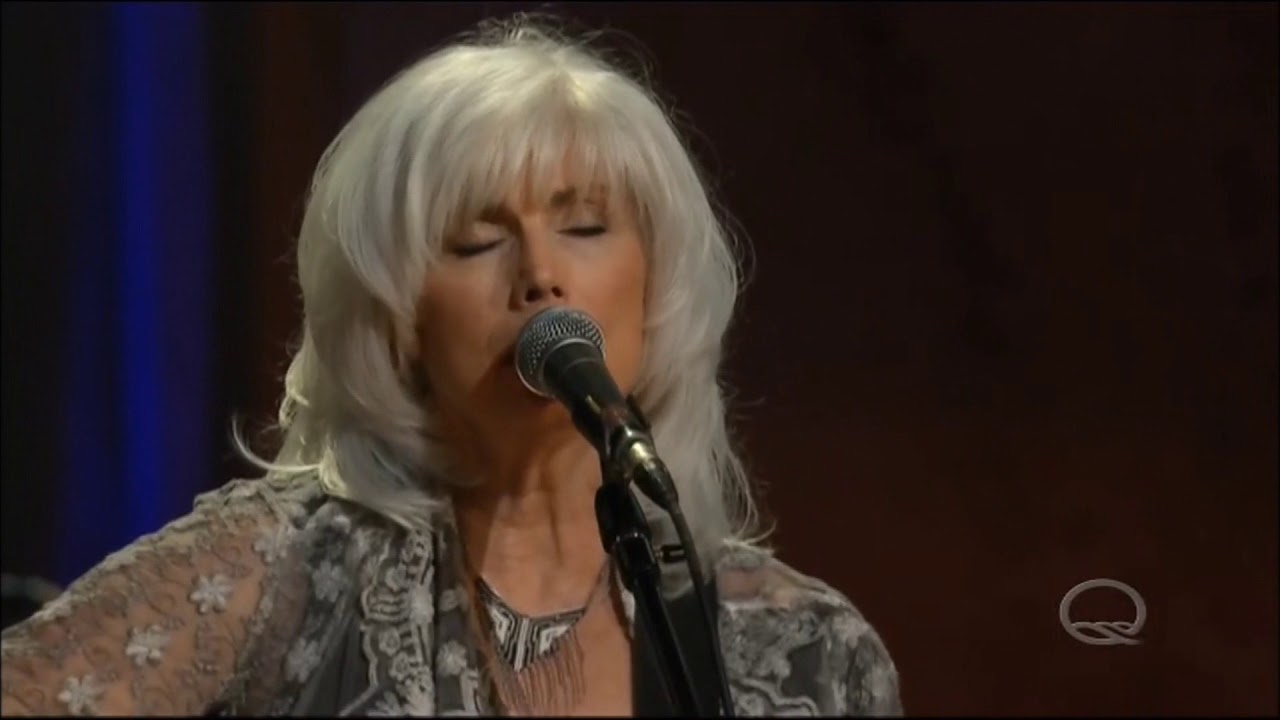
“Little Bird” feels like a hand gently opening after years of holding on too tight—an intimate hymn to release, to trust, and to the strange comfort of finally letting the heart breathe again.
Some songs arrive like headlines. “Little Bird” doesn’t. It arrives the way certain memories do—quietly, almost shyly—until you realize it has been standing in the doorway for a long time, waiting for you to notice what it’s offering. Emmylou Harris released “Little Bird” in 2003 on her album Stumble into Grace (released September 23, 2003 on Nonesuch Records, produced by Malcolm Burn). The album itself made a clear mark: it peaked at No. 6 on Billboard’s Top Country Albums and reached No. 58 on the Billboard 200.
That chart context matters because it reminds you what this period represented: not a chase for the loudest spotlight, but a deepening. Stumble into Grace belonged to a late-career stretch where Harris’s songwriting—long admired, sometimes underestimated—moved to the center of the room. And “Little Bird” is one of the album’s most telling signatures: a song co-written by Emmylou Harris with Kate McGarrigle and Anna McGarrigle (running 3:14), with the McGarrigle sisters also present in the album’s musical family.
The “story behind” “Little Bird” isn’t the tabloid kind; it’s the human kind—the story of artistic kinship. The McGarrigles were not casual collaborators; they were kindred spirits, songwriters whose gift for plainspoken poetry could turn everyday language into something gently illuminated. On Nonesuch’s own notes about the record, their presence is described as part of Harris’s musical community—co-writing “Little Bird” and joining in on vocals, a reciprocation of shared history. This is the sort of behind-the-scenes truth that you can actually hear: the song sounds like it was written in a room where trust already existed.
Musically, “Little Bird” sits inside the shimmering aesthetic that Harris and Burn had been shaping—an approach that framed her voice in spacious, ambient textures rather than traditional, hard-edged country drive. One especially perceptive review described the album’s sound as “ambient pop,” and singled out “Little Bird” for the way it follows a Celtic-tinged melody until it becomes something like a healing singalong—as if private unrest slowly finds its way toward community and spiritual connection. That observation doesn’t just flatter the arrangement; it points straight at the song’s meaning.
Because “Little Bird” is ultimately a song about permission—permission to loosen the fist, to step back from the cliff-edge of control, to stop mistaking worry for devotion. The bird image is a small miracle of songwriting: birds are fragile, yes, but they are also built to leave. To love a “little bird” is to accept that love cannot be possession. In Harris’s voice, that idea carries a particular weight. She doesn’t sing like someone discovering this truth for the first time; she sings like someone who has lived long enough to know how hard it is—and how necessary.
And then there’s the emotional afterglow: “Little Bird” doesn’t end with a grand victory. It offers something subtler, more durable—what you might call earned tenderness. If much of Stumble into Grace feels like moving through dusk toward a lamp left on in the window, “Little Bird” is the moment you notice the light and realize you’re not walking alone.
