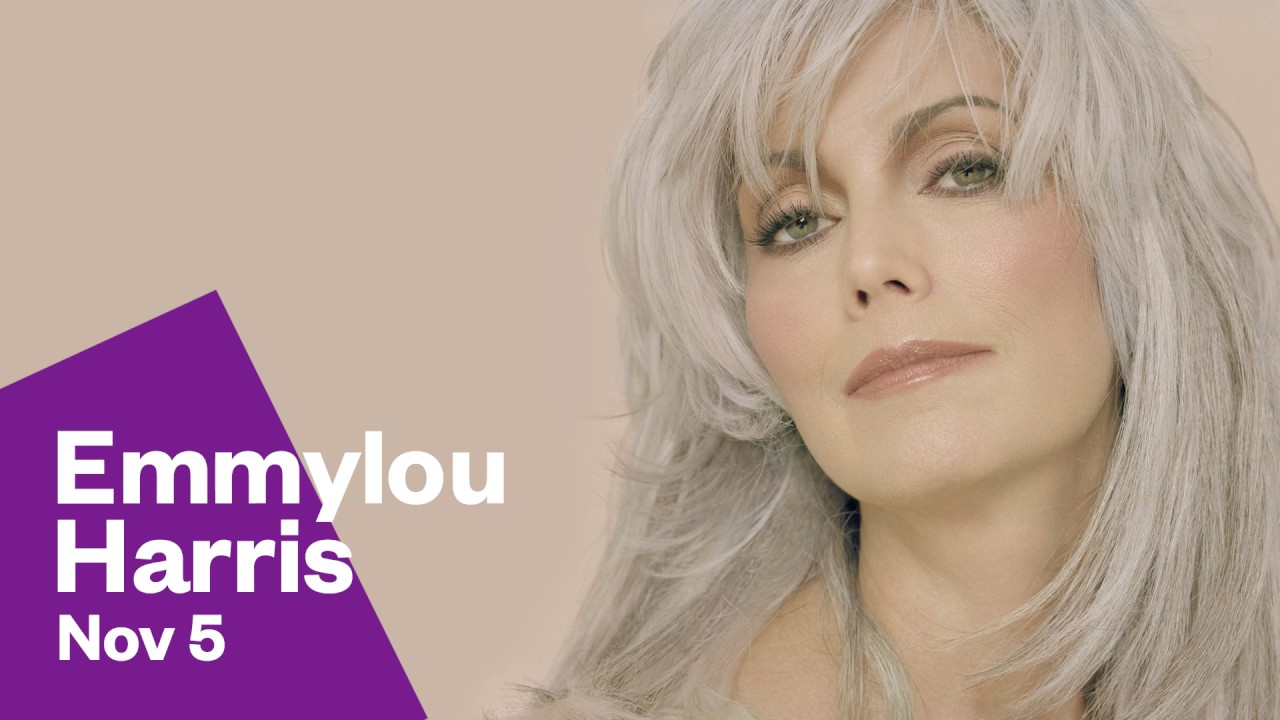
“Beyond the Great Divide” is a quiet benediction—about love that outlives distance, and the tender courage it takes to keep singing across the spaces life puts between us.
To place Emmylou Harris’s “Beyond the Great Divide” in its proper light, the most important details come first. Her version appears as the closing track on All I Intended to Be, released June 10, 2008 on Nonesuch Records, and recorded over a long, patient stretch from October 16, 2005 to March 17, 2008. The album’s reception was not merely affectionate—it was measurable: it debuted at No. 22 on the Billboard 200 and No. 4 on Top Country Albums, her strongest Billboard 200 showing for a solo record in decades. In other words, this was not a late-career footnote. It was a return that people heard in real time.
Just as crucial: this “Beyond the Great Divide” is not The Band’s “Across the Great Divide.” Different title, different writers, different world. Harris records the song credited to J.C. Crowley and Jack Wesley Routh. That distinction matters because it tells you what kind of artist she is—one who follows songs, not reputation, and who doesn’t mind if a gem comes from a road less traveled. In fact, Nonesuch framed All I Intended to Be as a record shaped by Harris’s lifelong instinct as a “song-finder,” balancing originals with pieces she simply loved enough to carry forward.
The story behind the song, then, is less about a single dramatic incident and more about a lineage of voices. According to documented cover/performance histories, “Beyond the Great Divide” was first recorded and released by Karen Brooks in 1985, before traveling through other country interpretations—until Emmylou Harris brought it to her own album in 2008 (in a version credited as Emmylou Harris with John Starling in some discographies). This is the kind of song that lives like an heirloom: handled carefully, passed along because the emotion remains useful—because the words still know things the listener hasn’t finished learning.
So what is the meaning of “Beyond the Great Divide” when Emmylou sings it? It’s a song about separation, yes—but not the glamorous kind. It isn’t separation as melodrama, with slammed doors and public scenes. It’s separation as geography, time, loss, misunderstanding—the slow accumulation of distance that arrives almost politely, until one day you notice you’re calling someone “back then” instead of “today.” The “great divide” becomes a symbol broad enough to hold all the ways life divides us: miles, years, pride, illness, grief, the quiet drift of two people who once shared the same kitchen light.
And yet Harris has always been a singer who can make distance feel musical rather than merely tragic. On All I Intended to Be, the whole concept is a kind of reckoning—looking back without sentimentality, looking forward without pretending. The album title itself suggests an honest inventory: what was hoped for, what happened, what remains. Placing “Beyond the Great Divide” as the final track feels deliberate: after all the album’s searching, it leaves you with a last image of separation—and the stubborn human need to keep reaching across it.
That’s where the nostalgia comes in, not as a soft-focus filter, but as a lived sensation. Some songs remind you of a particular year; this one reminds you of a particular kind of silence—the kind that follows a goodbye you didn’t realize was final, or the kind that sits in a room after the phone call ends. When Emmylou Harris sings a song like “Beyond the Great Divide,” she doesn’t force the feeling. She lets it stand there, unadorned, like a photograph you keep turning over in your hands, wondering what you missed at the time.
In the end, the power of “Beyond the Great Divide” is that it doesn’t promise the divide will vanish. It only suggests that love—real love—has a way of staying audible. Even across distance. Even across years. Even when all you can do is sing.
