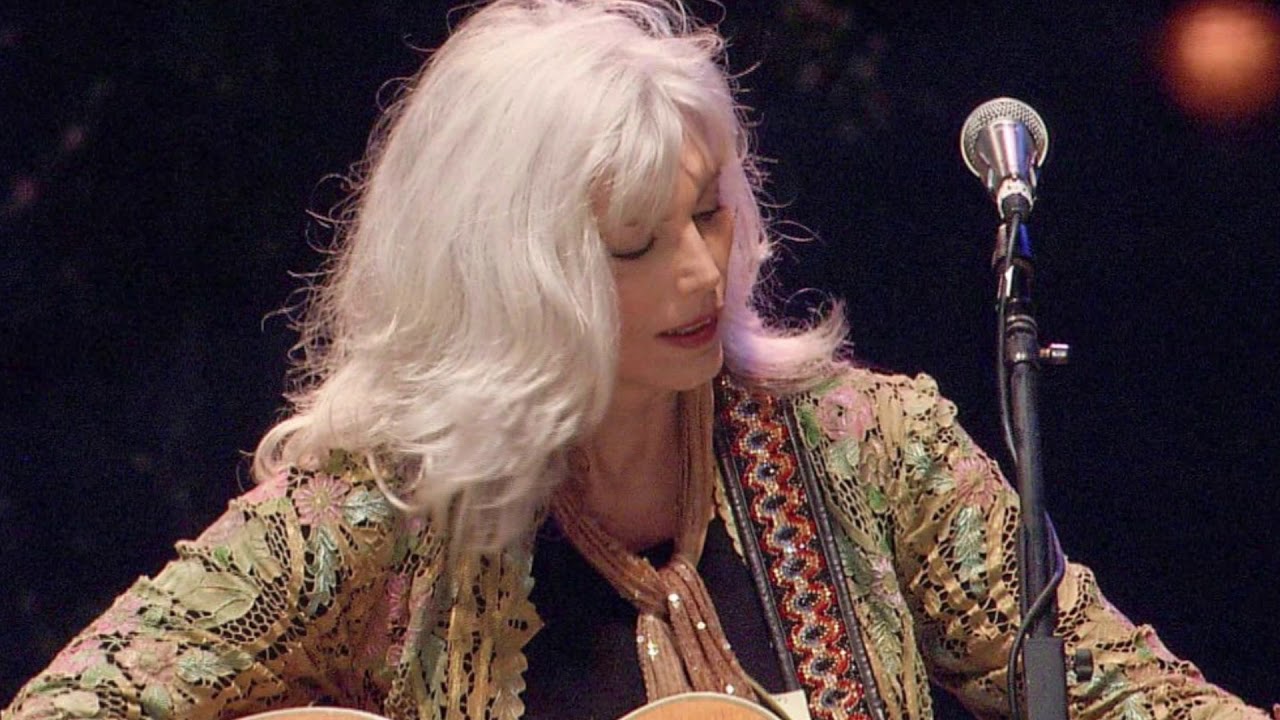
“I Don’t Wanna Talk About It Now” is Emmylou Harris choosing silence as survival—when grief is still too raw for language, and the only honest prayer is to keep breathing until the hurt loosens.
On September 12, 2000, Emmylou Harris released Red Dirt Girl on Nonesuch Records—a record that felt like a curtain being pulled back, not for spectacle, but for truth. If much of her earlier legend was built on the radiant art of interpretation, this album marked a different kind of courage: Harris stepping forward as a writer in her own right, shaping memory into song with a confessional steadiness that never begs for attention. In that context, “I Don’t Wanna Talk About It Now”—the album’s third track—lands like a private door closing softly. Not slammed. Not locked. Just closed, because the heart has reached its limit for explaining itself.
The “arrival” of the song in the public world was modest but telling. It was issued as a single from Red Dirt Girl, and it became Harris’ first entry on Billboard’s Adult Alternative Airplay chart, peaking at No. 33—a small number that still speaks volumes, because it placed her voice in the format where adult listeners go for intimacy rather than noise. Industry coverage at the time described it as a “moody single that transcends genre,” the kind of track programmers were urged not to overlook—more atmosphere than anthem, more ache than hook.
Behind the song sits the larger story of the album’s making. Red Dirt Girl was recorded March–April 2000 at Clouet Street Studio, New Orleans, produced by Malcolm Burn—a producer with a gift for leaving rough edges where they belong, letting songs feel lived-in instead of perfected. And the personnel on “I Don’t Wanna Talk About It Now” reads like a small, sympathetic circle gathered close around Harris rather than a glossy production line: Emmylou on acoustic guitar, Malcolm Burn on piano, electric guitar, and tambourine, Jill Cunniff adding electric guitar, bass, and harmony, Ethan Johns on drums, Daryl Johnson on bass and harmony, and Julie Miller with harmony vocals—voices and instruments chosen not to distract from the lyric, but to steady it.
What makes the song so quietly devastating is its central decision: not yet. Not yet speaking, not yet unpacking, not yet turning pain into a story polished enough for conversation. In a culture that loves tidy explanations—beginning, middle, moral—Harris offers something truer: the season when a person is still inside the storm. This is not denial in the childish sense; it’s self-protection in the most adult sense. Sometimes talking too soon doesn’t heal you—it only spreads the wound out on the table before it has stopped bleeding.
You can hear that maturity in the way Harris inhabits the track. She has always possessed that rare vocal quality—clear as glass, but never cold—and here she uses it like a low lamp rather than a spotlight. “I Don’t Wanna Talk About It Now” doesn’t perform heartbreak; it contains it. The arrangement moves with restraint, the rhythm keeping a gentle distance, as if everyone in the room understands that grief needs space. Even the title feels like an act of boundary-setting said without anger: not “I’ll never tell you,” but “not now.” The difference is everything. It leaves the door human.
And that’s the deeper meaning the song carries within Red Dirt Girl, an album celebrated as a turning point in Harris’ career—one that later won the Grammy for Best Contemporary Folk Album. This track is part of the album’s emotional grammar: memory, loss, witness, survival—each delivered with the calm authority of someone who has learned that pain doesn’t need to be loud to be real. Emmylou Harris isn’t asking the listener to fix anything. She’s offering something rarer: the honest sound of a person admitting, softly, that language will come later—after the heart has had time to gather itself back together.
