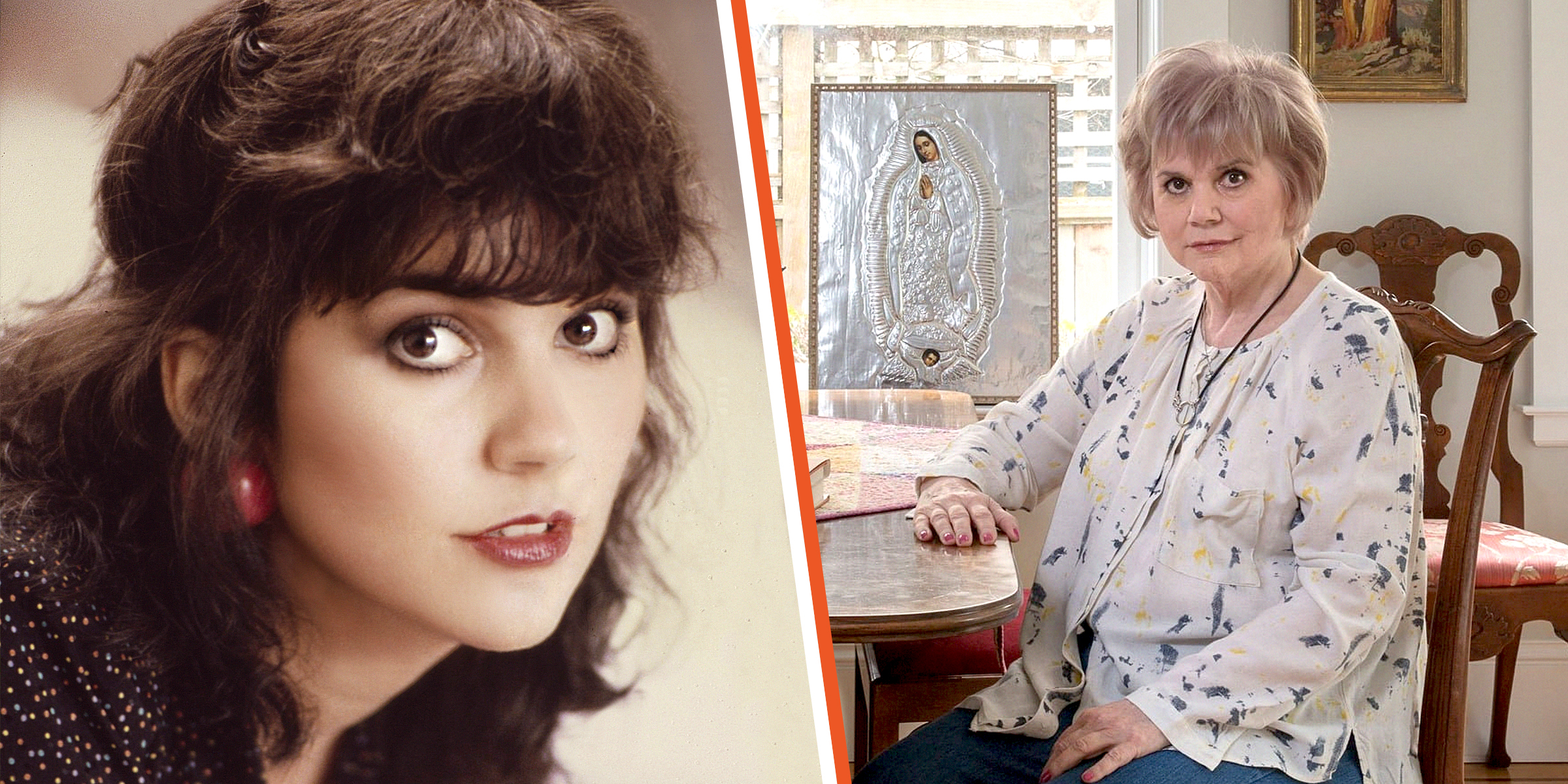
“I Can’t Help It (If I’m Still in Love with You)” is a quiet confession that refuses to fade—Linda Ronstadt singing the kind of love that lingers even after life insists it should be over.
What makes Linda Ronstadt’s “I Can’t Help It (If I’m Still in Love with You)” so haunting is that it arrived like a shadow hit—a song tucked on the flip side of a smash, yet strong enough to carve its own legend. In November 1974, it was issued as the B-side to Ronstadt’s career-changing single “You’re No Good”, the record that would soon reach No. 1 on the Billboard Hot 100. But while the world was singing along to that tough, triumphant A-side, country radio quietly fell in love with the other side of the 45: this tender Hank Williams classic, delivered with such crystalline ache that it climbed to No. 2 on Billboard’s Hot Country Songs. And the industry—rarely sentimental—noticed too: Ronstadt’s recording won the Grammy for Best Country Vocal Performance, Female at the 18th Annual Grammy Awards, a signal that this wasn’t just a clever cover but a definitive interpretation.
The song’s power begins with its origin. Hank Williams wrote and first recorded “I Can’t Help It (If I’m Still in Love with You)” in March 1951, released May 1951 as the B-side of “Howlin’ at the Moon,” and it surged to No. 2 on the Billboard country chart—proof, even then, that the public often knows which song is the truer wound. (One of the enduring stories around the composition is that it came together on the road—Hank shaping the opening line and bandmates tossing jokes back at him—until the joke fell away and the sorrow stayed.)
Ronstadt didn’t treat that sorrow like museum glass. She placed it in the living room.
Her version appears on Heart Like a Wheel (released November 19, 1974, produced by Peter Asher), the album that made her not just a star but a kind of American standard—country-rock, pop, and old-school heartbreak braided into one voice. The album itself reached No. 1 on the Billboard 200, and its singles turned her into a radio constant. Yet in the middle of all that commercial momentum, “I Can’t Help It” feels strangely private, like a truth she’s admitting when the room is empty.
That’s the song’s genius: it isn’t about dramatic betrayal. It’s about what happens after the dust settles—when you see someone again and your body remembers before your mind can defend itself. The lyric moves with the plainness of a conversation you never wanted to have. No ornate poetry, no clever detours—just the unbearable simplicity of recognition: I’m still here. The feeling is still here. And Ronstadt sings it with a discipline that makes it cut deeper. She doesn’t sob through it. She doesn’t oversell it. She stands straight inside the ache, as if dignity is the only thing left to hold.
A crucial detail in the emotional chemistry is the harmony: the recording is widely circulated and cataloged with Emmylou Harris’ harmony presence—two voices that seem made to share the same air, one luminous and direct, the other like a soft second thought that won’t go away. The result is not “duet as showpiece,” but harmony as memory—like the past itself has leaned in to sing along.
And perhaps that’s why this song—despite being a B-side—became a kind of emblem. It reminds us that the heart doesn’t always follow the clean narrative we’d prefer. Sometimes love doesn’t end with a scene; it ends with distance, with time, with life moving forward… and then one ordinary day you pass a face on the street and the whole old world wakes up again.
Linda Ronstadt didn’t just cover Hank Williams here. She translated him—carrying a 1951 ache into the mid-1970s mainstream without sanding down its honesty. And in doing so, she gave us one of the most quietly devastating performances of her era: a song that doesn’t ask for permission to linger, because it already knows the truth—some feelings don’t leave when they’re told to. They leave only when they’re ready.
