In Exile’s 1984 country hit, five voices made a genre shift feel natural.
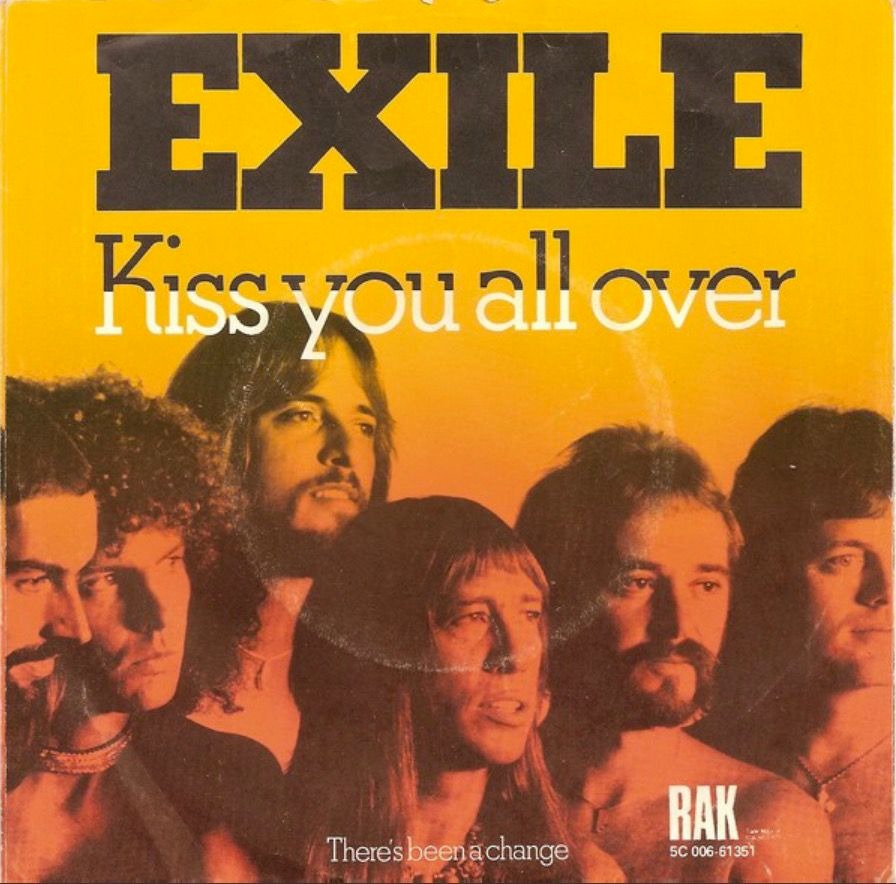
In 1984, Exile took Give Me One More Chance to number one on the country singles chart, placing the song at the center of one of the decade’s most graceful pop-to-country transitions. The group had already been widely known for the sleek late-1970s pop success of Kiss You All Over, but by the time of the Kentucky Hearts era, their identity had moved toward country radio without losing the melodic polish that first made them recognizable. What makes Give Me One More Chance so revealing is not simply that a pop-associated act found country success. It is that the change sounded less like a costume than a continuation.
The song carries the bright efficiency of a well-built country-pop single. It moves with forward motion rather than heavy confession, giving its plea a sense of urgency without dragging it into despair. The title itself could invite overstatement: a lover asking for another opportunity, promising repair, trying to hold open a door that may already be closing. But Exile approaches that familiar emotional scene with balance. The arrangement keeps the edges clean, the rhythm steady, and the melody open enough for the voices to rise together.
That rise is the heart of the record. Exile’s five-part harmony does not behave like decoration around a lead vocal; it becomes the song’s emotional architecture. When the voices gather, the request in the lyric stops sounding like one person speaking into silence. It becomes collective, rounded, almost aerodynamic. The harmonies lift the chorus from apology into insistence, giving the phrase Give Me One More Chance a momentum that feels hopeful rather than defeated. The blend is smooth, but it is not blank. It has the disciplined warmth of singers who understand that harmony can make feeling larger without making it louder.
This was the quality that allowed Exile to cross genres with unusual ease. Pop had taught the group the value of a strong hook, careful vocal placement, and choruses that arrive with immediate clarity. Country, especially in the early 1980s, offered room for narrative directness, emotional plainness, and group singing that could feel both polished and close to the ground. Instead of abandoning one language for another, Exile found the place where the two overlapped. Give Me One More Chance sits right at that meeting point: radio-bright, country-rooted, and built around voices that know exactly when to shine.
The contrast with Kiss You All Over is useful, but only if it is not treated as a dramatic rupture. The 1978 pop hit was sleek and sensual, tied to the textures of its era. Give Me One More Chance belongs to a different environment, with a cleaner country framing and a more open emotional posture. Yet both recordings depend on precision. Both understand the power of repetition, arrangement, and vocal identity. The difference is that the 1984 hit places those tools in service of a plea that sounds direct enough for country radio and polished enough to carry the memory of the group’s earlier pop life.
There is also something quietly instructive in the way the record handles regret. Many songs about second chances lean into collapse, but Exile gives this one motion. The performance suggests that asking for another chance is not only an admission of failure; it can also be an act of energy, timing, and resolve. The harmonies keep pushing upward, as if the group refuses to let the song settle into self-pity. That choice matters. It gives the record its lift. The listener hears not only the wound in the request, but the effort behind it.
Within the larger country landscape of the period, Give Me One More Chance shows how flexible the format had become. Country music was absorbing smoother production, stronger pop structures, and the kind of vocal-group identity that could travel across audiences. But Exile did not succeed merely because the market had room for crossover sounds. The group had a specific strength: a vocal blend that could make polish feel human. Their harmonies gave the song its credibility. They made the transition audible as craft rather than calculation.
That is why the record remains such a clean example of reinvention done with continuity. Exile did not have to erase its pop instincts to become persuasive in country music. On Give Me One More Chance, those instincts were reorganized around a different emotional center. The voices are still bright, the chorus still immediate, the performance still carefully shaped. But the feeling has changed its address. It has moved into a country song where a plea can travel on five voices and arrive with unusual grace.
The deepest lesson of the single may be that artistic change does not always require a loud break with the past. Sometimes it happens when musicians recognize what has been true about them all along and place it in a new frame. In 1984, Exile found that frame in Give Me One More Chance. The song asks for another beginning, and the group’s harmony makes the request sound not like retreat, but renewal.
