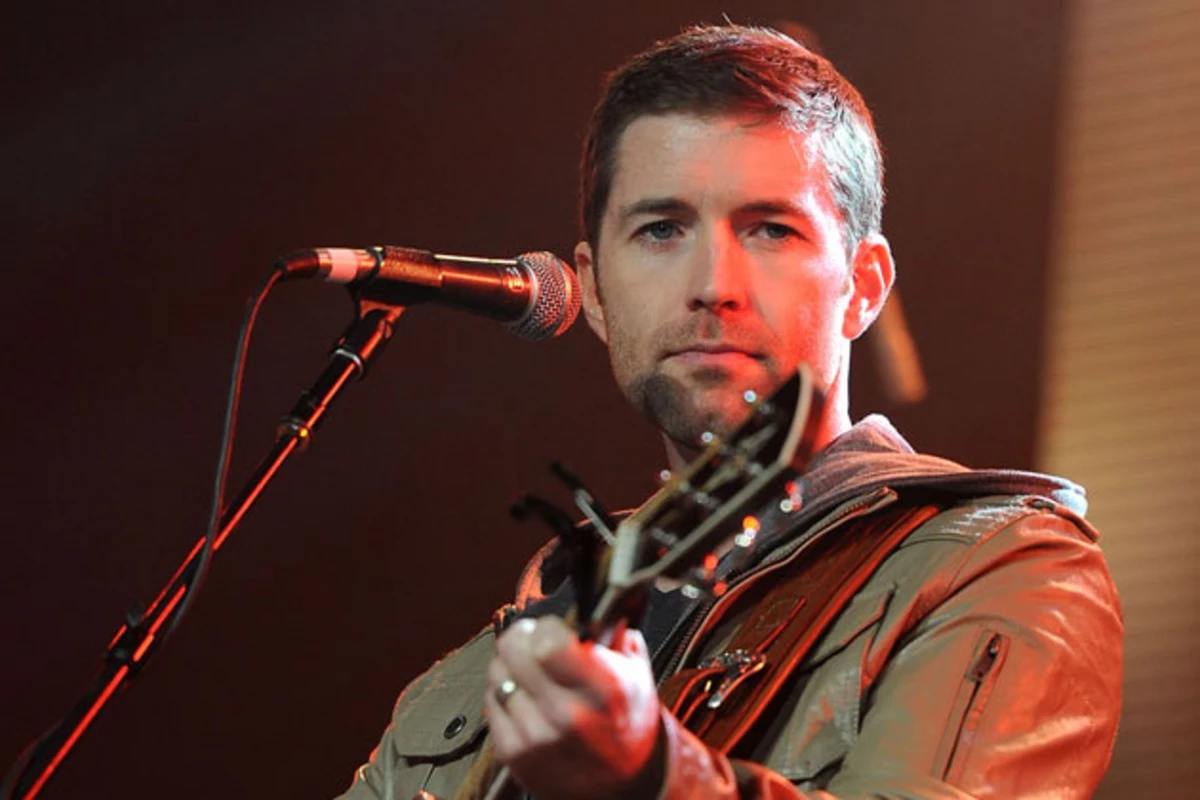
A Don Williams country standard found a different kind of gravity when Josh Turner brought it into the Haywire era.
In 2010, Josh Turner released I Wouldn’t Be a Man as a single from Haywire, his fourth studio album. The song already belonged to country music’s memory before Turner touched it. Written by Mike Reid and Rory Bourke, it had been recorded by Don Williams and released as a country single in the late 1980s, carrying the kind of plainspoken romantic directness that Williams could make feel almost weightless. Turner’s version did not try to erase that history. Its interest lies in how carefully it steps into it.
Don Williams had a rare gift for understatement. His recordings often seemed to move at the pace of ordinary speech, never hurrying the listener toward a feeling. In his hands, I Wouldn’t Be a Man was not a dramatic declaration so much as a measured admission. The lyric is built around desire, but the strength of the song comes from restraint: the narrator is not performing masculinity as swagger, but acknowledging attraction with a kind of calm inevitability. That balance is difficult. If pushed too hard, the song can become blunt. If softened too much, it loses its pulse.
Turner’s 2010 cover finds its place by leaning into the depth of his voice. By the time of Haywire, his bass-baritone had become one of the most recognizable sounds in mainstream country, a voice that could suggest tradition without sounding museum-bound. On I Wouldn’t Be a Man, that low register gives the song a heavier center. Where Williams’ approach often floated with conversational ease, Turner’s interpretation feels grounded, almost architectural. The lines settle lower in the room. The pauses matter. The familiar lyric becomes less airy and more physical, not because the arrangement overwhelms it, but because the vocal carries such natural weight.
The production places Turner in a clean contemporary-country frame. The rhythm is steady, the guitars polished, and the arrangement leaves enough room for the vocal to remain the focal point. It does not disguise the song as something radically new. Instead, it lets the older country writing pass through a 2010 radio landscape without losing its shape. That is one of the quiet strengths of the recording: it understands that a cover can modernize the surface while keeping faith with the emotional architecture underneath.
The title phrase is the key to Turner’s reading. I Wouldn’t Be a Man could easily be handled as a simple hook, but in this version it feels more complicated than a boast. Turner’s delivery suggests that the phrase is both confession and boundary. The song’s narrator is admitting what he feels, yet the performance keeps that admission contained. There is no need to overstate the heat in the lyric; the tension is already there. Turner’s discipline allows the listener to hear the song not only as romantic desire, but as a study in how country music often turns plain language into emotional pressure.
Its placement on Haywire also matters. The album arrived in a period when Turner was balancing radio success with a visible attachment to traditional country values. Songs such as Why Don’t We Just Dance and All Over Me showed his ability to work comfortably within polished modern production, while his earlier identity had already been shaped by the deep moral resonance of Long Black Train and the warm romantic confidence of Your Man. In that setting, covering a Don Williams-associated song was not a detour. It was a way of drawing a line between generations: from the quiet authority of Williams to Turner’s own low-voiced form of country classicism.
There is a particular risk in covering a song connected to Don Williams. His simplicity can be deceptive. Because he rarely appeared to force a song into significance, later singers can be tempted either to imitate his restraint or compensate for it with volume. Turner avoids both traps. He does not sing the song as Williams did, and he does not treat it as an opportunity for vocal display. He lets the richness of his tone do much of the work. The result is not a replacement of the earlier version, but a different angle on the same emotional fact.
That is what gives the 2010 recording its lasting interest. It shows how country songs survive not by remaining untouched, but by being handled with enough respect to reveal new grain in the wood. Turner’s I Wouldn’t Be a Man carries the memory of Don Williams while belonging to the world of Haywire: smoother, more contemporary, but still attentive to the old country virtues of phrasing, clarity, and emotional proportion.
In the end, the cover is a lesson in inheritance. Turner does not need to announce his reverence for the song; he demonstrates it by staying close to its center. He trusts the melody, trusts the lyric, and trusts that a deep voice can be powerful without becoming forceful. In a musical culture often drawn to reinvention, this version finds its meaning in continuity. It reminds us that honoring a song is not the same as preserving it behind glass. Sometimes it means singing it again, in a different decade, with enough restraint for the old feeling to breathe in a new voice.
