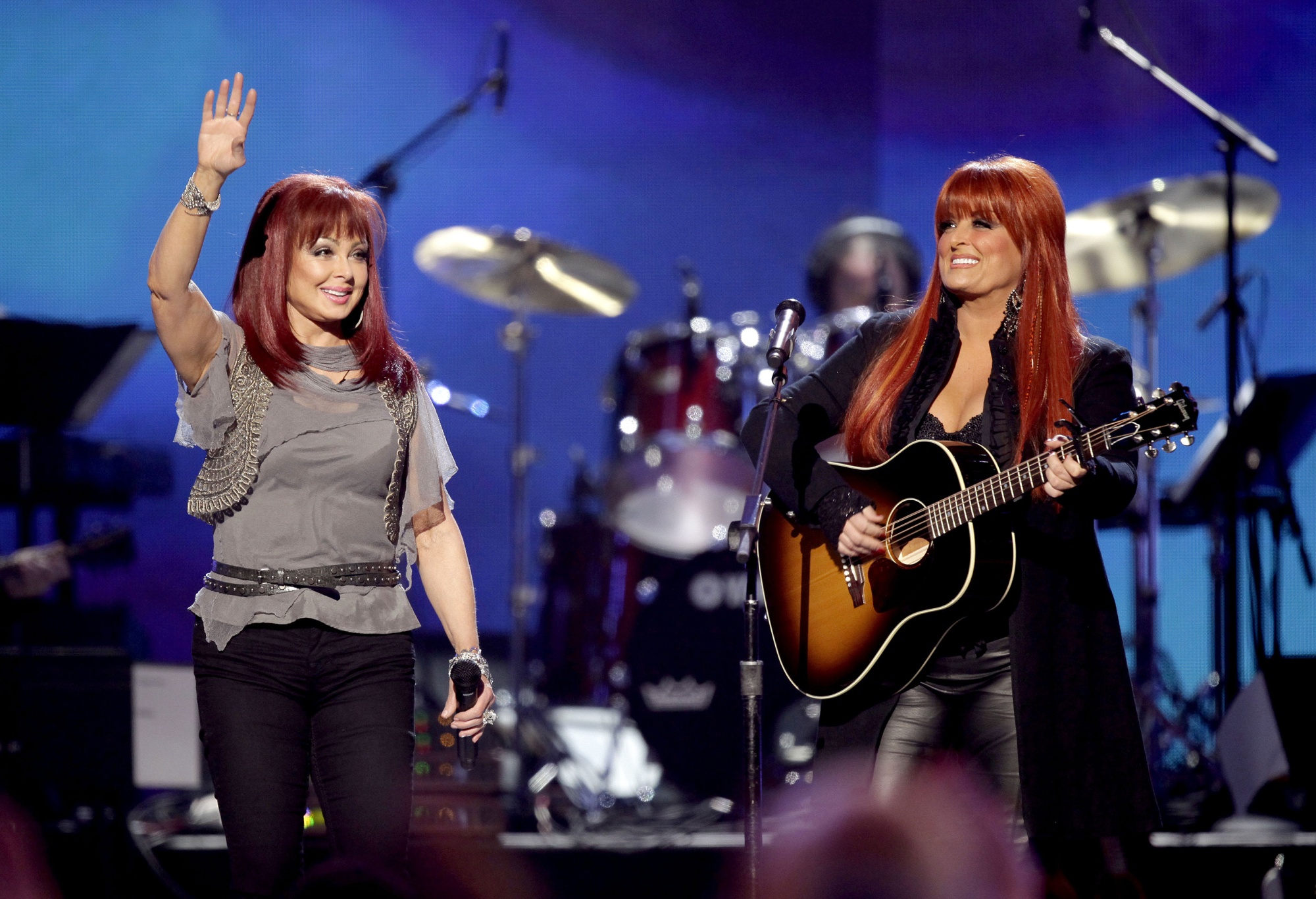
In 1986, The Judds made nostalgia sound less like an escape than a family conversation held in harmony.
The Judds released Grandpa (Tell Me ‘Bout the Good Old Days) as a single in 1986, drawing from their album Rockin’ with the Rhythm and from a country tradition that knew how much feeling could live inside a plainspoken question. Written by Jamie O’Hara, the song became a No. 1 country hit and one of the defining recordings of Naomi Judd and Wynonna Judd as a mother-daughter duo. Its success was not built on spectacle. It came from a quieter force: two related voices making memory feel close enough to touch.
The title itself carries the emotional design of the song. Grandpa (Tell Me ‘Bout the Good Old Days) is framed as a request, not a declaration. The narrator turns toward an elder and asks whether earlier times held steadier love, stronger families, clearer promises, and a moral order that now feels harder to locate. The song does not need to prove that the past was perfect. Its power comes from the vulnerability of asking. It is less a history lesson than a longing for guidance, spoken across generations.
That generational structure mattered especially in the hands of The Judds. Wynonna’s lead vocal brings the ache forward with a rich, grounded tone, never pushing the lyric into melodrama. Her phrasing lets the questions breathe, as though each one has been carried for a while before being voiced. Naomi’s harmony enters not as decoration but as kinship. The blend is close, warm, and disciplined, creating the sense that the song is being sung from inside a family rather than about one.
Mother-daughter harmony has a different emotional gravity from many other vocal pairings. With Naomi Judd and Wynonna Judd, the relationship was part of the public identity of the act, but on this recording it also becomes part of the musical meaning. The harmony suggests continuity: one voice leading, another supporting; one line carrying the question, another giving it roots. The result is not simply a duet arrangement. It is a sound that mirrors the song’s own desire to keep generations in conversation.
The arrangement understands restraint. Rather than crowding the lyric, it leaves room around the voices, allowing the melody to move with the clarity of a remembered hymn and the polish of mid-1980s Nashville country. The production is clean, but it does not feel cold. Soft instrumental colors support the vocal center, and the tempo gives the words time to land. Nothing in the recording rushes the listener toward resolution. The song moves like someone looking through a family album and pausing longer than expected on a single face.
By 1986, The Judds had already become one of country music’s most recognizable acts, bringing acoustic warmth, close harmony, and a distinctly familial image into a decade often associated with glossy production. Grandpa (Tell Me ‘Bout the Good Old Days) arrived at a point when their sound was both commercially strong and emotionally specific. It fit the country radio landscape, but it also stood apart from louder declarations of romance or pride. It offered an intimate kind of yearning, one rooted in household language and inherited questions.
The song’s chart success confirms how widely that yearning traveled. It reached the top of the country chart, and the recording became closely associated with major recognition for both the composition and the performance. Yet the honors are not the most revealing part of its legacy. What remains most striking is how modest the song’s dramatic tools are. There is no grand narrative twist, no elaborate character study, no attempt to solve the cultural anxieties it raises. Instead, it trusts a childlike question asked with adult awareness.
That trust is what keeps the record from becoming a simple piece of nostalgia. The phrase good old days can easily flatten the past into a golden blur, but The Judds give it human weight. Their singing suggests that nostalgia is not only a wish to go backward. Sometimes it is a way of asking what should be carried forward: fidelity, tenderness, patience, a sense of belonging. The song’s ache comes from knowing that every generation inherits both memory and uncertainty.
In the end, Grandpa (Tell Me ‘Bout the Good Old Days) matters because it turns family longing into a shared musical space. The listener hears a grandchild’s question, a songwriter’s careful craft, and two voices whose relationship gives the recording its quiet authority. Naomi and Wynonna do not make the past sound flawless. They make the act of asking about it feel necessary. In their harmony, memory is not a museum piece. It is a living thread, held between voices, still strong enough to guide the hand.
