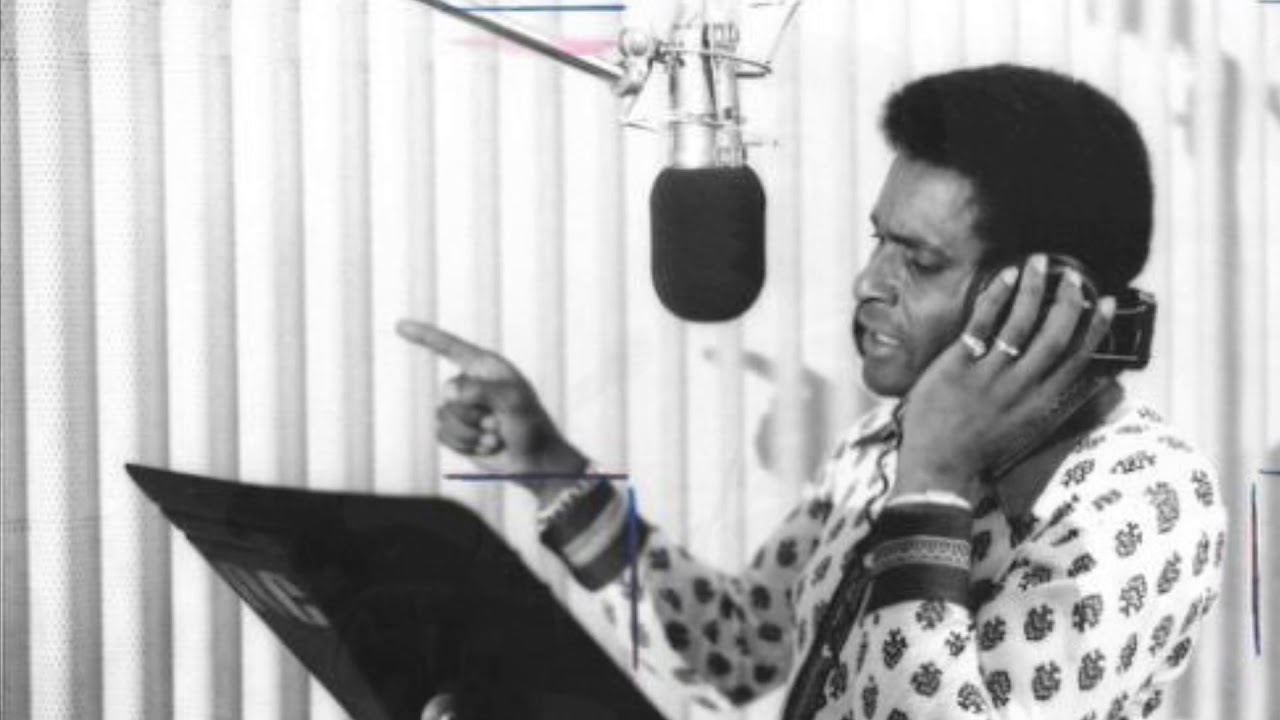
A cheerful greeting became Charley Pride’s clearest statement of warmth, ease, and country-pop grace.
Released in 1971, Charley Pride’s “Kiss an Angel Good Mornin’” quickly became the recording most closely associated with him: a country No. 1, a major pop crossover, and a bright signature song built from one of the simplest ideas in popular music. Written by Ben Peters and released on RCA Victor, it appeared during Pride’s remarkable early-1970s run, when his smooth baritone and controlled delivery were carrying country music into homes far beyond the genre’s usual borders.
The song does not announce itself with grandeur. Its power lies in how little it needs to prove. A man is asked why he seems so happy, and his answer arrives as advice: love well, be kind, and begin the day with tenderness. In another singer’s hands, that premise might have become novelty or pure sentiment. Pride gives it balance. He sings with a smile in the tone, but not with exaggeration. The vocal is genial, steady, and conversational, as though the melody has simply found the natural shape of good manners.
That restraint matters. “Kiss an Angel Good Mornin’” is cheerful, but its cheerfulness is disciplined. The arrangement keeps the song moving with an easy country rhythm, bright backing voices, and a polished Nashville sound that made room for pop listeners without sanding away the song’s rural roots. The hook is immediate, yet Pride does not lean on it too hard. He lets the phrase do its work, returning to it with enough warmth to make it feel familiar after a single listen.
By 1971, Pride was already far more than a curiosity in country music. He had built a serious body of hits, and his audience understood the authority of his voice. Still, the wider cultural setting gives this recording a special charge. As a Black country star succeeding at the highest commercial level in a predominantly white industry, Pride’s presence carried historical significance even when the song itself was not written as a social statement. “Kiss an Angel Good Mornin’” did not need to argue for belonging. It sounded completely at home.
That may be one reason the record crossed over so effectively. It reached listeners as a song of domestic contentment rather than spectacle. Its optimism was not abstract; it was practical, almost ritual-like. The title image is modest and memorable because it turns love into a daily act. The song’s narrator does not describe romance as a thunderstorm or a wound. He describes it as attention, habit, and gratitude. Pride’s performance honors that modesty. He makes happiness sound less like luck than like something tended.
The musical language is also central to its appeal. Pride’s baritone had a rare combination of velvet surface and firm center. On this recording, he phrases cleanly, avoiding both bluesy overstatement and stiff precision. His timing gives the lyric room to breathe. When the chorus opens, the melody rises in a way that feels generous rather than forceful. The backing arrangement supports that generosity, adding lift without clutter. The result is a country record with pop accessibility, not because it abandons country feeling, but because it communicates that feeling with unusual clarity.
As a signature song, “Kiss an Angel Good Mornin’” has a revealing quality. It does not represent every side of Pride’s artistry; his catalog includes heartbreak, longing, and finely shaded balladry. But it captures the part of him that many listeners first recognized: calm assurance, melodic openness, and an ability to make sincerity feel unforced. Signature songs often become shorthand, and shorthand can flatten an artist. In this case, the song endures because the shorthand is not false. It catches something real in Pride’s public musical identity: the dignity of ease.
The record also belongs to a particular moment in Nashville history, when country music was expanding its audience through smoother production, radio-friendly hooks, and performers who could move between tradition and mainstream polish. Pride fit that moment without seeming manufactured by it. His voice remained the center. Even as “Kiss an Angel Good Mornin’” traveled beyond country radio, it carried the intimacy of a front-porch saying, a piece of advice passed along because it had worked for someone.
What keeps the song from becoming merely quaint is the seriousness beneath its lightness. To sing about joy convincingly can be as difficult as singing about sorrow. Sadness often arrives with its own drama; happiness requires touch, proportion, and trust. Pride understood the scale of the song. He did not inflate it. He let it stay human-sized, and in doing so made it large enough for millions of listeners to enter.
More than five decades later, the charm of Charley Pride’s “Kiss an Angel Good Mornin’” is still tied to that artistic choice. It is not a song that asks to be studied before it can be felt. It greets the listener plainly, almost casually, and then reveals how much grace can live inside a simple refrain. Its brightness is not shallow; it is carefully held. In Pride’s voice, cheerfulness becomes a form of poise, and a morning kiss becomes a small philosophy of endurance.
