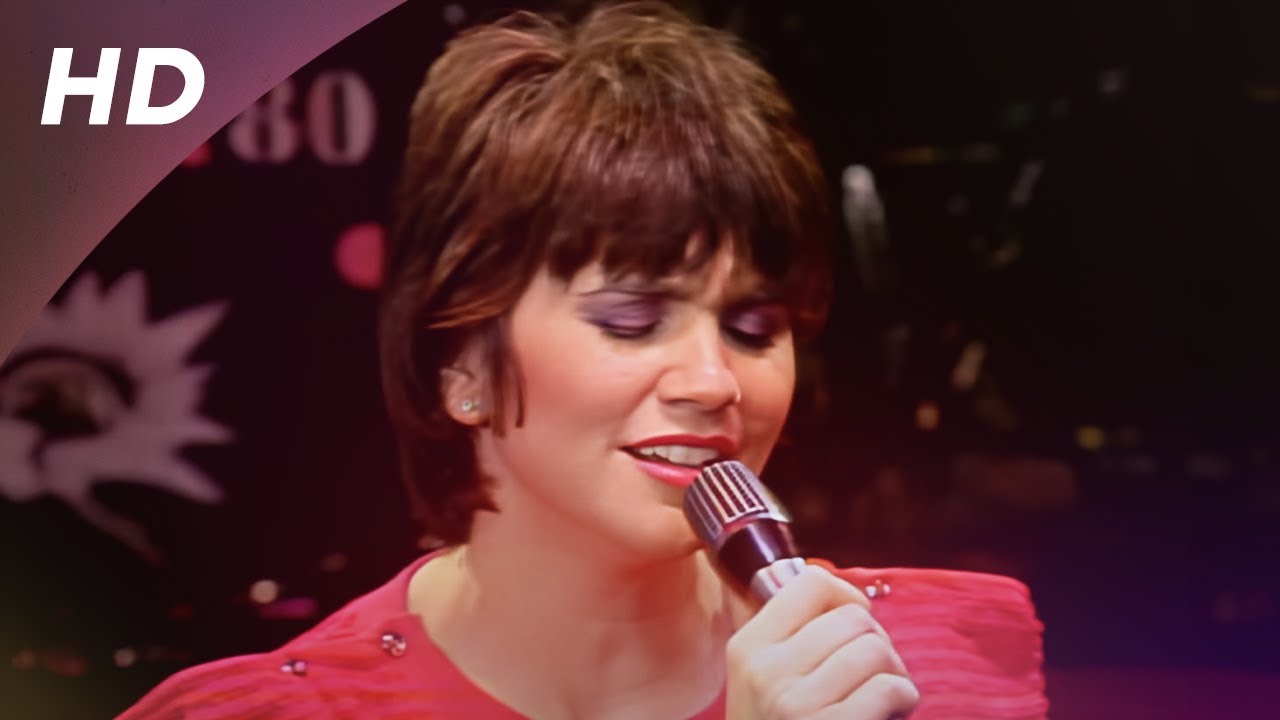
On “All My Life,” two unmistakable voices found romance not in grandeur, but in the grace of listening.
Linda Ronstadt and Aaron Neville recorded “All My Life” for Ronstadt’s 1989 album Cry Like a Rainstorm, Howl Like the Wind, a lush and carefully shaped record that placed her voice inside a setting of pop, soul, orchestral color, and adult contemporary elegance. Written by Karla Bonoff, the song became one of the album’s defining duets and won the Grammy Award for Best Pop Performance by a Duo or Group with Vocal. Its honor mattered not only because of the song’s popularity, but because the performance offered something rarer than vocal display: a portrait of two singers making room for each other.
By 1989, Ronstadt had already built a career on movement. She had traveled through country-rock, folk, pop standards, new wave touches, operetta, and Mexican traditional music with a seriousness that made each turn feel less like reinvention for its own sake than a search for the right musical language. Cry Like a Rainstorm, Howl Like the Wind arrived after that long widening of her artistic frame. It did not ask her to abandon power; it asked her to place power inside restraint. That distinction is central to “All My Life.”
The duet begins with a feeling of arrival rather than pursuit. Bonoff’s song is built on the language of lifelong searching, but Ronstadt and Neville do not sing it as if they are trying to convince anyone. Their interpretation has the calm of recognition. Ronstadt’s voice, famously capable of ringing force, enters with clarity and composure. She shapes the melody with a kind of luminous precision, allowing the lyric’s promise to unfold without pressing too hard against it. The emotional strength comes from her control: she lets the line breathe, and the space around it becomes part of the meaning.
Neville’s entrance changes the air without breaking the spell. His voice carries one of the most distinctive textures in American popular music: light but intense, delicate yet unmistakably rooted in rhythm and soul. Where Ronstadt’s phrasing often gives the song a clean melodic architecture, Neville’s adds a tender tremor, a feeling of vulnerability held in suspension. He does not answer her as a contrast for contrast’s sake. He seems to complete the emotional shape she has begun, bringing a different kind of softness to the same vow.
That is why “All My Life” works so well as a duet. Many romantic duets depend on drama, on the sense of two voices moving toward a climactic declaration. Ronstadt and Neville choose something more intimate. They trade lines with care, then blend in a way that suggests trust rather than competition. Neither singer disappears, yet neither tries to dominate the other. Their harmony is not merely a musical device; it becomes the song’s emotional argument. Love, in this performance, sounds like attention.
The arrangement supports that reading. Produced with polished late-1980s detail, the track carries the smoothness of its era, but it is not overwhelmed by surface. The instrumentation creates a wide, graceful space around the voices, giving the melody a sense of ceremony without making it heavy. Strings and keyboards frame the performance, while the rhythm remains steady enough to keep the song grounded. The production knows what the listener should follow: not spectacle, but the movement of breath between two singers who understand how to leave room.
Within the larger album, the duet gains additional resonance. Cry Like a Rainstorm, Howl Like the Wind included more than one Ronstadt-Neville pairing, most famously “Don’t Know Much,” another major success from the same record. Yet “All My Life” has its own particular emotional temperature. If “Don’t Know Much” carries the ache of uncertainty resolved through devotion, “All My Life” feels more like a quiet confirmation. It does not lean on doubt as strongly. It rests in the wonder of having finally named what was missing.
That sense of mature recognition suited Ronstadt’s late-1980s artistic moment. She was no longer being defined by a single genre or by the expectations that had followed her from the 1970s. Her voice had become a kind of meeting place for American song traditions, and this album used that breadth with unusual confidence. Pairing her with Neville was not simply a commercial idea; musically, it allowed two very different kinds of purity to meet. Ronstadt’s purity was often associated with pitch, line, and force. Neville’s was bound to tone, lift, and spiritual delicacy. Together, they made the song feel both grounded and weightless.
The Grammy recognition for “All My Life” confirmed how strongly that balance registered. Awards can never fully explain why a performance lasts, but in this case the honor points toward a real achievement. The duet captured a form of vocal partnership that depended on discipline. It showed that tenderness in pop music does not require fragility alone; it can also come from craft, from knowing when to rise and when to recede, from trusting the other voice to carry part of the feeling.
Listening to Linda Ronstadt and Aaron Neville on “All My Life” now, the most moving quality may be its patience. The song does not hurry its promise. It lets affection gather gradually, line by line, harmony by harmony. In an era often remembered for large production gestures, this recording endures because its deepest gesture is modest: two great singers standing inside the same song, proving that love can sound most convincing when it is sung with care, humility, and enough silence for another voice to be heard.
