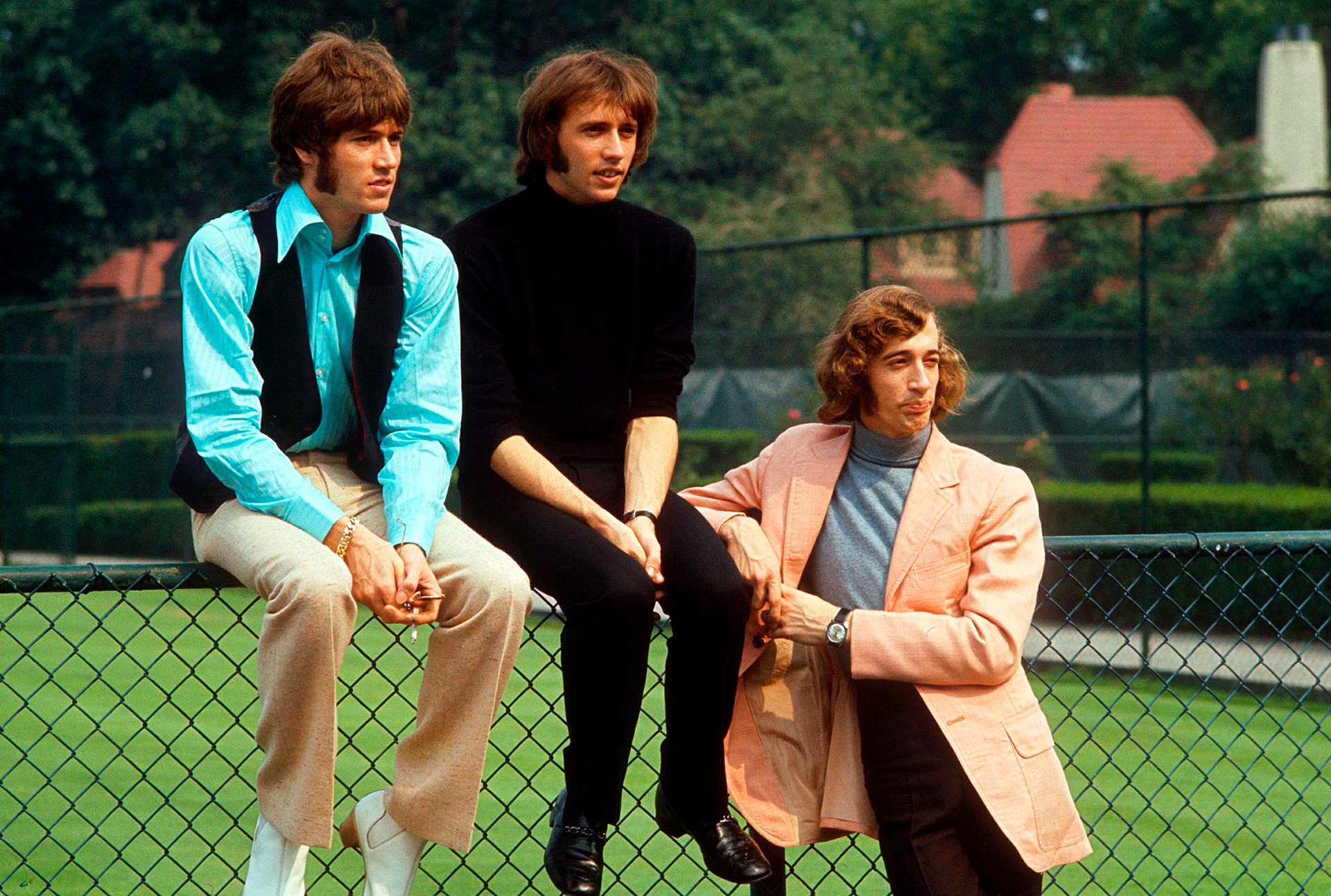
On Cryin’ Every Day, the Bee Gees let brotherhood speak softly, with Robin and Barry Gibb sharing the ache of a ballad that refuses to hide behind grandeur.
Cryin’ Every Day appears on the Bee Gees album Living Eyes, released in 1981, at a complicated moment in the group’s story. The late 1970s had made Barry, Robin, and Maurice Gibb almost impossibly famous, tying their name to the glittering afterimage of Saturday Night Fever, the polished sweep of Spirits Having Flown, and a run of songs that seemed to pour out of radios with effortless confidence. But Living Eyes arrived after that floodlight had begun to dim. The world was changing its listening habits, the word disco had become a burden in some quarters, and the brothers were facing the difficult task of being heard again as songwriters, singers, and interpreters rather than as symbols of a cultural peak.
That setting matters deeply when listening to Cryin’ Every Day. This is not one of the album’s most widely remembered titles, and it was not built around the kind of instantly public gesture that defines a major single. Its power is more private. The song is a stripped-back pop ballad, and its emotional center rests on a striking dual lead vocal from Robin Gibb and Barry Gibb. For a group so often celebrated for blended harmony, that choice is important. Here the brothers do not simply merge into one radiant Bee Gees sound; they stand near one another as separate emotional presences, each carrying a different shade of the same hurt.
Robin’s voice always had a way of making vulnerability feel slightly off-balance, as though the feeling had arrived before the singer was fully ready to contain it. His tone could bend around a phrase with a tremor that made even plain words feel exposed. Barry, by contrast, often brought a smoother line, a sense of melodic lift, and a carefully controlled ache that could open into brightness without losing sadness. On Cryin’ Every Day, the contrast between them becomes the song’s quiet drama. The title phrase is simple, almost conversational, but when passed through two brothers’ voices it becomes less like a complaint and more like a shared admission.
The beauty of the recording lies in how little it needs to force. Compared with the grander architecture of the Bee Gees’ late-seventies work, this ballad feels deliberately restrained. The arrangement leaves room around the voices. The rhythm does not rush to rescue the song from its own sadness. The melody carries the weight, and the vocals are allowed to reveal the small differences that made the Gibb brothers so compelling together: Robin’s searching intensity, Barry’s melodic poise, and the unmistakable family connection that sits underneath both.
There is a particular kind of tension in a brother duet. It is not the same as a romantic duet, and it is not quite the same as two unrelated singers trading lines. With Robin and Barry, the listener hears history even when the lyric itself stays broad. These voices came from the same home, the same childhood musical imagination, the same long journey from early pop ambition to adult superstardom. By 1981, they had already lived several careers in public. They had been teenage hopefuls, harmony craftsmen, balladeers, disco-era giants, and producers whose writing would continue to shape records for other artists. In that larger arc, Cryin’ Every Day sounds less like a grand statement than a moment when the brothers allowed the surface to thin.
The album Living Eyes itself has often lived in the shadow of what came before it. That is understandable, but it can also make listeners miss the emotional value of its quieter corners. The record is not simply a post-disco artifact; it is a portrait of artists trying to recalibrate their identity while still relying on the oldest instrument they had: family harmony. In Cryin’ Every Day, the Bee Gees are not chasing the dance floor, not trying to overwhelm the room, not stacking spectacle upon spectacle. They are returning to the kind of pop balladry where a melodic line, a close vocal, and a plain phrase can open up a surprisingly deep space.
The title itself has a directness that suits the performance. Cryin’ Every Day does not dress sorrow in elaborate language. It sounds like something said after the defenses are gone. The dropped final consonant in Cryin’ gives the phrase a lived-in informality, as if the emotion belongs to ordinary speech rather than polished theater. That may be why the song feels especially revealing inside the Bee Gees’ catalog. Their greatest hits often arrive with immediate signatures: a groove, a falsetto hook, a dramatic chorus, a harmony so precise it seems carved from light. This track works differently. It asks the listener to lean in and notice the human edges.
Hearing Robin and Barry together in this setting also changes the emotional temperature of the song. Neither voice cancels the other. Instead, the dual lead suggests that grief can have more than one face inside the same family. One brother may sound more wounded, the other more controlled, but both are moving through the same room. That is the deeper resonance of the recording: not just sadness, but companionship in sadness. The Bee Gees were always more than a vocal blend. They were a set of relationships made audible, with all the closeness, pressure, instinct, and unspoken understanding that brotherhood can carry.
For listeners who come to Living Eyes through the familiar glow of the Bee Gees’ biggest songs, Cryin’ Every Day can feel like a side door into the group. It does not demand attention with scale. It earns it through proportion. The performance reminds us that the Bee Gees’ emotional force was never only in their high notes or their famous harmonies, but in the way those voices could hold different kinds of pain without breaking the song apart. In that sense, this album track becomes a small but telling chapter: two brothers, one melody, and a sorrow made gentler because it is not sung alone.
