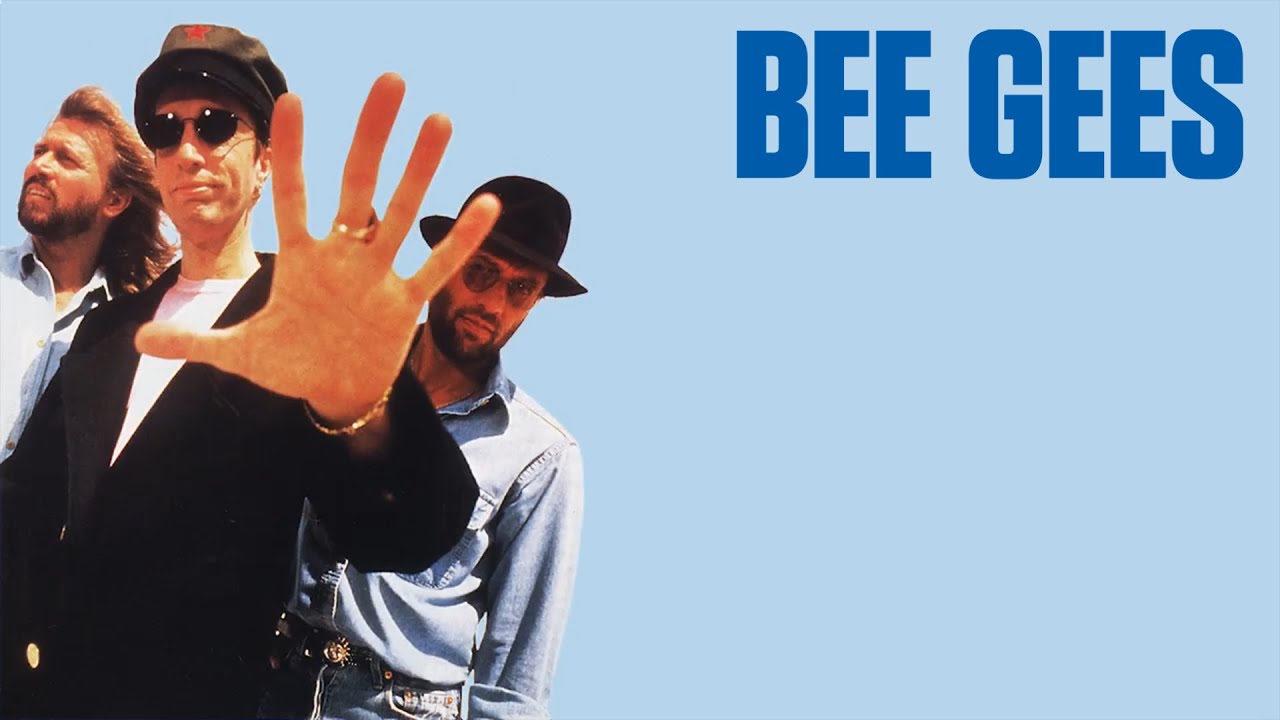
Near the end of the Bee Gees’ recording journey, Sacred Trust turned devotion into something quieter than triumph: three brothers still finding one another in harmony.
Sacred Trust appears on This Is Where I Came In, the 2001 album that became the final studio album of new material released by Bee Gees during the lifetime of the trio: Barry Gibb, Robin Gibb, and Maurice Gibb. Issued by Polydor/Universal in April 2001, the record arrived at an unusual point in their story. The Bee Gees were no longer trying to introduce themselves, no longer chasing the sort of mass pop moment that had once made them unavoidable. They were veterans with a history almost too large to fit into one sound: teenage beat-group yearning, orchestral pop, blue-eyed soul, country-leaning balladry, disco-era brilliance, adult contemporary elegance, and the rare family harmony that could make even a modest phrase feel lit from within.
That is why Sacred Trust matters in a different way from the group’s most famous recordings. It was not the album’s most aggressive statement, nor was it designed to rewrite public memory. Its power is more private. On an album that let the brothers move through different textures and individual colors, Sacred Trust stands as an elegant late-career ballad built around something the Bee Gees never really lost: the ability to let three voices lean into one another until the song seemed to breathe as a single body.
Written by the Gibb brothers, the song carries the kind of devotional language that had long suited them. Bee Gees ballads often understood love not simply as romance, but as a vow under pressure. In Sacred Trust, the title itself suggests something more solemn than a passing feeling. It points toward loyalty, promise, and the fragile honor of being believed by another person. The arrangement keeps that emotion polished rather than raw. It belongs to the adult-pop world of the early 2000s, but beneath the production is a much older Bee Gees instinct: the rising melody, the controlled ache, the chorus shaped to make harmony feel like revelation rather than decoration.
By 2001, the voices of Barry Gibb, Robin Gibb, and Maurice Gibb carried time inside them. That did not weaken the blend; it changed its meaning. Barry’s gleam, Robin’s emotional edge, and Maurice’s grounding presence had been heard across decades, but on This Is Where I Came In those familiar elements arrived with a new sense of perspective. The listener was not hearing young men rushing toward fame. The listener was hearing brothers who had survived fashions, backlash, reinvention, grief, and the strange burden of being remembered most loudly for only part of what they had done.
In that context, Sacred Trust becomes more than a graceful album track. It feels like a late-career gem because it does not strain to prove the Bee Gees’ importance. Instead, it quietly demonstrates it. The song’s emotional center lies in restraint: the careful phrasing, the lift of the harmonies, the way the melody seems to ask for faith without demanding spectacle. For a group whose name could instantly summon glittering dance floors in the public imagination, this was a reminder that their deepest language had always been vocal architecture. They knew how to build a room out of sound, and they knew how to make that room feel inhabited.
This Is Where I Came In was not presented as a farewell in the dramatic sense. History gave it that weight after Maurice Gibb died in 2003, closing the era of the Bee Gees as an active three-brother studio unit. Heard with that knowledge, Sacred Trust gathers a softer gravity. Nothing in it needs to announce an ending. The emotion comes from the opposite feeling: the sound of a bond still functioning, still elegant, still capable of lifting a simple pledge into something communal.
The great late recordings often do not compete with the peaks; they illuminate the road that followed them. Sacred Trust does exactly that. It asks to be heard not as a footnote, but as a final-album moment where craft, family, and memory meet without fanfare. The Bee Gees had spent a lifetime turning harmony into identity. Here, near the close of their studio journey, that identity remained intact: three voices, one promise, and a ballad that grows more affecting when you realize how close to the end of the chapter it truly was.
