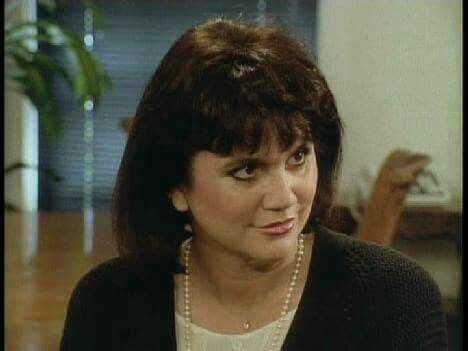
Before the grand ballads and the arena applause, Linda Ronstadt let a Randy Newman song show how country-rock could make hurt feel young, restless, and close.
In 1969, Linda Ronstadt recorded Bet No One Ever Hurt This Bad, a Randy Newman composition, for her solo debut album Hand Sown… Home Grown. Released on Capitol after her time with the Stone Poneys, whose Different Drum had already put her voice into the national conversation, the album caught Ronstadt at a fascinating threshold. She was no longer simply the young singer associated with a folk-rock hit, but she had not yet become the defining 1970s interpreter who could move from country to rock to pop standards with rare authority. That in-between quality is exactly what gives this track its charge.
Hand Sown… Home Grown has long held a special place in the story of early country-rock because it arrived at a moment when the borders between folk, country, and rock were being redrawn with unusual freedom. Los Angeles musicians were looking toward Nashville without surrendering to tradition, and country phrasing was finding new life inside electric guitars, road-worn rhythms, and singer-songwriter honesty. Ronstadt stood in the middle of that shift with a voice that could sound both open and unsentimental, capable of carrying sorrow without turning it into theater.
That makes Bet No One Ever Hurt This Bad a revealing choice. Newman was still near the beginning of his own recording career, already known among attentive listeners and fellow musicians as a writer whose songs could be sharp, strange, tender, ironic, and unexpectedly vulnerable. His title here has a plainspoken ache to it. It almost sounds like an exaggeration muttered in the first heat of pain, the kind of line someone says when heartbreak has made the world feel embarrassingly small. In Ronstadt’s hands, however, it becomes less like a complaint and more like motion. The pain does not sit still. It travels.
Her version is important because it does not try to make the song grand. This is not the later Ronstadt of sweeping radio ballads, where every phrase could open like a curtain. Instead, the performance belongs to a younger, leaner country-rock world. The arrangement leaves room for twang, pulse, and directness. It feels closer to a pickup truck radio than a concert hall, closer to the edge of town than the polished center of popular music. The track breathes with the kind of looseness that marked many late-1960s recordings, when artists were still testing how much emotional truth could fit inside a simple groove.
What stands out now is how clearly Ronstadt’s future instincts are already present. She had an unusual gift for choosing songs that did not need to have been written for her in order to feel claimed by her. Later, that gift would become one of the central facts of her career: she could take material from different writers, traditions, and eras and reveal the human center inside it. On Bet No One Ever Hurt This Bad, that ability is still raw, still forming, but unmistakable. She does not oversell the wound. She lets the song keep its shape, then presses her own clarity through it.
There is also a quiet tension between Newman’s songwriting personality and Ronstadt’s delivery. Newman often wrote from angles, with characters and emotional masks complicating the surface. Ronstadt, by contrast, tended to sing toward the emotional core of a song. That contrast gives this 1969 recording a special flavor. It does not erase Newman’s wryness, but it pulls the hurt forward. What might have felt eccentric or sideways becomes direct, almost young in its impatience. The phrase Bet No One Ever Hurt This Bad lands not as a polished statement of heartbreak, but as a living feeling caught before it has learned to behave.
In the larger arc of Ronstadt’s career, the track is not one of the famous monuments. It is not Blue Bayou, not You’re No Good, not Long Long Time, and not part of the massive commercial peak that would follow in the 1970s. Its value lies elsewhere. It belongs to the apprenticeship of a great interpreter, the period when taste, nerve, and identity were still being assembled in public. Listening to it now, the pleasure is not only in hearing how young she sounds, but in hearing how certain she already is about the kind of singer she wants to be.
The song also reminds us that early country-rock was not only about style. It was about permission. It allowed singers to bring rural textures into rock rooms, to make folk directness swing a little harder, to treat country sorrow without strict Nashville formality. Ronstadt’s version of Newman’s song carries that permission lightly. It does not announce a movement. It simply lives inside one.
That may be why Bet No One Ever Hurt This Bad still matters within Hand Sown… Home Grown. It captures Linda Ronstadt before the outlines of her fame were fixed, before expectation had hardened around her, before her voice became a familiar national possession. Here, she sounds like someone stepping into open country with a song that knows pain can be messy, youthful, almost defiant. The recording does not ask to be treated as a prophecy, but it offers one anyway: the singer who would later make other people’s songs feel newly personal was already listening for the place where borrowed words become lived truth.
