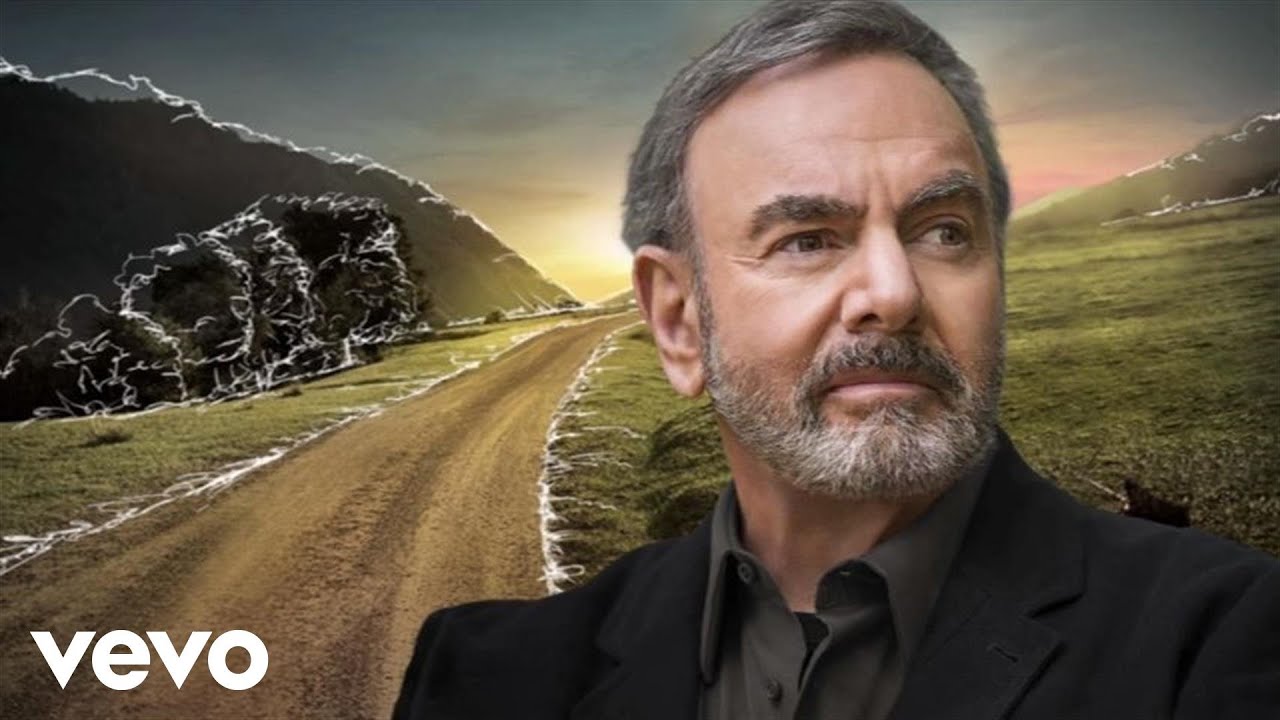
On Lovescape, Neil Diamond tucked one of his most curious lonely-room portraits away from the spotlight, where its mystery still feels private and close.
“Lonely Lady #17” appears on Neil Diamond’s 1991 album Lovescape, a Columbia Records release from a period when Diamond was no longer trying to prove himself to pop radio in the same way he had in earlier decades. By then, he had already traveled from Brill Building songwriter to arena-filling performer, from “Solitary Man” and “Sweet Caroline” to the grand emotional scale of Jonathan Livingston Seagull, Beautiful Noise, and The Jazz Singer. Lovescape, produced with the polished adult-pop sensibility associated with the early 1990s, arrived as the work of an artist who understood drama, melody, and romantic restlessness from the inside. Yet one of its most intriguing corners is not one of the obvious calling cards. It is this deep cut: “Lonely Lady #17.”
Part of the fascination begins with the title. Diamond had long been drawn to characters who seem half-real and half-symbolic: the wanderer, the believer, the dreamer, the performer, the lover standing just outside the door of certainty. But “Lonely Lady #17” feels different because of its number. The phrase does not simply describe a woman; it files her away, as if she has become one more anonymous figure in a city full of private ache. The number gives the song a faintly cinematic strangeness. It suggests a hotel room, an apartment door, a list, a memory that has been counted and recounted. In a catalog full of openhearted declarations, this title sounds more like something glimpsed in passing, something Diamond is trying to understand before it disappears.
As a Lovescape album track, the song benefits from being outside the pressure of hit-making. Deep cuts often reveal a different side of a major artist because they are not required to summarize a career in three minutes. They can sit in a shadowed corner. They can follow a mood instead of demanding instant recognition. “Lonely Lady #17” belongs to that kind of listening. It is the sort of track that may not be the first song mentioned when people talk about Diamond’s most famous recordings, yet it helps explain the emotional architecture behind the larger hits: the way he was always interested in people reaching for connection while carrying a private distance they could not quite name.
The early 1990s were a complicated time for artists of Diamond’s generation. The pop landscape was shifting quickly, with adult contemporary, glossy studio craft, rock reinvention, and soon the sharper edges of alternative music all occupying different parts of the same cultural map. Diamond did not need to chase every new trend. His strength remained what it had always been: the ability to make a song feel like a confession delivered in public. On Lovescape, that gift is filtered through a more refined, late-night production atmosphere. The surfaces are smoother than his rawer 1960s work, but the emotional questions remain familiar. Who is alone? Who is waiting? Who is brave enough to speak first? Who gets remembered, and who becomes only a number?
That is where “Lonely Lady #17” finds its quiet power. It does not need to shout. It works because Diamond’s voice has always carried a certain tension between theatrical reach and intimate grain. Even in his most polished settings, he can make a phrase sound as though it is being pulled from somewhere older than the arrangement around it. In a song like this, the listener is invited not just to admire the melody, but to imagine the person inside the title. The “lady” is not reduced to glamour or heartbreak; she becomes a sign of how loneliness can be both visible and hidden. Everyone can see the outline, but not everyone knows the story.
There is also something revealing about hearing “Lonely Lady #17” within the broader theme of Lovescape. The album title itself suggests a landscape of love rather than a simple love story — a terrain made of memory, longing, desire, regret, faith, and unanswered rooms. Diamond’s best romantic writing often understands that love is not only arrival. Sometimes it is pursuit. Sometimes it is absence. Sometimes it is the imagination circling someone who remains just out of reach. This deep cut fits that map beautifully because it does not resolve everything. It leaves enough space for the listener to wonder.
For longtime fans, the song can feel like a small hidden chamber in Diamond’s vast body of work. For listeners arriving later, it offers a reminder that a major artist’s catalog is not built only from the songs that filled arenas or made radio history. It is also built from quieter pieces that hold a mood with unusual persistence. “Lonely Lady #17” may not carry the instant public familiarity of Diamond’s most beloved standards, but it has the appeal of a page found folded inside a larger book — personal, slightly mysterious, and worth reading slowly.
More than three decades after Lovescape first appeared in 1991, this album track still invites a different kind of attention. It asks not for nostalgia alone, but for patience. It asks the listener to hear the polish of its era and then listen past it, toward the human figure standing in the title. That is the quiet reward of a true deep cut: it does not announce itself as the center of the story, but once noticed, it changes the shape of the room around it.
