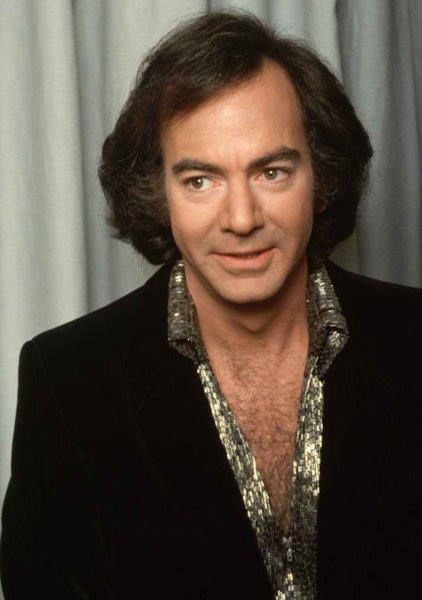
Before the grand choruses and spotlight rituals, Neil Diamond sounded lean, urgent, and still close enough to the street to make a small song feel like a declaration.
Someday Baby belongs to the young Neil Diamond of 1966, the Bang Records period that framed his first public identity as a singer-songwriter with a sharp pop instinct and a restless voice. As a track connected with The Feel of Neil Diamond, his early Bang-era album world, it sits before the enormous sing-alongs, before the sequined stage image, before the amphitheaters and the ritual of thousands of people answering him back. That is what makes it so revealing. It catches Diamond while the edges were still visible.
The 1966 Bang period matters because it introduced listeners to Diamond not simply as another young man with a guitar, but as a writer who understood compression. His early records did not sprawl. They moved quickly, made their point, and left behind a phrase that could stay lodged in the mind. Around the same time, songs such as Solitary Man and Cherry, Cherry began shaping the first recognizable outline of his career: part Brill Building discipline, part rock-and-roll pulse, part private unease disguised as radio confidence. Someday Baby lives in that same air. It is not the oversized Neil Diamond that later generations would picture immediately. It is the hungry one.
That early distinction is important. The later Diamond could be expansive, theatrical, almost ceremonial in the way he occupied a melody. In the Bang recordings, the drama is smaller but often more immediate. The arrangements tend to value momentum, hooks, and direct impact. There is little room for excess ornament. A song has to stand on its bones. In that setting, Someday Baby feels like a piece of an artist still proving how much personality he could fit inside a compact frame. The title itself has a casual promise in it, half hope and half dare, the kind of phrase that can sound light until a singer leans into it with belief.
Diamond’s voice in this early era had not yet become the monumental instrument of the 1970s concert stage. That is part of its charm. It carries a sharper grain, a forward lean, a sense of someone pushing through the song rather than standing above it. You can hear the songwriter measuring the singer, and the singer answering back. He was not merely delivering material; he was discovering how his own phrasing could create character. That discovery gives these Bang-era tracks their particular voltage. They are not museum pieces from before the real fame began. They are the workshop where the later force was being assembled.
The Feel of Neil Diamond is an especially apt title for that first-album moment. It does not promise the definitive Neil Diamond. It promises the feel of him: the accents, the emotional weather, the tension between confidence and solitude, the way pop craftsmanship could carry a lonely undertow. In 1966, popular music was moving fast. Folk-rock, garage rock, soul, British Invasion records, and sophisticated New York pop were all crowding the same radio landscape. Diamond’s early Bang material found a place by being direct without being anonymous. Even when the songs were brief, they carried a signature pressure.
He would later write and record songs with broader emotional architecture, songs that seemed built for mass participation or private confession on a much larger scale. But listening back to Someday Baby is valuable precisely because it reduces the frame. It lets the listener meet Neil Diamond before grandeur became part of the expectation. The ambition is there, but it has not hardened into image. The voice is recognizable, but not yet monumental. The songwriting instinct is already alert, already drawn to memorable turns and emotional certainty, but the performance still feels close enough to the floorboards to breathe.
For fans who know Diamond mainly through the later landmarks, the Bang Records era can feel like opening an early photograph and realizing the familiar face was once charged with a different kind of light. Someday Baby does not need to compete with the famous titles to earn attention. Its value lies in what it reveals: the young writer-performer testing speed, tension, and charm; the label-era sound that encouraged urgency; the beginning of a voice that would eventually learn how to command rooms far larger than the ones these early records first imagined.
That is why the track still has a pulse beyond simple nostalgia. It reminds us that careers are not born fully dressed in their final costume. They begin in smaller rooms, in concise songs, in the uncertain balance between instinct and identity. Neil Diamond would go on to become a figure of scale, but Someday Baby keeps him human-sized: alert, striving, and vividly present in the first rush of becoming.
