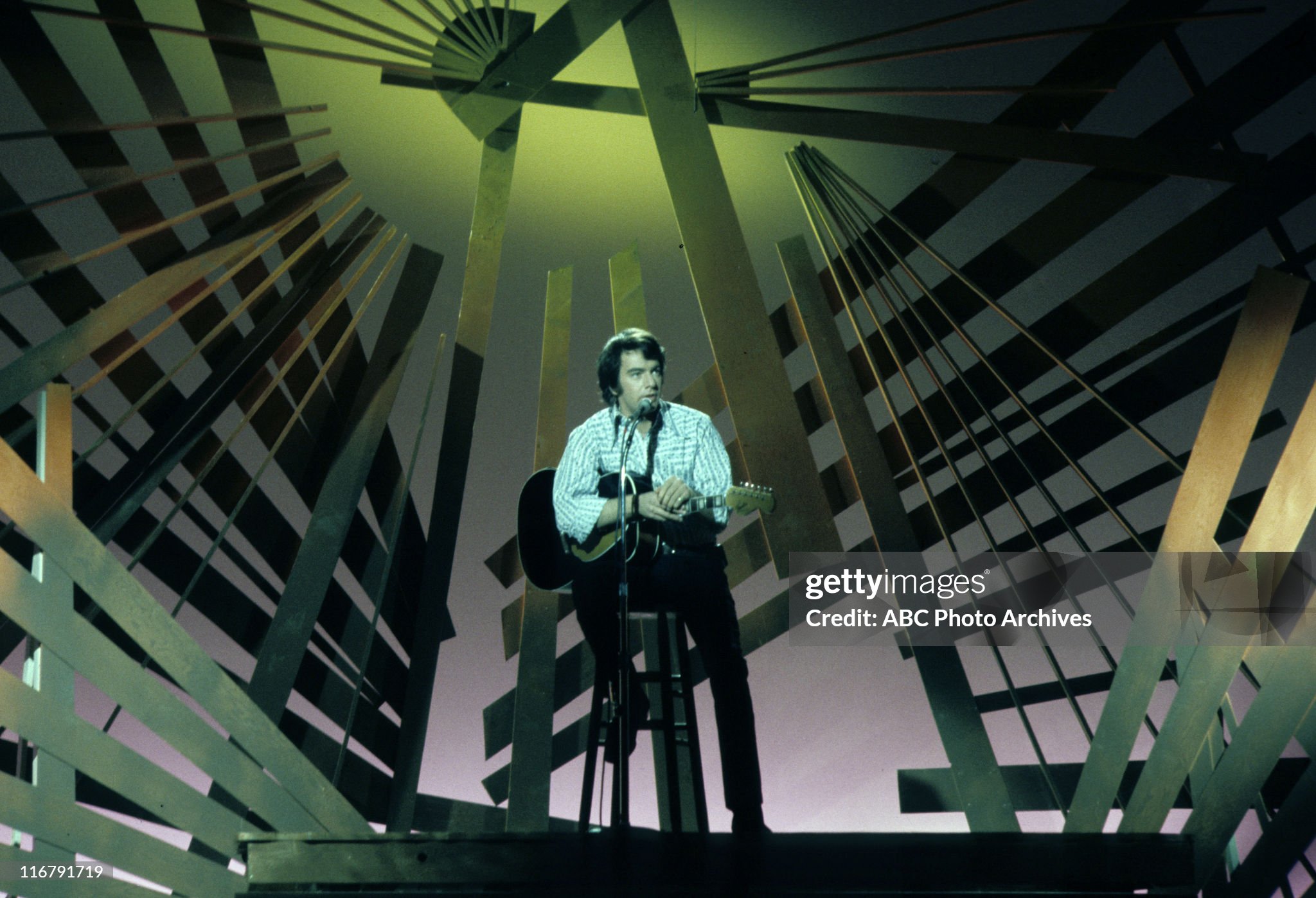
On Tap Root Manuscript, Neil Diamond turned a well-traveled song of brotherhood into something closer to a personal pledge.
Neil Diamond recorded He Ain’t Heavy, He’s My Brother for his 1970 album Tap Root Manuscript, placing a song already associated with deep communal feeling inside one of the most ambitious records of his early career. Written by Bobby Scott and Bob Russell, the song had been brought to wide popular attention by The Hollies in 1969, but Diamond’s version belongs to a different emotional room. It is not simply a famous singer borrowing a famous song. It is a singer-songwriter, at a moment of expanding scale and self-definition, stepping into a lyric about responsibility and choosing to make it sound almost conversational.
The Tap Root Manuscript context matters. Released in 1970, the album is often remembered for Cracklin’ Rosie, one of Diamond’s biggest early signature hits, but the record is broader and stranger than a casual hits collection might suggest. Its first side moves through American pop, folk, and reflective songwriting, while its second side reaches toward a larger suite-like idea with The African Trilogy. Even the album’s title and sleeve presentation suggest that Diamond was trying to frame himself as more than a singles artist. The cover image and design give the record a serious, earth-rooted atmosphere, as if the music inside is meant to be read as a document, a search, or a set of markings from a restless creative period.
That is why He Ain’t Heavy, He’s My Brother sits so naturally on the album. The song’s words are simple, but they carry a moral weight that can easily become too grand if a singer pushes them too hard. Diamond’s gift, especially in this era, was his ability to make large emotions feel direct. He could sound dramatic without losing the grain of ordinary speech. In this performance, the famous line does not arrive as a slogan. It feels like a decision being made in real time: I will carry this burden because the person beside me is not a burden at all.
Musically, Diamond’s interpretation fits the shape of his early-1970s voice: sturdy, intimate, and slightly rough at the edges, with a sense of forward motion underneath the tenderness. He does not approach the song as a delicate confession. He gives it the grounded force of someone walking uphill and refusing to complain. That physical feeling is important. The lyric is built around the image of carrying another person, and Diamond’s phrasing lets the listener feel the weight without turning it into misery. There is dignity in the restraint.
The song also reveals something about Diamond’s relationship to the material he chose. By 1970, he was no longer only the writer behind bright, punchy pop records or the voice of instantly memorable radio hooks. He was beginning to lean more openly into big themes: belonging, loneliness, faith, endurance, and the search for human connection across distance. He Ain’t Heavy, He’s My Brother gave him a ready-made vessel for those concerns. The fact that it was a cover did not make it less personal. In the hands of the right interpreter, a cover can become a mirror, reflecting not only the song’s original meaning but the singer’s own artistic weather.
Heard beside the more familiar versions, Diamond’s recording has a distinctive kind of firmness. The Hollies made the song soar with aching pop grace, while Diamond draws it closer to the ground. His version feels less like a communal hymn and more like a private promise spoken in public. That difference is subtle, but it changes the emotional temperature. Instead of asking the listener to admire the beauty of sacrifice, it asks the listener to recognize the plain necessity of care.
The presence of the Tap Root Manuscript album cover in this conversation adds another layer. Album covers from this era were not merely packaging; they shaped the way listeners entered a record. Before the needle touched the groove, the sleeve suggested a world. With this album, Diamond appeared to be reaching for roots, memory, and a larger cultural imagination. In that frame, He Ain’t Heavy, He’s My Brother becomes more than a popular song tucked between original material. It becomes part of the album’s wider question: what connects one person to another when the road becomes long?
More than five decades later, Diamond’s 1970 reading remains moving because it refuses to treat compassion as decoration. The performance does not beg for tears. It stands upright. It understands that brotherhood is not always loud, not always easy, and not always sentimental. Sometimes it is simply the act of continuing to walk with someone when walking alone would be simpler. On Tap Root Manuscript, that idea sounds less like an anthem borrowed from elsewhere and more like a truth Diamond was ready to carry in his own voice.
