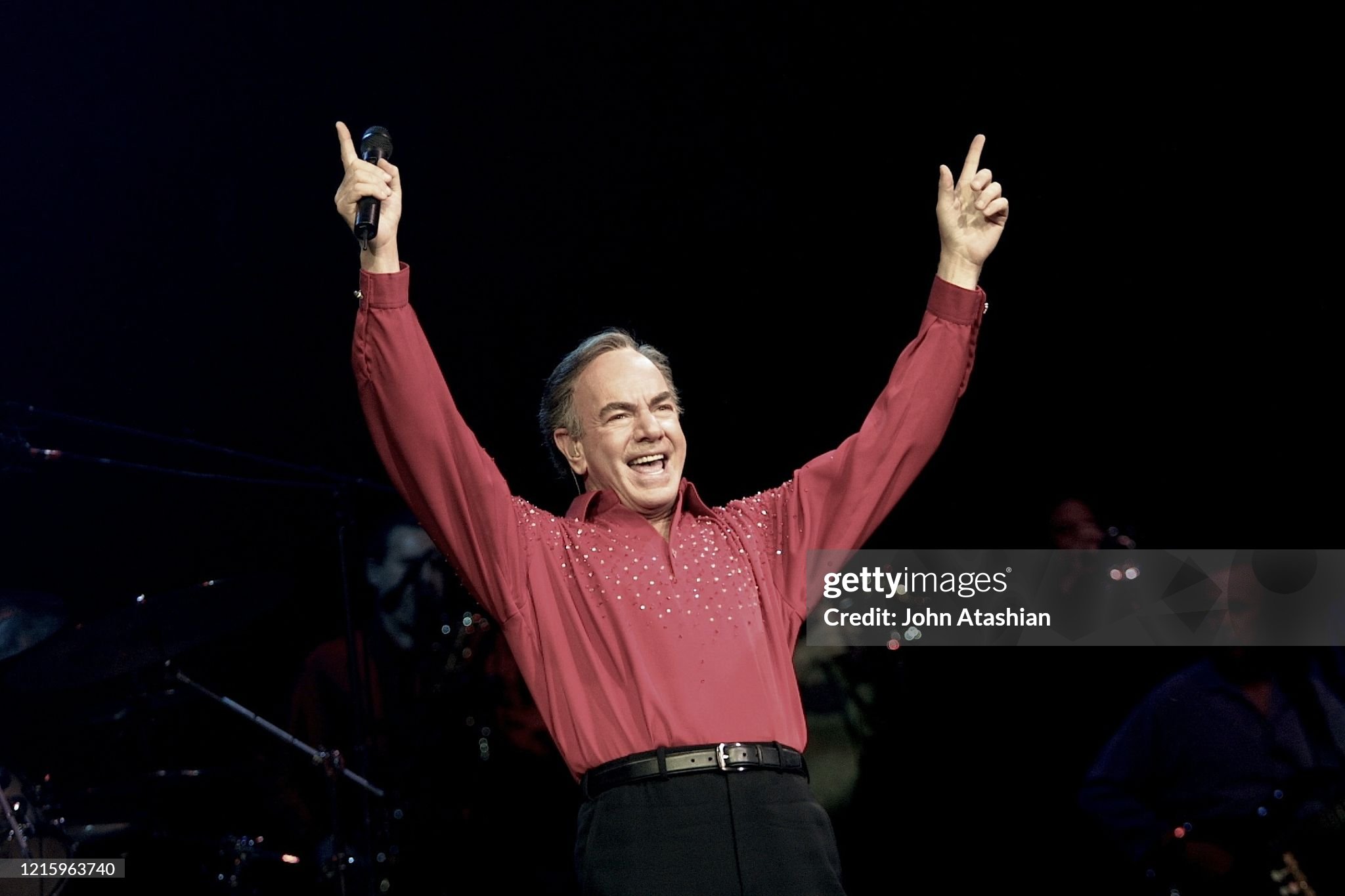
On “Deep in the Morning”, Neil Diamond sounds less like a monument and more like a young songwriter measuring hope against the first light of day.
“Deep in the Morning” appeared in 1969 as an album track on Neil Diamond’s Brother Love’s Travelling Salvation Show, a record that belongs to one of the most revealing stretches of his early career. Released during his Uni Records period, the album arrived as Diamond was moving beyond the compact pop craftsmanship of his mid-1960s breakthrough and toward the broader, more dramatic songwriting voice that would soon make him one of the most recognizable performers of the 1970s. It is easy to remember that era through the larger songs: “Brother Love’s Travelling Salvation Show” with its revival-tent thunder, or “Sweet Caroline”, which became so closely associated with the album after later editions that it nearly changed the public memory of the record itself. But tucked within that same 1969 landscape, “Deep in the Morning” offers a different kind of evidence.
This is not the Neil Diamond of grand entrances and arena-sized refrains. It is the earlier Diamond, still carrying the habits of a songwriter who knew how to compress feeling into a few direct lines, still close enough to the Brill Building world to understand the value of structure, but already reaching for something rougher, more personal, and more open-ended. Brother Love’s Travelling Salvation Show is often heard as a transitional album because it gathers several sides of him at once: gospel-flavored showmanship, folk-pop reflection, country-tinged movement, and that unmistakable vocal grain that could make even a simple phrase feel like a promise wrestled from experience.
Within that setting, “Deep in the Morning” feels like a small dawn scene placed between bigger emotional rooms. The title alone suggests a particular hour, not quite the innocence of sunrise and not quite the harshness of day. It carries the feeling of being awake before the world has fully declared itself, when memory, worry, desire, and determination can all sound strangely similar. Diamond’s early writing often worked best when it found drama in plain speech, and this album track belongs to that talent: the ability to make a modest setting feel charged with movement.
By 1969, Diamond had already established himself as far more than a lucky singles artist. He had written songs that others recorded, scored major hits under his own name, and developed a vocal identity that did not depend on polish alone. His voice had urgency in it. Even when the arrangement stayed measured, there was often a forward lean in his delivery, as though the song were not merely being performed but being pushed toward a decision. On “Deep in the Morning”, that quality matters. The track does not need the scale of the album’s title song to make its point. Its strength lies in the sense of a man standing at the edge of a new day and trying to decide what kind of life it might become.
That early-era tension is one reason the song remains worth hearing closely. Later Neil Diamond would become associated with enormous choruses, dramatic concerts, and songs that audiences could sing back as communal declarations. But the 1969 album tracks show the machinery before it became myth. They show the writer testing shades of mood, building a catalog not only out of hits but out of pieces that revealed his range. “Deep in the Morning” sits in that quieter zone where a performer’s future is visible, but not yet fully fixed. You can hear confidence, but also searching. You can hear the craft, but not the armor.
The album around it strengthens that impression. Brother Love’s Travelling Salvation Show did not present Diamond as a singer content to remain inside one tidy pop lane. Its songs move across roads, rooms, names, and imagined congregations. The title track turns performance into a kind of secular sermon; other cuts lean toward tenderness or travel, toward memory or restless motion. In that company, “Deep in the Morning” becomes part of a larger portrait of an artist enlarging his vocabulary. He was learning how to make intimacy and spectacle live on the same record.
There is also something revealing about the fate of album tracks from this period. They often survive differently from hit singles. They do not always return through radio rituals or stadium singalongs. Instead, they wait for listeners who want to understand the shape of an artist, not just the peaks. A song like “Deep in the Morning” rewards that kind of listening because it brings Diamond back down to human scale. It reminds us that before the familiar public image hardened, there was a young performer arranging his influences, instincts, and ambitions into songs that could hold both simplicity and strain.
Hearing it now, the track feels less like a footnote than a window. It opens onto 1969, onto the moment before Diamond’s 1970s identity became fully formed, onto an album where a songwriter was discovering how large his own voice could become without losing the directness that first made people listen. “Deep in the Morning” does not have to announce itself as a major anthem. Its value is subtler than that. It catches the artist in motion, still close to the ground, still watching the light come up, still turning the ordinary hour into something worth singing.
