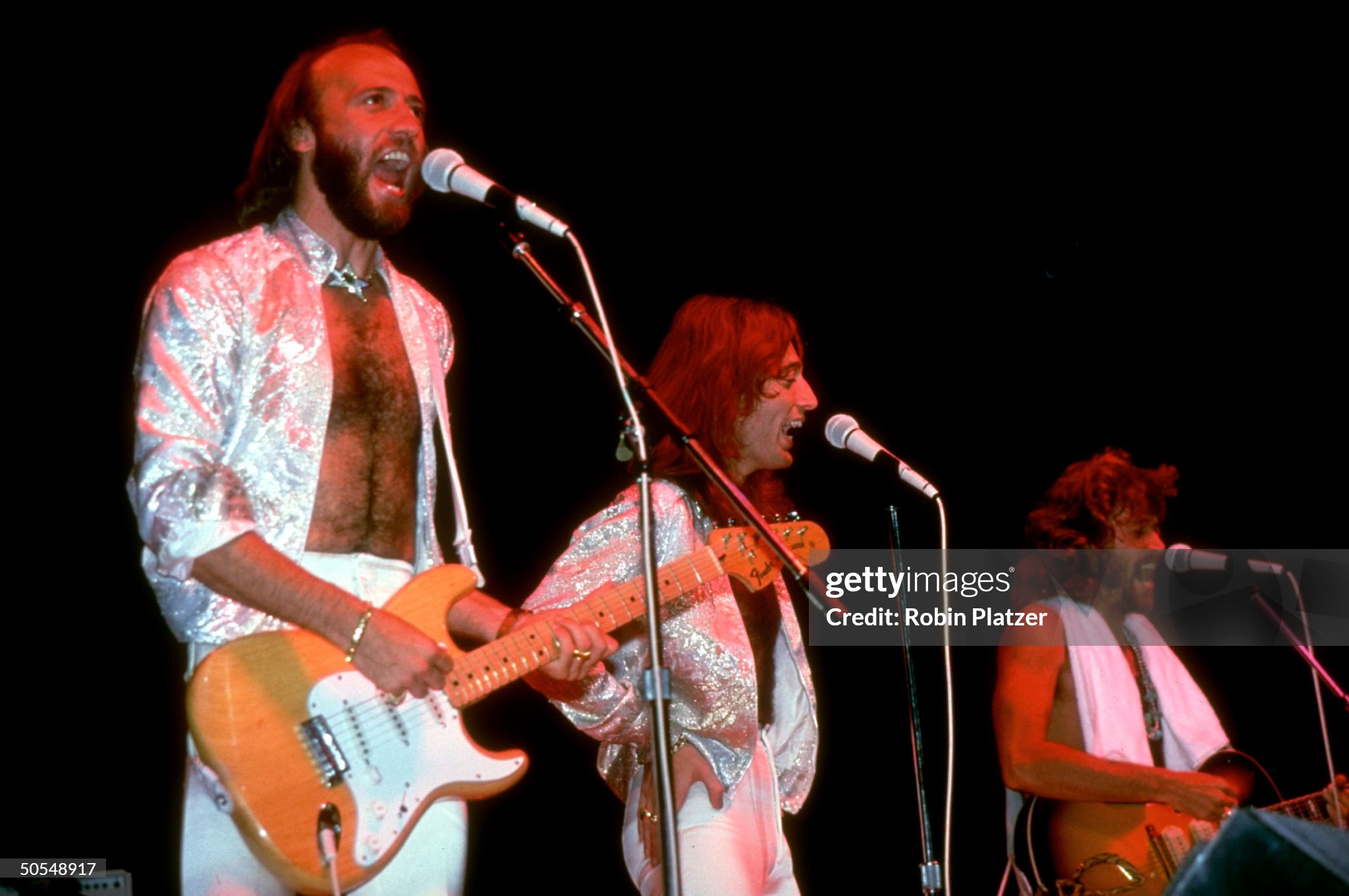
As the first sound of Idea, Bee Gees’ Let There Be Love did not simply begin an album; it opened a door onto the group’s grandest late-sixties ambitions.
Released in 1968 as the opening track of the Bee Gees album Idea, Let There Be Love arrived at a fascinating point in the group’s story. This was long before disco turned the brothers Gibb into global symbols of dance-floor glamour. In this period, Barry Gibb, Robin Gibb, and Maurice Gibb were still shaping a sound rooted in ornate pop, melancholy balladry, dramatic arrangements, and the almost uncanny closeness of family harmony. As an album opener, the song carries the weight of intention. It tells the listener, within its first sweeping gestures, that Idea is reaching for something larger than a collection of singles.
The title itself sounds like a declaration, but the recording does not treat love as a simple slogan. Let There Be Love unfolds with a sense of ceremony, as if the band is raising the curtain slowly rather than bursting through it. The Bee Gees were always gifted at making emotion feel architectural: a melody could rise like a staircase, a harmony could appear like light through colored glass, and a phrase could seem suspended between innocence and warning. Here, their voices are not merely decorative. They are the emotional engine of the song, layered and carefully balanced, turning the phrase into something closer to invocation than pop refrain.
That quality matters because Idea was an album made in the restless climate of 1968, when pop groups were no longer expected simply to deliver neat two-and-a-half-minute pleasures. The Beatles had widened the possibilities of the LP, psychedelic music had encouraged more adventurous colors, and orchestral pop had begun to blur the line between radio craft and chamber drama. The Bee Gees did not follow those currents by imitation alone. Their strength was different: they could make elaborate music feel intimate. Even when the arrangement swelled, the center remained human, carried by voices that seemed to know one another’s shadows.
As the first track, Let There Be Love establishes that emotional scale immediately. It has the feel of a threshold song, one that asks the listener to enter the album with patience and attention. The harmonies are intricate without sounding clinical. They move in close formation, creating a texture that is rich but not crowded, tender but not fragile. The Bee Gees’ greatest vocal gift in this era was their ability to sound both youthful and strangely old-souled. A line could begin with the clarity of pop innocence and end with a tremor of uncertainty. That tension gives the song its lasting pull.
It also reveals the group’s progressive pop ambitions in a way that is easy to overlook if one hears the Bee Gees only through their later fame. In 1968, they were building songs that leaned toward theatricality, unusual emotional shading, and carefully staged dynamics. Idea would also become associated with major Bee Gees recordings from the period, including I’ve Gotta Get a Message to You and, in its U.S. configuration, I Started a Joke. But Let There Be Love performs a different role. It is not merely a highlight; it is the album’s opening statement, setting the emotional temperature before the record begins to shift through its moods.
There is something especially revealing about the Bee Gees choosing a song of such breadth to begin the album. They were not introducing themselves as a beat group chasing immediacy. They were presenting themselves as pop dramatists, craftsmen of mood and scale, singers who understood that a record could begin like a scene in a film. The arrangement suggests space, and the vocals fill that space with yearning. Nothing feels casual. Even the softness has structure. Even the sweetness carries a trace of gravity.
Heard now, Let There Be Love can feel like a reminder of how much of the Bee Gees’ identity was already present before the world learned to associate them with a different decade and a different pulse. The precision of the harmonies, the emotional intensity, the willingness to treat pop as something expansive and theatrical—all of it is there. What changes with time is how clearly we can hear the ambition. The song no longer sounds like an opening track simply doing its job. It sounds like three brothers standing at the edge of a larger artistic language, trusting their voices to carry them into it.
That is why Let There Be Love still matters within the Bee Gees’ catalog. It captures a moment when their music was stretching upward, searching for grandeur without losing intimacy. As the opening of Idea, it feels less like a beginning in the ordinary sense and more like an invitation: enter this room, listen closely, and hear how much feeling can be built from harmony, restraint, and the courage to make pop sound vast.
