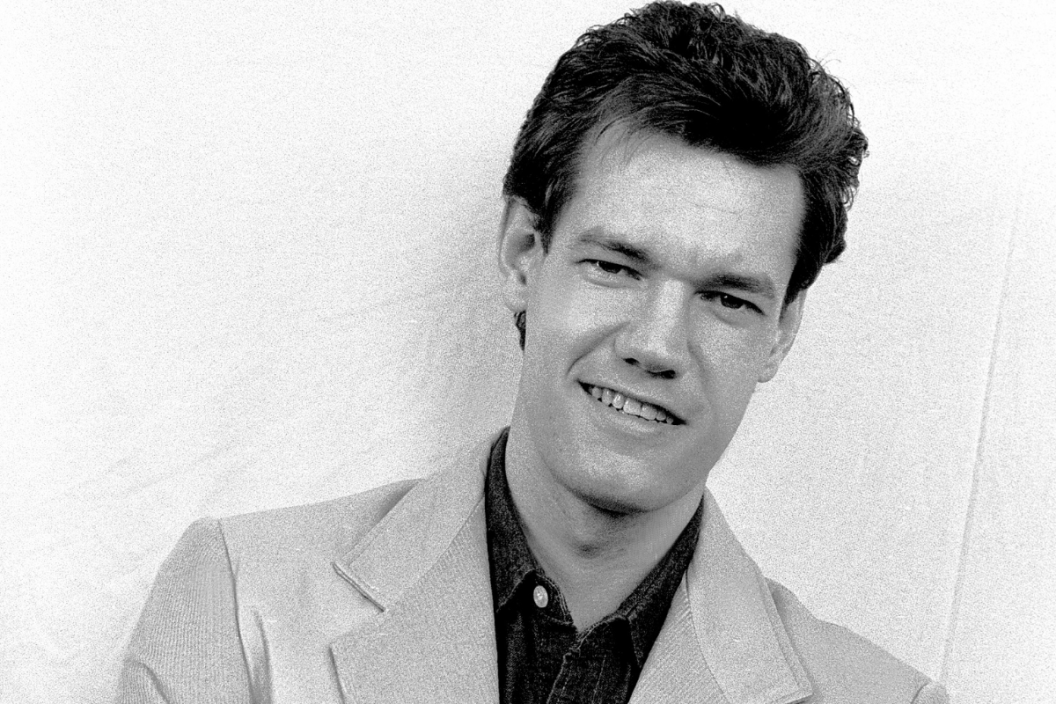
With “I Told You So”, Randy Travis turned pride, regret, and country restraint into one of his most defining heartbreak ballads.
Randy Travis released “I Told You So” as a single in 1988 from his landmark album Always & Forever, and the song reached No. 1 on the country chart that same year. Written by Travis himself, it became far more than another successful entry in a remarkable run of hits. It was the kind of ballad that seemed to reveal the emotional architecture of his voice: low, steady, wounded, and disciplined enough to let the ache arrive without forcing it.
By the time Always & Forever had settled into country music’s bloodstream, Travis was already one of the defining figures of the genre’s mid-1980s traditionalist revival. His 1986 breakthrough album, Storms of Life, had helped pull mainstream country back toward steel guitar, fiddle, plainspoken lyrics, and a baritone that sounded rooted in older values without feeling like imitation. Always & Forever, released in 1987, carried that momentum forward with a confidence few artists ever get to experience. It included major country hits, but “I Told You So” stood apart because it placed Travis not only in front of the song, but inside its creation.
The premise is simple, which is part of its force. A former lover returns after causing pain, asking whether forgiveness might still be possible. The narrator imagines how he would respond: not with an easy embrace, not with a grand speech of revenge, but with the devastating phrase of the title. “I told you so” can sound petty in ordinary conversation, yet in this song it becomes something more complicated. It is pride trying to protect an old wound. It is longing disguised as certainty. It is a heart that still remembers everything, even while pretending it has learned how to close the door.
Travis’s performance is crucial because he never overplays the bitterness. He sings the song with a calm surface, allowing the listener to feel the pressure underneath. His voice has that rare country quality of sounding both firm and vulnerable at once. The low notes carry authority, but they also carry weight, as if every word has been considered before being spoken aloud. In a lesser performance, the title phrase might have become a sharp rebuke. In Travis’s hands, it feels like a defense mechanism that may collapse the moment the other person looks back.
Musically, “I Told You So” belongs to the kind of country ballad that trusts space. The arrangement does not crowd the lyric. It moves with measured grace, giving the melody room to breathe and giving Travis’s phrasing the central role. The song’s emotional pull comes from patience: the held notes, the careful turns, the way the chorus opens without losing its restraint. It feels built for a quiet room, a late-night drive, or the private moment after someone has rehearsed a conversation they hope they will never have to face.
The fact that Randy Travis wrote the song himself adds an important layer to its place in his catalog. He was widely admired as an interpreter, a singer who could make a lyric sound lived-in even when someone else had written it. But “I Told You So” showed that he could also write a song precisely suited to the emotional grain of his own voice. The melody understands his baritone. The lyric understands his gift for stillness. The result is a recording that feels less like a singer selecting material and more like an artist finding a shape for a feeling he already knew how to carry.
Its success in 1988 also says something about the era. Country music was moving through a period when tradition and commercial appeal were not enemies. Travis could take a cleanly written, emotionally direct ballad to No. 1 without sanding away its country identity. The song did not need spectacle. It trusted melody, language, and voice. That trust is one reason it continued to travel long after its chart moment, later reaching new audiences through other interpretations while still remaining closely tied to Travis’s own name.
What makes “I Told You So” endure is not just that it is sad. Many songs are sad. This one understands the pride that often stands guard over sadness. It knows that heartbreak is not always a dramatic collapse; sometimes it is a sentence spoken too calmly, a fantasy of strength imagined by someone who may still be waiting. Travis sings from that uneasy place where love, resentment, memory, and self-respect are tangled together. He does not ask the listener to choose one emotion. He lets them coexist.
That is why the recording remains one of his defining heartbreak ballads. It captures the special power of Randy Travis at his peak: a voice that could make old-fashioned country values feel immediate, a songwriter’s instinct for plain words with deep consequences, and a performance style that found drama in restraint. “I Told You So” is remembered as a No. 1 hit, but its real life has been quieter and longer than any chart stay. It remains a song people return to when they want to hear regret without ornament, pride without cruelty, and heartbreak sung by someone who understands that the hardest words are often the ones we practice saying before the door ever opens.
