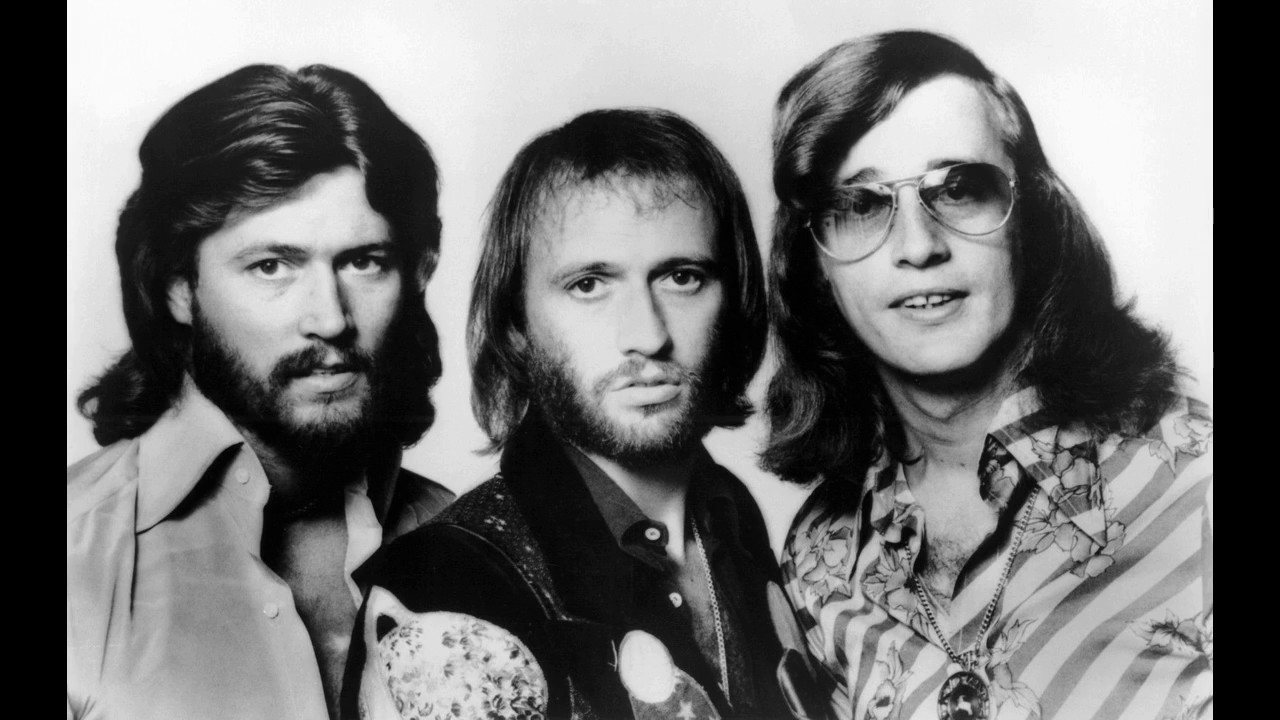
Before the dance-floor breakthrough, a modest 1974 flip side caught the Bee Gees learning a new kind of pressure, precision, and soul under Arif Mardin.
In 1974, Bee Gees released It Doesn’t Matter Much to Me as the B-side to Mr. Natural, placing it in one of the most revealing transition points in the group’s career. The recording came from their first sessions with producer Arif Mardin, the Atlantic-associated arranger and producer whose musical intelligence would soon help the brothers reshape their sound. Because it sat on the back of a single rather than in the bright center of a hit campaign, the song has always carried the air of something half-hidden: not a grand announcement, not a commercial victory lap, but a small piece of evidence from the moment the Bee Gees began turning toward a new future.
That context matters. By the time of Mr. Natural, the Gibb brothers were no longer the fresh-faced hitmakers of the late 1960s, when songs such as New York Mining Disaster 1941, To Love Somebody, and I Started a Joke had established them as masters of melancholy pop drama. They had already known enormous success, separation, reunion, and the strange pressure of public expectation. The early 1970s had not erased their gifts, but it had complicated their place in the pop landscape. Rock had hardened, soul had deepened, singer-songwriters had changed the center of gravity, and the Bee Gees had to decide whether their famous harmonies could survive by standing still.
It Doesn’t Matter Much to Me answers that question quietly. It is not the fully transformed Bee Gees of Main Course, and it is certainly not the cultural force that would later be tied to Saturday Night Fever. Instead, it captures an earlier and more fragile stage of movement. The song is built around the familiar Gibb strength of close vocal blend, but the feel is tighter, less ornamental, more alert to rhythmic placement. Robin Gibb and Barry Gibb share the vocal space with the kind of family precision that can sound almost effortless until one listens closely. Their voices do not simply sit beside each other; they lean, answer, and press into the same emotional line, creating tension out of closeness.
That Robin-and-Barry blend is one of the reasons the record remains interesting beyond its B-side status. Robin’s voice could bring a quivering intensity to even the smallest phrase, while Barry’s tone often carried warmth, control, and a searching melodic confidence. When the two are drawn together in tight harmony, the effect is less about polish than about pressure. The title itself, It Doesn’t Matter Much to Me, suggests indifference, but the singing complicates that claim. The voices do not sound careless. They sound disciplined, guarded, and aware that even a line of dismissal can carry emotional residue.
Arif Mardin was important because he did not need to destroy what made the Bee Gees recognizable in order to move them forward. His contribution was not merely a change of decoration. He had a producer’s ear for space, groove, and placement, and he understood how a vocal group could be framed so that the rhythm underneath became part of the emotional argument. On Mr. Natural and its surrounding sessions, the brothers were not yet chasing the sleek pulse that would soon redefine them. They were testing weight, restraint, and a more American soul-influenced sense of motion. In that light, a B-side like It Doesn’t Matter Much to Me becomes more than a collector’s detail. It becomes a hinge.
B-sides often tell a different kind of truth. The A-side must carry ambition, promotion, and expectation; the flip side can reveal process. It can show a band trying on a new shape without having to declare a revolution. For the Bee Gees, who were always more restless than their later caricatures allowed, these smaller tracks help correct the simplified version of their history. They were not one group in the 1960s and an entirely separate group in the disco years. They were a family band constantly revising the relationship between melody, rhythm, and ache. Their reinvention did not arrive as a lightning strike. It gathered in studios, in arrangements, in experiments, in songs that did not always become famous.
Hearing It Doesn’t Matter Much to Me now, with the later triumphs in the rearview mirror, gives the record a special kind of suspense. The listener knows what is coming: the sharper grooves, the falsetto breakthroughs, the global attention, the complicated afterlife of fame. But this song does not know any of that yet. It belongs to the moment before certainty, when the Bee Gees were still finding out how much of themselves could be carried into a new sound. That is what makes it linger. On the back of Mr. Natural, during those first sessions with Arif Mardin, the brothers were not simply filling space on a single. They were leaving behind a small, concentrated clue to the reinvention already beginning inside their harmonies.
