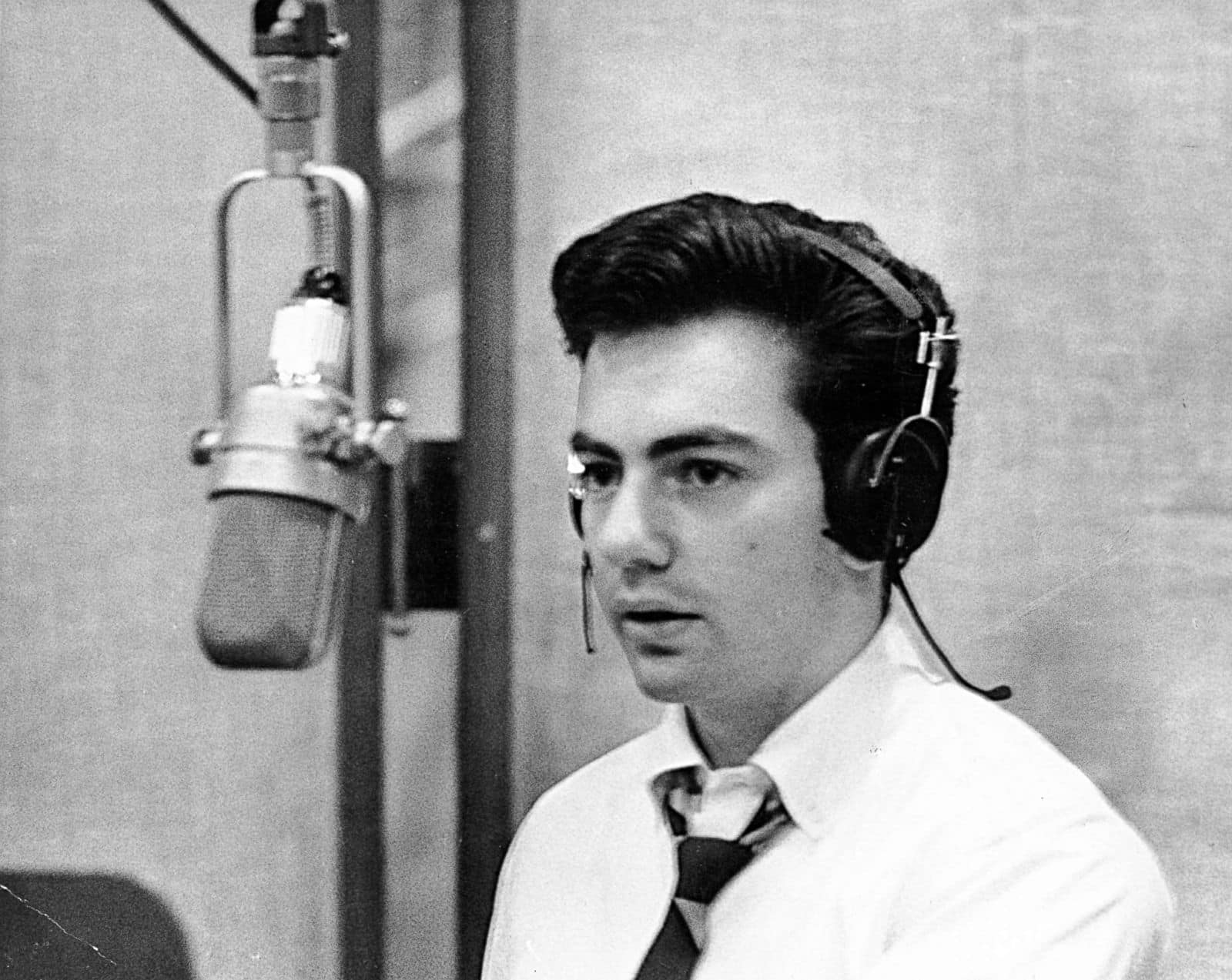
In 1977, Neil Diamond turned the title track of I’m Glad You’re Here with Me Tonight into a quiet invitation, a love song shaped less by spectacle than by presence.
Released in 1977 on Columbia Records, I’m Glad You’re Here with Me Tonight was the title track of Neil Diamond‘s eleventh studio album, a record that arrived after the wide-screen confidence of Beautiful Noise and before the enormous public afterlife of You Don’t Bring Me Flowers. That placement matters. Diamond was no longer simply the sharp, compact songwriter who had emerged from the New York pop-writing world with songs built for radio impact. By this point, he had become a commanding album artist and concert figure, a singer whose records often carried the feeling of curtains parting, lights rising, and a private confession being made in front of thousands.
The 1977 album is often remembered for Desirée, the record’s clearest radio moment, and for Diamond’s original solo version of You Don’t Bring Me Flowers, a song that would soon become part of a much larger pop story when he and Barbra Streisand recorded the celebrated duet version in 1978. But the title track does something quieter and, in some ways, more revealing. It does not stand at the center by force. It stands there by tone. I’m Glad You’re Here with Me Tonight gives the album its emotional doorway, its sense of someone stepping out of public brightness and into a room where companionship is enough.
The phrase itself is disarmingly plain. It is not a vow, not a dramatic plea, not a grand promise under a spotlight. It sounds like something that could be said across a dinner table or in the hush after a long day. Yet in Diamond’s hands, that simplicity becomes the point. He had always understood the power of direct address. From the communal release of Sweet Caroline to the searching loneliness of I Am… I Said, his finest songs often work because they speak straight ahead while leaving room for something more complicated underneath. Here, the directness is gentler. The song welcomes rather than demands. It lets affection appear as presence, not performance.
Musically, the title track belongs to the polished late-1970s world Diamond was inhabiting during his Columbia years. The rougher edges of early rock and Brill Building pop had given way to carefully shaped arrangements, adult emotional pacing, and a voice placed not as a decorative instrument but as the room’s central authority. Diamond’s baritone could be dramatic, but on material like this, its strength comes from control. He did not need to push every line toward a climax. He could let a phrase settle, let a pause hold meaning, let the warmth of the melody suggest what the lyric leaves unspoken.
That restraint is part of why I’m Glad You’re Here with Me Tonight matters within the album era. In 1977, popular music was spreading in several directions at once: disco was reshaping the dance floor, arena rock was growing larger, singer-songwriter introspection had moved into the mainstream, and adult contemporary radio was making space for records that sounded polished but still personal. Diamond occupied a place of his own inside that landscape. He could be theatrical without becoming distant, sentimental without losing structure, and intimate even when the arrangement around him seemed built for a large hall.
As a title track, the song gives the album a human frame. The record contains brighter moments, more dramatic turns, and songs that would travel farther in public memory. But I’m Glad You’re Here with Me Tonight is the sentence that tells the listener how to enter the album. It asks for closeness. It suggests that the evening, the record, and perhaps the relationship inside the song all depend on the same fragile condition: someone has stayed. In Diamond’s catalog, where loneliness and belonging often sit side by side, that is no small thing.
Listening to it now, the song feels less like a relic of 1977 than a reminder of how much emotional force can live inside a modest declaration. The album era gave artists room to build moods across a full side of vinyl, and Diamond understood that a title track did not always have to be the loudest statement. Sometimes it could be the lamp in the window. Sometimes it could be the first words spoken after the door closes. Sometimes, for a singer known for filling vast spaces, the most revealing moment was simply the sound of him making one person feel expected.
