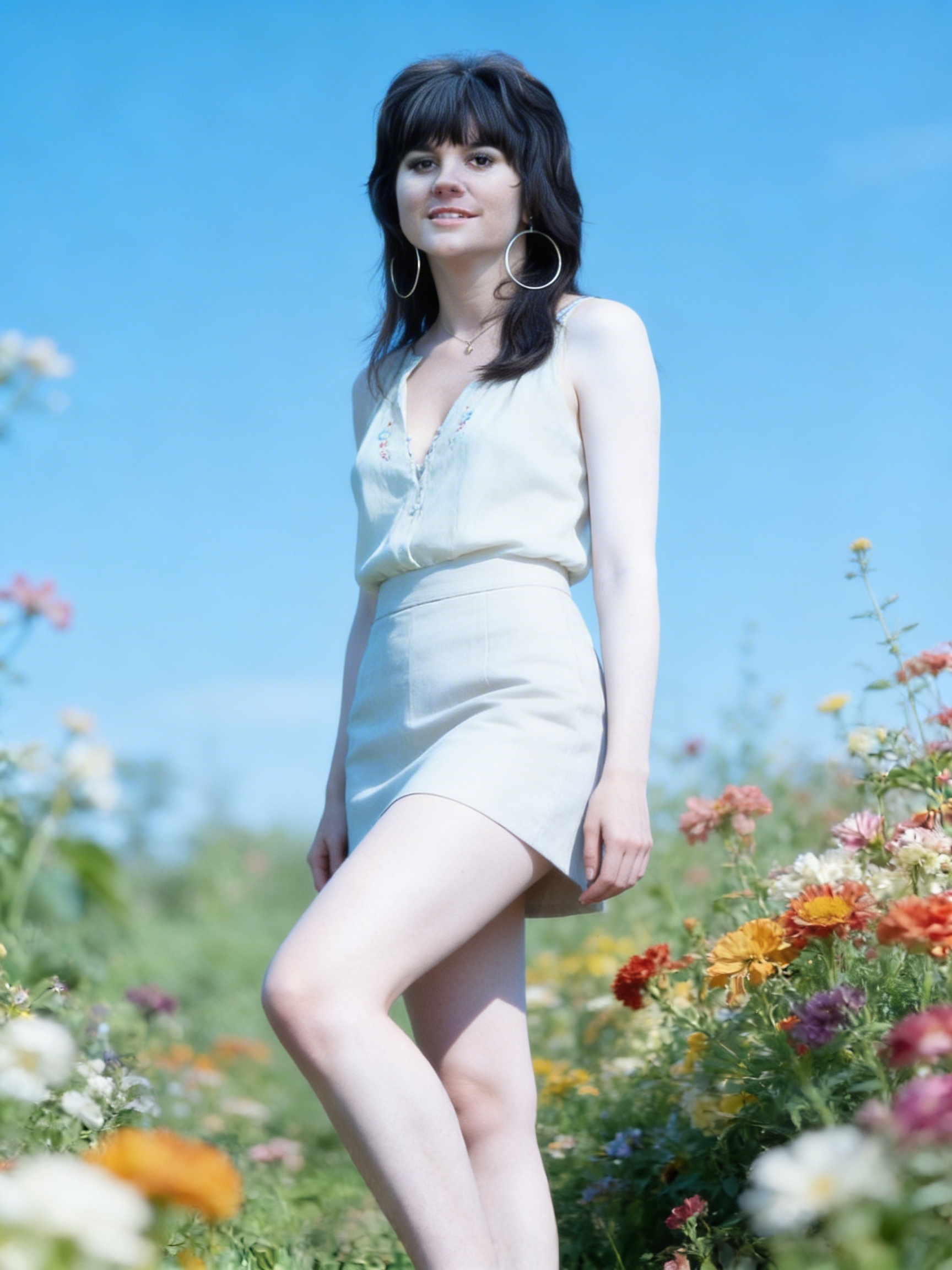
Before the great radio triumphs arrived, Linda Ronstadt found a quieter kind of country-rock grace in a song that seemed to breathe mountain air.
Linda Ronstadt recorded Colorado for her 1973 album Don’t Cry Now, a record that sits at a fascinating turning point in her career. Released before the massive commercial breakthrough of Heart Like a Wheel, the album caught Ronstadt in the middle of a transition: no longer simply the former voice of the Stone Poneys, not yet fully crowned as one of the defining singers of the decade, but already gathering the musical language that would make her work feel so emotionally durable. Within that setting, Colorado, written by Rick Roberts of Flying Burrito Brothers and later Firefall fame, becomes one of the album’s most quietly revealing moments.
It is not the track that usually gets pulled first from Don’t Cry Now. Many listeners naturally gravitate toward her reading of Desperado, her country-rooted approach to Silver Threads and Golden Needles, or the aching control she brings to Love Has No Pride. Those songs have their own gravity. But Colorado works differently. It does not reach out with theatrical sorrow or try to announce itself as a grand statement. It moves with the modesty of a road memory, the kind of song that seems to have been waiting in the corner of the room until the noise lowers and the listener can finally hear it.
That restraint is part of its beauty. Ronstadt’s early 1970s recordings often stood at the crossroads of country, folk, rock, and the Southern California singer-songwriter scene. Don’t Cry Now reflects that world in miniature, drawing on songs by writers such as J.D. Souther, Randy Newman, Neil Young, Eric Kaz, and Libby Titus, while also connecting her to the close-knit Los Angeles musical community that included members and friends of the Eagles, country-rock players, and session musicians who understood how to leave space around a voice. In that company, Colorado feels less like a showcase and more like a shared landscape.
Rick Roberts’ writing carries the plainspoken melancholy that country-rock did especially well: travel, distance, restlessness, the search for a place that might still recognize you when you return. The title itself is simple, almost conversational, but in Ronstadt’s hands it becomes more than a location. It suggests altitude, open country, and the strange ache of belonging somewhere only after you have left it. She does not over-sing the feeling. Instead, she lets the melody keep its natural shape, allowing the lyric’s sense of homeward pull to gather quietly.
This is where Ronstadt’s interpretive gift becomes clear. Her voice could be thrillingly powerful, but on Colorado she seems interested in something more delicate: the sound of someone looking back without turning the song into confession. There is a softness in the way the arrangement supports her, an acoustic ease that gives the track room to wander. The performance belongs to the country-rock tradition, but it avoids the dusty postcard version of the West. It feels personal without becoming private, gentle without losing strength.
Heard today, Colorado also helps explain why Don’t Cry Now remains such an important prelude in Ronstadt’s catalog. The album did not need to have one fixed identity because Ronstadt herself was still proving how wide her musical home could be. She could inhabit a Randy Newman song, a country standard, an Eagles ballad, and a Rick Roberts deep cut without sounding like a guest in any of them. Her talent was not simply range; it was emotional placement. She knew where to stand inside a song.
That may be why Colorado keeps its quiet hold. It is not built around a dramatic climax or an obvious hook designed to dominate memory. Its strength lies in atmosphere: acoustic strings, western air, a vocal that seems to travel while standing still. It captures the feeling of a young artist stepping into a broader horizon, trusting understatement as much as force. For fans who know Ronstadt mainly through the later hits, this track offers a more intimate doorway into the years when her sound was still being assembled piece by piece, song by song, with remarkable instinct.
As an album deep cut, Colorado rewards the kind of listening that classic records were made for: not skipping to the famous moment, but letting the whole side unfold. It reminds us that some of Ronstadt’s finest performances do not arrive with fanfare. Some simply appear like a road opening beyond the last town, quiet at first, then wider than expected.
