“The Gambler” is more than a country hit — it is a parable about survival, dignity, and knowing when life asks for courage, restraint, or one last hard lesson in the dark.
There are songs that become popular, and then there are songs that become part of the language. “The Gambler” by Kenny Rogers belongs to that second, rarer class. Released on November 15, 1978 as the title track from his album The Gambler, it became one of the defining country recordings of its era: No. 1 on Billboard’s Hot Country Singles chart, No. 16 on the Billboard Hot 100, and No. 3 on Billboard’s Adult Contemporary chart. In Canada, it reached No. 2 on the country chart and No. 8 on the pop chart. Its success was not confined to country radio. It crossed over because the song carried something deeper than trend — it carried wisdom, drama, and a voice that sounded as though it had earned the right to deliver both.
The important facts belong near the beginning because this song’s place in history is no exaggeration. “The Gambler” was written by Don Schlitz, who later said he wrote it when he was only 23 years old. Schlitz recorded it himself first, but it was Kenny Rogers’s version — produced by Larry Butler in Nashville — that turned the song into legend. Rogers’s recording won the Grammy for Best Male Country Vocal Performance, while Schlitz’s composition won Best Country Song. The song also helped power the album The Gambler, which became one of Rogers’s signature records and one of the major country albums of the late 1970s.
What makes “The Gambler” so enduring, though, is not merely its chart life. It is the way the song unfolds like an old American story — simple on the surface, almost biblical underneath. A weary traveler meets an older gambler on a train. The gambler asks for whiskey in exchange for advice. The advice comes in the language of cards, but everyone understands that the cards are only the disguise. This is a song about judgment. About timing. About the cost of pride. About learning, often too late, that survival has its own intelligence. “Know when to hold ’em, know when to fold ’em” became famous because it sounds practical, but what gives it real power is that it applies to almost everything: money, love, ambition, argument, even grief. That is why the song traveled so far beyond country music. It does not merely entertain. It instructs without sounding preachy.
And then there is Kenny Rogers himself. So much of the record’s greatness lies in the fact that he never oversings it. A lesser singer might have turned the song into theater, puffed it up into something too knowing or too dramatic. Rogers does the opposite. He tells it. He leans into the narrative with that weathered warmth that became one of his great gifts as an interpreter. He sounds neither flashy nor sentimental. He sounds believable. That matters enormously. “The Gambler” works because the man singing it seems to understand that wisdom is usually passed along quietly — on a train, in the dark, with no guarantee it will save you.
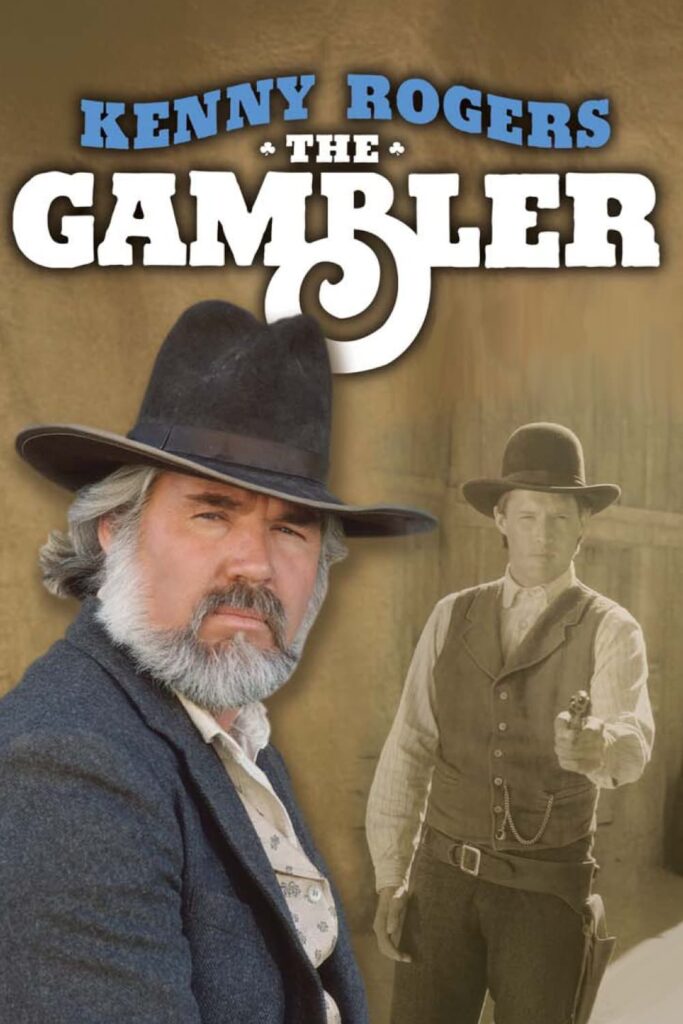
The story behind the song only deepens its hold on listeners. According to the Library of Congress, the success of “The Gambler” was so immediate and so complete that it helped inspire a whole television franchise built around the character, beginning with Kenny Rogers as The Gambler in 1980. Decades later, in 2018, the recording was selected for preservation in the National Recording Registry as “culturally, historically, or aesthetically significant.” In 2021, it was also inducted into the Grammy Hall of Fame. Those honors feel entirely fitting. Few country songs have ever moved so seamlessly from hit single to cultural myth.
There is also something deeply moving in the song’s emotional design. For all its famous lines, “The Gambler” is not really about swagger. It is about mortality. The gambler passes on his lesson and then slips away, leaving the listener with the feeling that wisdom itself is always borrowed — arriving briefly, if we are lucky, before disappearing again into the dark. That is one reason the song still hits so hard after all these years. Beneath the calm voice and memorable chorus lies a sadness that older songs often understood better than modern ones: the knowledge that experience is costly, and that the best advice usually comes from someone who has already paid too much for it.
So “The Gambler” endures not just because it was a hit, not just because it made Kenny Rogers synonymous with its title, and not just because its chorus entered everyday speech. It endures because it sounds like truth set to melody. Soft-spoken, vivid, and unforgettable, it gave country music one of its great moral fables — and gave Kenny Rogers the song that would forever feel like his own shadow walking beside him.
