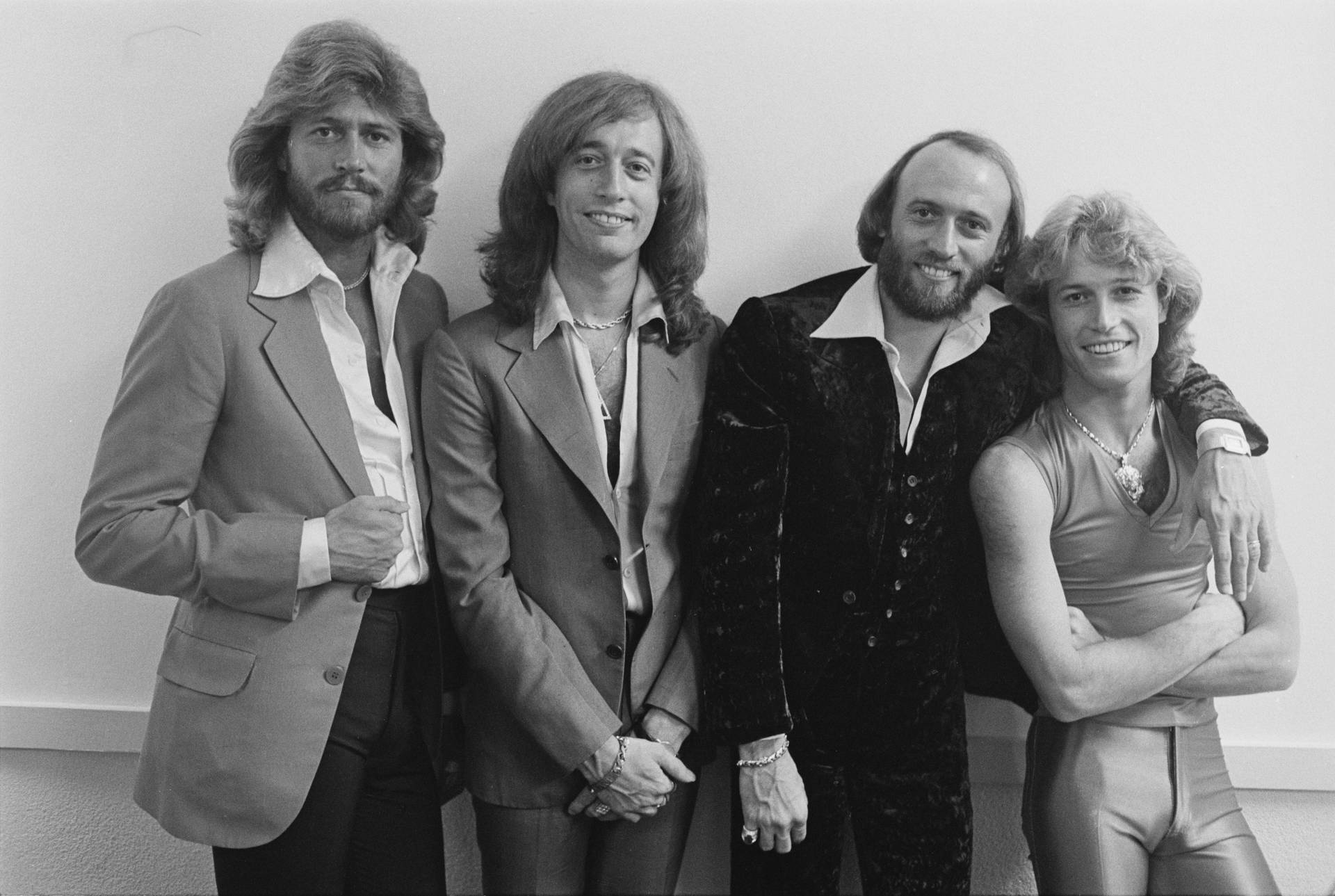
In the long shadow of Saturday Night Fever, The Bee Gees returned with The Woman in You and proved they could still move forward, even when the whole world expected them to look back.
Released in 1983 as the lead single from the Staying Alive soundtrack, The Woman in You arrived carrying more history than most pop singles ever have to bear. The film was the sequel to Saturday Night Fever, the cultural flashpoint that had tied The Bee Gees to the late-1970s disco boom more completely than almost any other act. By the time Staying Alive appeared, that era had already hardened into memory, debate, and backlash. The brothers were no longer stepping into a fresh movement. They were returning to a world they had helped define, only now the musical landscape had changed. That is what makes this record so interesting. It is not just a soundtrack song. It is a moment of recalibration.
On paper, the assignment could have felt limiting. A sequel soundtrack invites comparison before the needle even drops. People hear the title Staying Alive and immediately think of white suits, mirrored dance floors, and the unstoppable pulse of 1977. But The Woman in You does not try to recreate that exact atmosphere. Instead, it shifts into the leaner, glossier language of the early 1980s. The groove is tighter, less lush than the grand disco sweep of the group’s biggest crossover years. The rhythm feels clipped and controlled, the track polished in a way that belongs to a different decade. Rather than chasing their own past, The Bee Gees push themselves into the post-disco present, where pop had become sleeker, more mechanical, and more urban in its surface texture.
That change matters because it reveals how alert the group still was. By 1983, pop radio was filling with synthesizers, sharper drum sounds, and a colder kind of dance sophistication. The Woman in You understands that environment. It keeps the brothers’ gift for melody and vocal tension, but it dresses those instincts in production that feels more contemporary than nostalgic. There is still motion in the song, still that unmistakable Bee Gees sense of lift in the chorus, but the pleasure comes with more restraint. The record does not bloom the way their late-1970s hits did. It drives. It glides. It watches the room before it gives itself away.
Vocally, the song is a reminder of how much the group’s identity always depended on balance. Barry Gibb brings the cutting edge of the performance, a voice that can sound both intimate and aerodynamic at once, while the harmonies around him keep the emotional temperature from turning too cool. That blend had always been one of the group’s strengths: precision without sterility, elegance without distance. In The Woman in You, the brothers sound seasoned rather than eager. They are not trying to overwhelm the listener with sheer force. They are shaping mood, pacing, and atmosphere. Even the title suggests something slightly elusive, a song built less on open confession than on fascination, projection, and pursuit.
The soundtrack setting deepens that effect. Staying Alive, directed by Sylvester Stallone and starring John Travolta, was never going to feel like a simple repeat of the earlier film’s mood. The character had aged, the city had changed, and so had popular music. The Woman in You fits that altered emotional weather. It does not carry the communal release of a dance-floor anthem built to unite a room in one instant. Instead, it sounds more solitary, more adult, more aware of style as performance. That is why the song works so well as a lead single from this soundtrack. It acknowledges continuity with the Saturday Night Fever legacy while signaling that the old language alone would not be enough.
Its chart success mattered too. As a Top 40 hit in 1983, The Woman in You showed that The Bee Gees were still capable of reaching a broad audience even after the moment that made them global symbols had passed. That may sound modest compared with the imperial scale of their earlier run, but artistically it tells a richer story. Survival in pop is rarely just about repeating the formula that once worked. More often, it means understanding what to keep, what to trim away, and how to let a familiar voice live inside unfamiliar production. This single captures that exact discipline.
What lingers now is the confidence of the adjustment. Many songs tied to famous films end up trapped inside the movie’s shadow. The Woman in You deserves to be heard more carefully than that. It catches The Bee Gees at a crossroads, writing not from innocence or youthful explosion, but from experience. They knew what the public associated them with. They knew the risks of returning to that territory. And instead of offering a museum piece, they made a record that carried traces of their past while facing the cleaner, harder edges of the early 1980s head-on.
That is why the song still has a particular charge. It sounds like a band testing its own outline under new light, refusing to disappear into yesterday’s reputation. In that sense, the title of the film behind it becomes almost accidental poetry. Staying Alive was more than a sequel name. For The Bee Gees, in this moment, it described the task itself.
