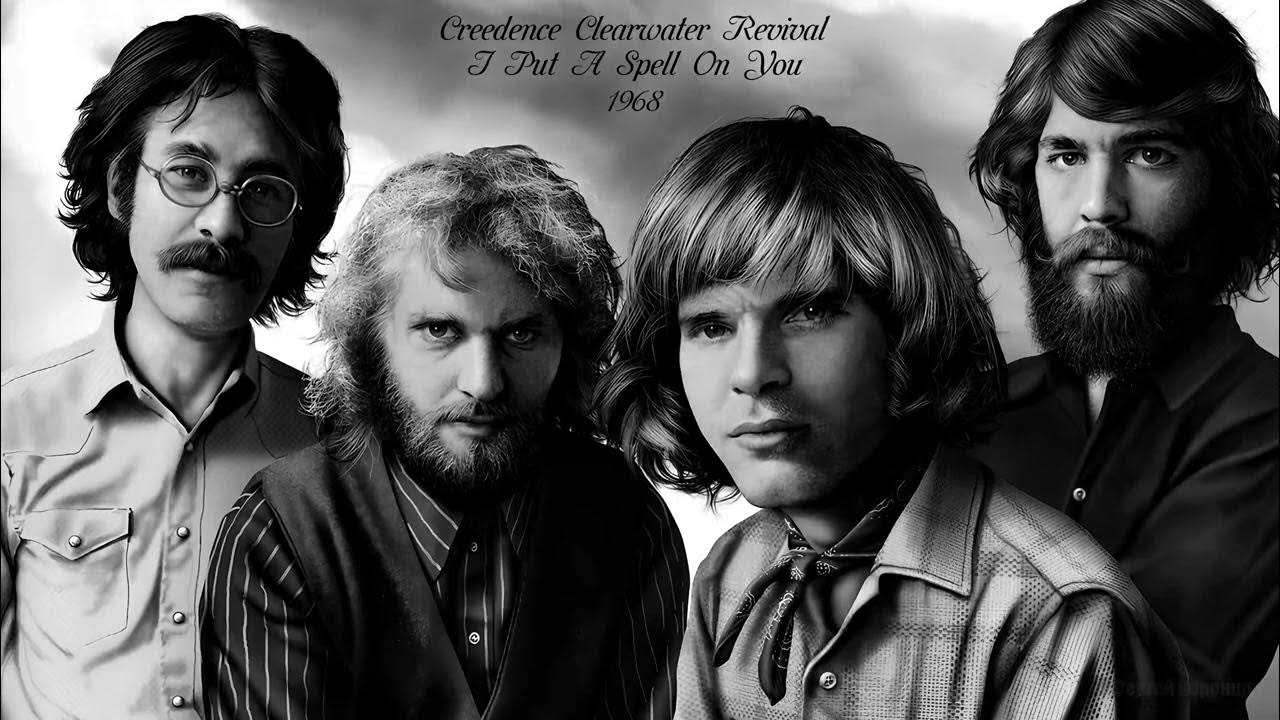
Sailor’s Lament shows what happened when Creedence Clearwater Revival stepped away from their usual rush of grit and momentum, and John Fogerty used Pendulum to chase a deeper studio groove.
Sailor’s Lament appears on Creedence Clearwater Revival’s 1970 album Pendulum, and it stands as one of the clearest signs that the band was willing to stretch its sound beyond the taut swamp-rock attack that had made it famous. Written by John Fogerty, the track is an instrumental, and that fact matters. Without a vocal to anchor the listener in a familiar Creedence narrative, the record has to speak through tone, arrangement, and atmosphere. What comes through is a measured, horn-colored, rhythm-and-blues drift that feels unusually spacious for a group so often celebrated for force, clarity, and hard forward motion.
That is what makes Pendulum such an intriguing album in the Creedence story. Released at the end of 1970, it arrived after an astonishingly concentrated run in which the band had become one of the defining American groups of the era. Yet instead of simply repeating a successful formula, John Fogerty pushed the record toward a broader studio palette. Pendulum brought in more keyboards, more layered arrangements, and, most noticeably, horns. Those choices did not erase the identity of Creedence Clearwater Revival; they changed the air around it. On Sailor’s Lament, that changing air becomes the whole point.
The track does not hit with the blunt certainty of Fortunate Son or the river-road propulsion of Green River. It moves differently. The groove feels slower, heavier in the middle, as if it is being carried rather than driven. The horns do not arrive as decoration. They shape the mood, giving the piece a dusky R&B contour that suggests Fogerty was thinking not only like a songwriter, but like an arranger. There is patience in the way the track unfolds. Space matters. Repetition matters. The pleasure comes from how the instrumental texture settles in and lets small shifts do the emotional work.
That is why the song feels so connected to the idea of studio exploration. Earlier Creedence records often carried the thrill of a band catching fire in tight formation, with no extra motion and no wasted light. Sailor’s Lament sounds more like a room being tested. You can hear the interest in color, in placement, in what happens when a familiar band voice is filtered through a different set of musical instincts. Rather than aiming for a big hook, the track leans into feel. Rather than cutting straight to the chase, it lets the atmosphere gather. It is a subtle risk, but a revealing one.
There is also something quietly transitional about it. Pendulum would be the last Creedence Clearwater Revival album released before Tom Fogerty left the group, and the record often carries that tension of a band still functioning at a high level while standing near the edge of change. Sailor’s Lament does not announce that history in any obvious way, but it seems to live inside it. The track sounds like a moment when certainty loosens just enough for curiosity to enter. The band is still disciplined, still recognizable, but the emotional weather has shifted. The old engine is there, though now it is idling in a different light.
For listeners who know Creedence mainly through the singles, this piece can come as a surprise. It asks for a different kind of attention. Not the quick recognition of a chorus, but the slower pleasure of hearing a strong musical personality try on another shape. John Fogerty’s R&B experimentation here is not flashy. It is controlled, almost understated. That restraint is part of the track’s appeal. It never behaves like a manifesto. It feels more like a musician following a private curiosity and letting the tape roll long enough for the idea to breathe.
And that may be why Sailor’s Lament has endured as one of the most telling corners of Pendulum. It reminds us that bands are often most revealing not only in their biggest statements, but in the side roads they choose to explore when nobody is demanding another hit. In those few minutes, Creedence Clearwater Revival sounds less like a machine built for certainty and more like a restless studio band listening for a new pulse. The result is not a rejection of what they were. It is the sound of what they might also have become, hanging in the room like late-night brass and a groove that refuses to hurry.
