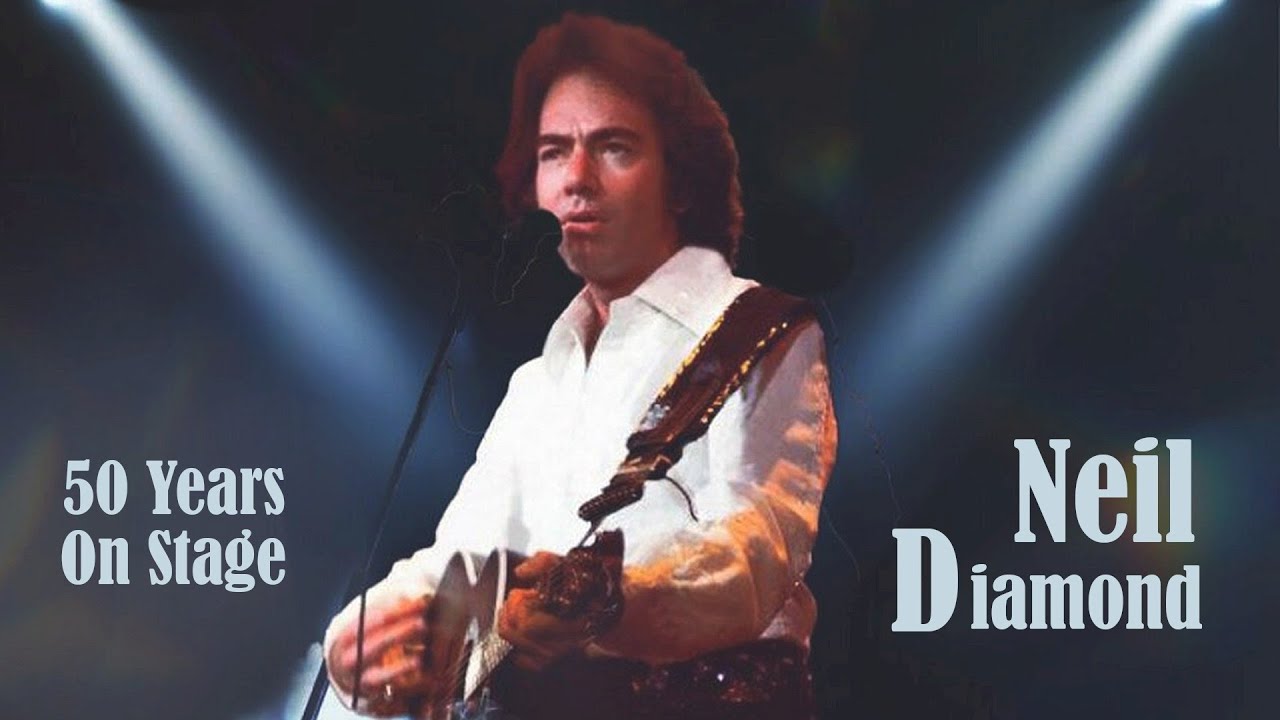
Before another singer carried it into the charts, The Boat That I Row caught Neil Diamond in 1966, turning independence into bright, restless pop.
Released on Bang Records in 1966, Neil Diamond‘s original recording of The Boat That I Row came before Lulu took the song to a wider audience with her later cover. That order matters more than it may seem. By the time Lulu made the song a British hit, Diamond was already proving that he was more than a writer with a strong catalog. On the Bang recordings, he was building the sound, stance, and dramatic tension that would carry him far beyond the demo room and the publishing office. The Boat That I Row belongs to that crucial early stretch, when his records still felt compact and radio-shaped, but his personality was already pressing against the edges.
In 1966, Diamond was moving through one of the most important transitions of his career. He had already developed the discipline of a professional songwriter, and the Bang era quickly introduced listeners to the recording artist through records such as Solitary Man and Cherry, Cherry. What makes The Boat That I Row so interesting inside that period is not simply that it is catchy, though it certainly is. It is that the song carries a form of self-command that would become one of Diamond’s deepest signatures. Even in these early years, he knew how to write a narrator who sounded wounded without sounding passive, determined without sounding stiff. The title alone is a whole piece of character writing: motion, control, refusal, survival.
Musically, the original has the efficiency of the best mid-1960s pop singles. Nothing lingers too long. The rhythm moves forward with purpose, the melody lands quickly, and the hook arrives with the confidence of someone who understands exactly how a record needs to hold the ear. Yet there is something slightly tougher in Diamond’s own version than in the song’s later, more widely known afterlife. His vocal does not smooth the edges away. It carries a wiry urgency, the sound of a singer who still has one foot in the songwriter’s world, where emotion has to be delivered fast, clearly, and without unnecessary decoration. That quality gives the record a special tension. It is polished enough for radio, but close enough to the writing desk to let you hear the push behind it.
The lyric is built around independence, but not the easy kind. This is not carefree drifting; it is chosen direction after disappointment. Diamond was always good at finding the exact point where pride and vulnerability meet, and The Boat That I Row lives in that intersection. The song sounds buoyant on the surface, yet its emotional logic is firmer than cheerful. It is about taking back control of the journey, refusing to let romance, rejection, or uncertainty dictate the course. That emotional mix helps explain why the song could travel so well from one singer to another. At its core, it offers both defiance and release.
When Lulu recorded the song later, she revealed another side of its design. Her version pushed the number into a brighter, more public pop space and helped confirm the strength of Diamond’s writing far beyond his own recordings. In Britain, it became a hit, and for many listeners her reading became the best-known one. But the success of that cover does not diminish the Bang original. If anything, it sharpens its value. Hearing Diamond’s 1966 version first, you can sense the blueprint before the spotlight shifts. The song’s bones are already strong: a compact structure, a memorable melodic rise, a title that works as metaphor and as motion, and a lyric stance that can be played as either playful or steel-willed depending on the voice delivering it.
That adaptability says a great deal about Diamond in the Bang Records years. He was not just writing songs that could be recorded; he was writing songs that could survive reinterpretation without losing their identity. That is a rarer gift than simple tunefulness. The Boat That I Row may not occupy the same public space as some of his larger career landmarks, but it shows the architecture of his craft with unusual clarity. You can hear the young artist understanding how to compress character, drama, and momentum into three brisk minutes. You can also hear how naturally he was beginning to merge two roles that do not always meet gracefully: professional songwriter and singular performer.
There is also something fitting in the image at the center of the song when placed beside Diamond’s own career at the time. In 1966, he was effectively rowing his own boat. The music business still knew him partly as a writer, but he was steering himself toward something more personal and more exposed. The Bang period gave him the platform, yet records like this gave him the shape. They showed that even before the grander concerts, the larger arrangements, and the later arena-scale persona, he already understood how to sound self-propelled. Not invulnerable. Not detached. Simply unwilling to be carried by someone else’s current.
That is why returning to the original version of The Boat That I Row feels so rewarding. It is not merely a historical footnote before a successful cover by Lulu. It is a vivid early Neil Diamond record, alive with motion, craft, and a kind of contained insistence that would become central to his music. Some songs become famous in borrowed light. This one already had its own weather. In the 1966 Bang recording, you hear a writer stepping fully into his voice and letting the song move the way its title promises: forward, under its own power, with no one else holding the oars.
