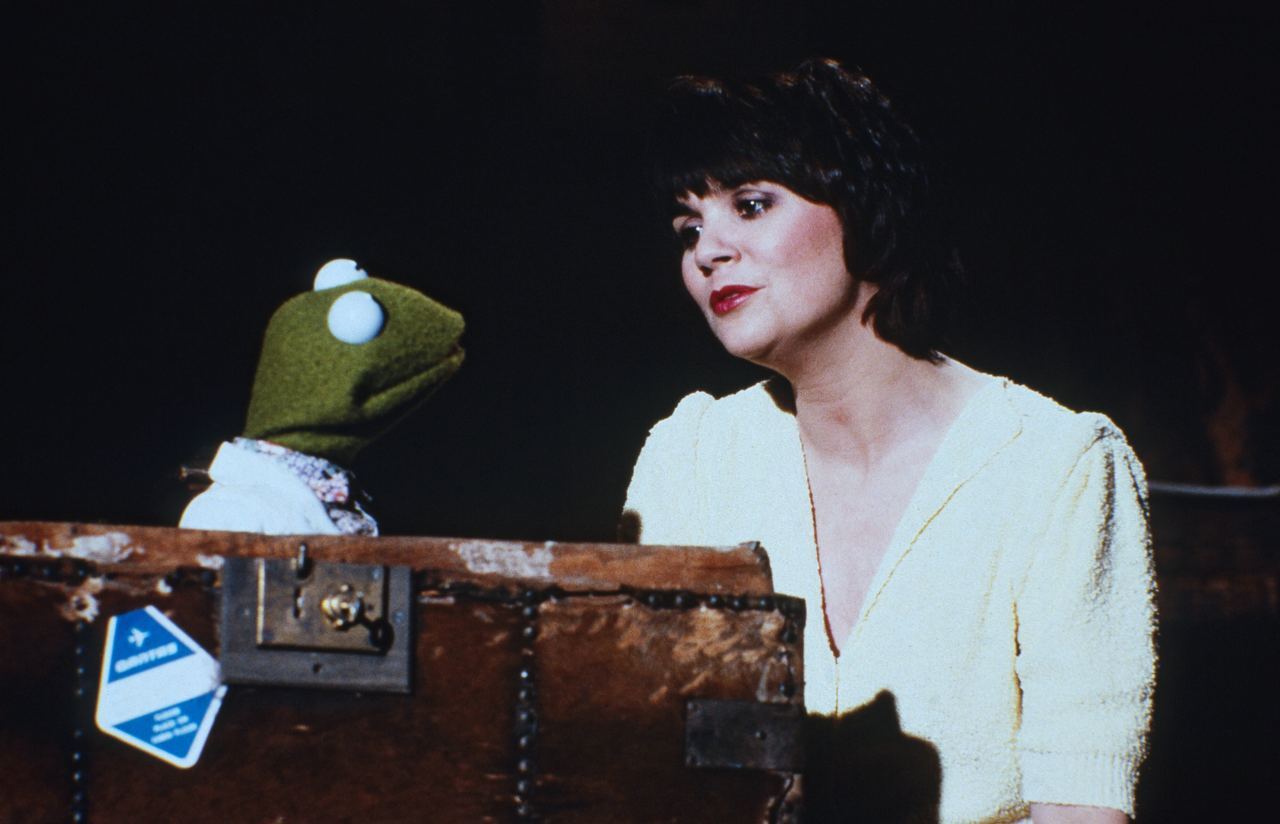
When Linda Ronstadt stepped into “I’ve Got a Crush on You” on What’s New, she was not borrowing nostalgia. She was proving that a singer shaped by rock, country, and pop could enter the Great American Songbook with poise, intimacy, and real conviction.
Released in 1983, What’s New was the first of Linda Ronstadt’s albums with Nelson Riddle, and from the beginning it carried a sense of both elegance and risk. Ronstadt had already spent the previous decade becoming one of the defining voices in American popular music, moving easily through rock, country, folk, and pop without ever sounding trapped by one lane. But the decision to record an album of pre-rock standards with the Nelson Riddle Orchestra was something else entirely. It asked listeners to hear her in a new frame: slower, more exposed, more dependent on phrasing than force. Her reading of “I’ve Got a Crush on You”, written by George Gershwin with lyrics by Ira Gershwin, became one of the clearest examples of why that gamble worked.
The song itself came from an earlier American world, first written in the late 1920s and later finding a durable place in the Songbook tradition. By the time Ronstadt reached it, “I’ve Got a Crush on You” had already been shaped by many singers, many orchestrations, many shades of longing. It is not a song that depends on big drama. Its power lies in understatement. The lyric is almost disarmingly plain, admitting infatuation without ornament, but the emotional balance is delicate. Too much sweetness, and it drifts away. Too much sophistication, and it loses its blush. Ronstadt understood that tension.
What makes her version so affecting is that she does not approach the Gershwins’ song as an actress playing at a bygone style. She sings it with clarity and restraint, but also with the directness that had always made her voice compelling. There is no wink in the performance, no museum-glass reverence. She sounds present inside the song, not posed beside it. That matters. Cross-genre experiments often fail when the artist seems to be visiting someone else’s house. On What’s New, Ronstadt sounds as though she has quietly learned the room’s manners while still bringing her own heartbeat.
Nelson Riddle’s contribution is equally central. Long associated with some of the most refined orchestral arrangements in American popular music, Riddle knew how to support a singer without burying the emotional line beneath polish. On “I’ve Got a Crush on You”, the orchestra does not crowd the melody. It opens space around it. The arrangement lets the song breathe in long, graceful phrases, with the kind of harmonic warmth that suggests candlelight without turning syrupy. Strings move with patience, woodwinds add softness, and the whole performance seems to trust silence as much as sound. That trust gives Ronstadt room to shape the lyric in a way that feels almost conversational, even inside such formal beauty.
And that is where the cross-genre story becomes more than a novelty. Ronstadt did not come to this material as a singer abandoning one identity for another. She came as an artist extending the logic of her own restlessness. Her best work had always involved interpretation: finding the emotional center of a song and delivering it with uncommon focus. Whether the setting was country-rock, torch song, or mariachi, she had a way of making the line feel lived in. On What’s New, that instinct met a repertoire built on subtle inflection, and the result was revelatory not because it was flashy, but because it was disciplined. She sang as if she knew that maturity in music often means doing less, not more.
There is also something quietly moving about the historical bridge the recording creates. By 1983, American pop had traveled through rock revolutions, singer-songwriter confession, radio gloss, and changing studio technology. Yet here was a major contemporary artist returning to a Gershwin standard with full orchestral backing and finding not a relic, but a living emotional language. Ronstadt helped prove that these songs were not preserved only by habit or prestige. They still had human use. They could still hold uncertainty, warmth, vulnerability, and the little tremor of saying too much by saying very little.
In Ronstadt’s hands, “I’ve Got a Crush on You” becomes a study in proportion. The feeling is tender, but never exaggerated. The arrangement is luxurious, but never overbearing. The voice is unmistakably hers, yet she bends toward the discipline the material requires. That balance is what makes the performance linger. It is not simply that a rock-era star sang a standard well. It is that she revealed how porous the borders between genres can be when taste, intelligence, and emotional honesty are doing the work.
More than four decades later, the recording still feels like a turning point in plain sight. Linda Ronstadt did not need to raise her voice to make the statement. With Nelson Riddle beside her and a Gershwin song built on understatement, she showed that reinvention can arrive not as spectacle, but as grace under control. The result is a performance that glows softly, then stays with you far longer than its gentleness first suggests.
