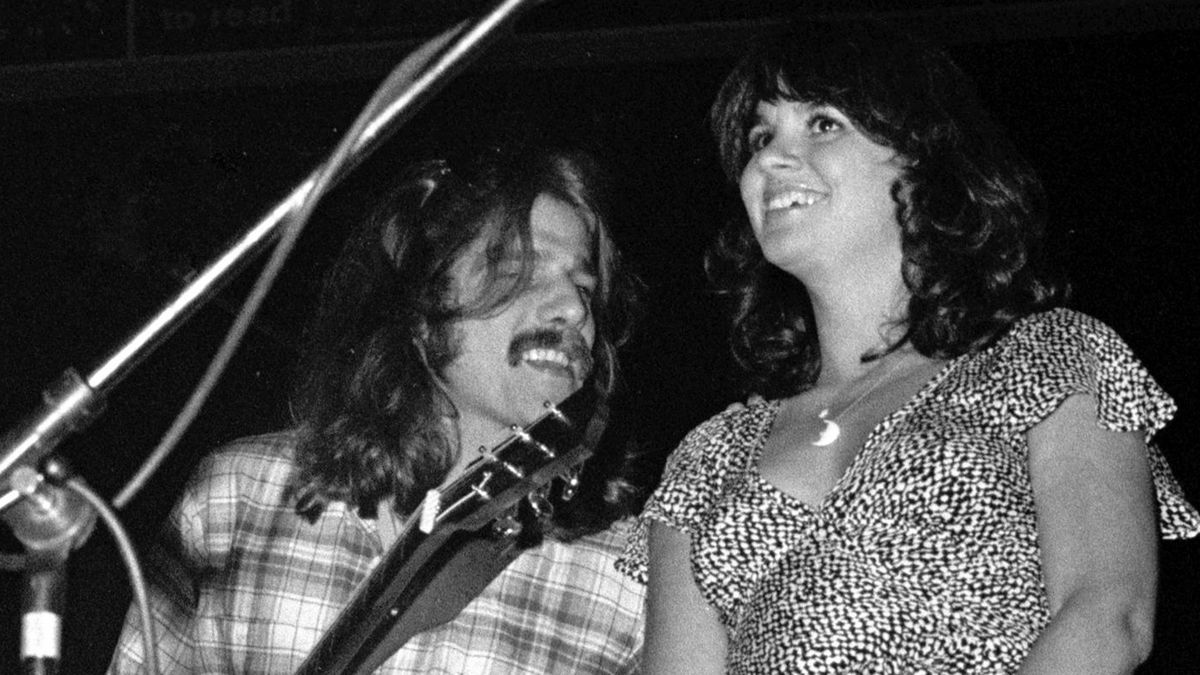
On Simple Dreams, Linda Ronstadt took “Poor Poor Pitiful Me” and changed its whole temperature, turning Warren Zevon’s sly bruiser into a bright, hard-running country-rock statement without losing the song’s bite.
When Linda Ronstadt recorded “Poor Poor Pitiful Me” for her 1977 album Simple Dreams, she was doing far more than choosing a sharp song from a respected songwriter. The track had first appeared on Warren Zevon’s 1976 self-titled album, where it carried his unmistakable mix of dry humor, trouble, and offhand danger. Ronstadt, working in the richly focused sound world that defined Simple Dreams, heard something else inside it. She kept the song’s restless spirit, but she brought it out into the light, giving it a cleaner drive, a more open melodic sweep, and a voice that made the whole thing feel less like a smirk from the corner of the room and more like a woman staring back at chaos without blinking.
That was one of Ronstadt’s rare strengths in the 1970s. She was not simply a singer with range, or a star with excellent taste. She was an interpreter who understood that songs could change shape when they passed through a different sensibility. By the time Simple Dreams arrived, she had already built a career on moving easily across styles that too many people treated as separate worlds. On that album alone, she could stand inside songs linked to Roy Orbison, Buddy Holly, the Rolling Stones, and Warren Zevon, and make the album feel coherent rather than scattered. What held it all together was not genre. It was her instinct for emotional balance, for where steel and tenderness could meet in the same line.
Zevon’s original version of “Poor Poor Pitiful Me” has the loose, darkly comic air that made his early work so compelling. It sounds lived-in, a little dangerous, and slightly amused by its own bad luck. Ronstadt’s version does not erase that mood, but it reorganizes it. The rhythm feels more direct. The arrangement has a California ease to it, but it never drifts. Guitars flash and pull; the groove stays lean; the whole performance moves with the confidence of players who know exactly how much force to apply. It is polished, yes, but not softened. The song still has edges. Ronstadt just lets them catch the light.
Her vocal is the real transformation. She does not sing the song as a defeated confession, nor does she overplay its humor. Instead, she balances control and momentum so well that the tension becomes part of the pleasure. There is toughness in the phrasing, but also lift. She sounds alert, quick, and entirely at home in the song’s mix of trouble and wit. That is why the recording feels like reinvention rather than tribute. She is not standing outside the material, admiring it. She is inside it, redirecting its energy. In her hands, the title phrase lands differently. It no longer sounds only like a shrug at misfortune. It starts to sound like a line spoken by someone who has already survived the scene the song is describing.
This matters because Ronstadt’s best covers were never acts of simple conversion, where a rock song becomes country or a songwriter’s album cut becomes mainstream radio. She understood something subtler. A song changes when the center of gravity changes. With her at the microphone, “Poor Poor Pitiful Me” becomes less private and more public, less sardonic and more defiant. The wit remains, but the emotional frame shifts. What once felt like a crooked late-night grin becomes something brighter and more resilient. That is the heart of cover reinvention: not making a song unrecognizable, but revealing that it had another life waiting inside it all along.
There was also a deeper artistic connection at work. Ronstadt had already shown how strongly she responded to Zevon’s writing, having recorded his “Hasten Down the Wind” before Simple Dreams. Her support helped bring his songs into a wider popular space at a time when his songwriting was still finding its full audience. That relationship makes “Poor Poor Pitiful Me” feel like more than a smart album selection. It sounds like part of an ongoing conversation between two artists with very different surfaces but a shared understanding of how complicated songs can be. Zevon supplied the crooked intelligence. Ronstadt found the velocity.
It is also worth remembering where Simple Dreams sits in her career. This was not a hesitant experiment from the margins. It came during one of Ronstadt’s most powerful commercial periods, when her voice was instantly recognizable and her artistic choices carried real cultural weight. Yet even at that level of success, she kept trusting songs over image. She chose material with character, contradiction, and room to breathe. “Poor Poor Pitiful Me” fit that instinct perfectly. It gave her something bright and tough to ride, but it also let her show how intelligence in performance can be as dramatic as sheer vocal force.
Nearly fifty years later, the recording still feels fresh because its achievement is so precise. Ronstadt does not overwhelm the song, and she does not preserve it under glass. She meets it at exactly the right pressure point, where style, wit, and feeling can all remain intact while the mood is entirely transformed. That is why her version lasts. It reminds us that a great cover is not a copy with better sound or broader reach. Sometimes it is the moment a song discovers a second self. On Simple Dreams, Linda Ronstadt gave “Poor Poor Pitiful Me” that second self, and the result still moves with the bright confidence of something newly born.
