Tulsa Time is more than a country hit—it is a gentle rebellion against hurry, a song about choosing your own rhythm when the world keeps pushing you to run faster.
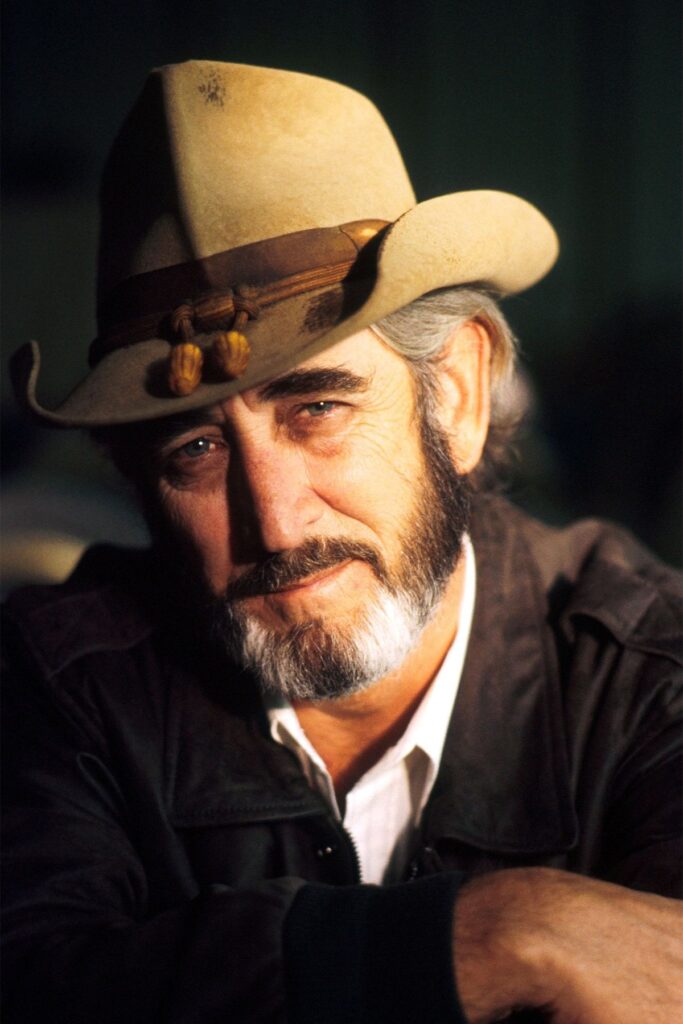
There was always something deeply reassuring about Don Williams. He never had to force a note, never had to overplay a feeling, and never had to chase a trend to make a song matter. With “Tulsa Time”, released from his 1978 album Expressions, he found the perfect vehicle for that calm authority. The song rose to No. 1 on Billboard’s Hot Country Singles chart in 1978, becoming one of the defining recordings of his career and one of those records that seems to improve with age. Years later, people still hear it and smile almost instinctively—not because it is flashy, but because it feels true.
Written by Danny Flowers, “Tulsa Time” has one of those backstories that explains exactly why the song feels so lived-in. Flowers spent time in Tulsa, Oklahoma, and what stayed with him was not simply the city itself, but its pace. Compared with the pressure and clock-watching of the music business, Tulsa seemed to move to its own schedule. That contrast became the soul of the song. In the lyrics, the narrator leaves Tulsa for a more glamorous dream in Hollywood, hoping to break through in the music world. But the farther he gets from home, the more he realizes that success measured by someone else’s clock may not be success at all. Sooner or later, the lesson becomes simple: if the world will not slow down for you, perhaps the wiser choice is to go where life still feels human.
That idea gave “Tulsa Time” its memorable hook. On the surface, it is witty and easygoing. Underneath, it carries something more thoughtful. This is not merely a song about geography. It is about the difference between ambition and belonging. It is about discovering that being out of step with the world can sometimes mean you are closer to what matters. Many songs about leaving home sound dramatic or tragic. Don Williams approached it differently. He sang it as if he already understood the joke, the sadness, and the wisdom all at once.
And that is where his genius truly enters the picture. Another singer might have turned “Tulsa Time” into a novelty number, leaning too hard on the humor or the swagger. Don Williams did the opposite. He delivered it with his trademark warmth—measured, relaxed, and quietly confident. His phrasing is so unhurried that the song itself seems to live by the principle it celebrates. He does not rush the story along. He lets it settle. He lets each line land with the ease of a conversation between old friends. That restraint is what makes the record so durable. It does not beg for attention; it earns affection.
Musically, the record is just as smart as the lyric. The groove has a subtle swing, light on its feet but never hurried, creating exactly the kind of atmosphere the title promises. It feels open-road casual, but it also carries that late-1970s country polish that made Don Williams such a crossover favorite. There is country in its storytelling, a touch of blues in its feel, and a gently rolling rhythm that invites listeners in instead of pushing at them. It is easy to understand why the song later appealed to artists outside traditional country as well. Its message was universal, and its construction was sturdy enough to travel.
Still, the definitive emotional weight belongs to Don Williams. He was often called the “Gentle Giant,” and songs like “Tulsa Time” explain why. He had the rare ability to sound relaxed without sounding detached. Even when a song smiled, there was often thoughtfulness behind it. Here, he captures the small ache of realizing that the world you chased may not fit you, while also preserving the grace of choosing another road. There is no bitterness in his performance. No grand speech. Just the calm realization that a person can come back from disappointment with dignity intact.
That is one reason “Tulsa Time” still speaks so clearly across generations. The song understands a truth many people come to slowly: speed is not the same as progress, and noise is not the same as meaning. Life teaches that lesson in different ways to different people. Sometimes through work, sometimes through travel, sometimes through long years spent trying to live up to a promise that never quite felt like your own. When Don Williams sings this song, he gives that realization a melody sturdy enough to carry memory.
There is also something especially moving about the way the song honors place. Tulsa becomes more than a city name. It becomes a symbol of ease, perspective, and self-respect. In a culture that often celebrates the hustle, “Tulsa Time” quietly defends another kind of wisdom: the wisdom of knowing when to stop running. That may be why the song has stayed alive so long. Not just because it sounds good on the radio, but because it reminds listeners of a life they may still miss—or still hope to reclaim.
In the end, “Tulsa Time” remains one of the finest examples of what Don Williams did better than almost anyone. He could take a plainspoken lyric, a modest melody, and a familiar feeling, then turn them into something lasting. He made understatement feel profound. He made calm feel strong. And in this song, he made the simple act of keeping your own time sound like a kind of quiet victory.
