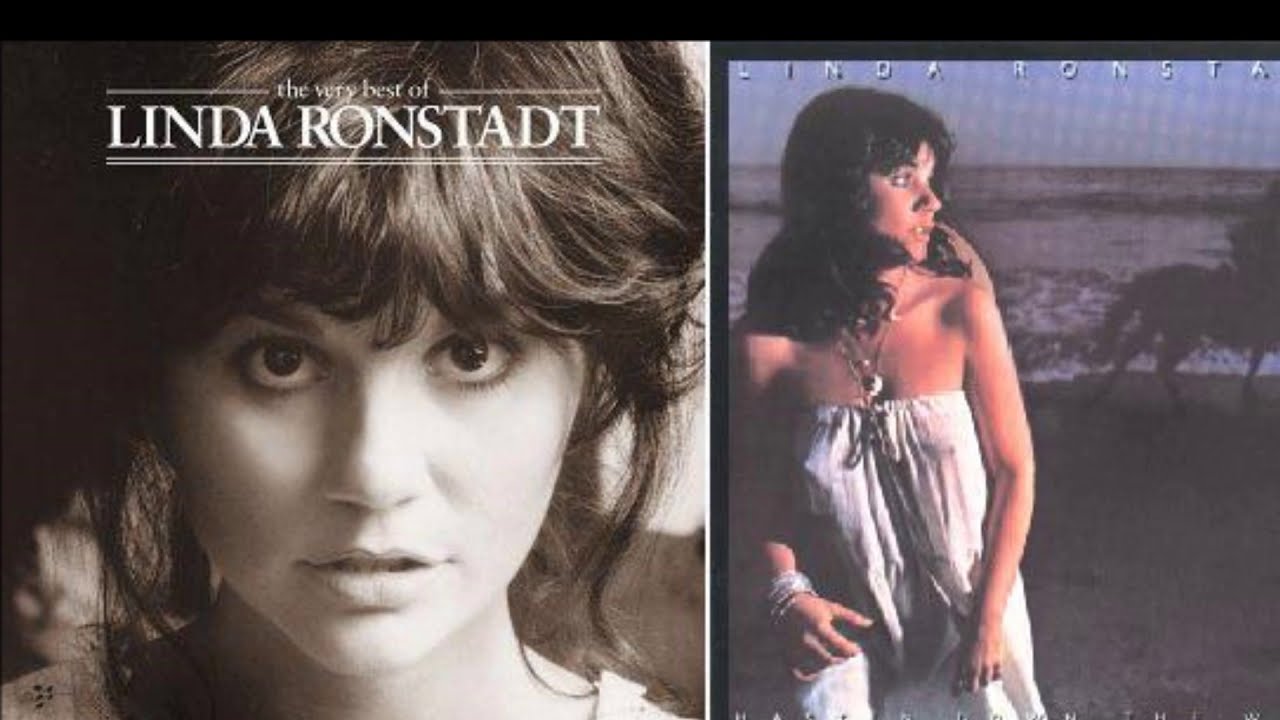
A song about love that has drifted away but still remains painfully near, Still Within the Sound of My Voice gave Linda Ronstadt one of the most exquisite showcases of control, power, and emotional grace in her later career.
When Linda Ronstadt opened her 1989 album Cry Like a Rainstorm, Howl Like the Wind with Still Within the Sound of My Voice, she did something remarkable: she made stillness feel enormous. The album itself was a major success, reaching No. 7 on the Billboard 200, and it is often remembered first for the luminous Aaron Neville duets Don’t Know Much, which climbed to No. 2 on the Billboard Hot 100, and All My Life, which reached No. 11. But before those radio favorites arrive, the record begins with this Jimmy Webb composition, and in many ways it tells you everything about the emotional standard the album intends to set. This was not simply another beautifully sung track. It was a statement of artistic authority.
Still Within the Sound of My Voice was written by Jimmy Webb, one of the great American songwriters, the same craftsman whose name is forever linked with songs such as Wichita Lineman and By the Time I Get to Phoenix. Webb has always had a rare gift for writing songs that seem to hover between conversation and confession, and this one belongs firmly in that tradition. Its title alone carries the ache of distance without complete disappearance. The beloved figure in the song is no longer close in the ordinary sense, yet not fully gone either. There is still an emotional radius, still a kind of invisible nearness. It is a song about separation, but not emptiness. About memory, but not surrender. About longing that survives even after the room has changed.
That emotional complexity is exactly why Linda Ronstadt was the right singer for it. Lesser vocalists might have treated the song as a grand ballad and pushed too hard too soon. Ronstadt does the opposite. She enters with restraint, with the kind of quiet assurance only a master possesses. The first phrases feel measured, almost conversational, as if she is letting the song reveal itself rather than announcing it. Then, slowly, the power gathers. Her tone rises without strain. Her breath support is so secure that the long lines feel inevitable rather than effortful. And when she opens the voice fully, she does not simply sing louder; she widens the emotional space of the song. That is the difference between a strong singer and a great interpreter.
What makes this performance so moving is the balance she keeps between clarity and ache. Ronstadt had one of the most instantly recognizable voices in American popular music, bright at the top, centered in the middle, and capable of tremendous force, yet she was never merely showing range here. On Still Within the Sound of My Voice, her phrasing is the real revelation. She knows exactly when to lean into a word and when to let it pass almost like a sigh. She uses vibrato as color, not decoration. She understands that heartbreak in a song like this is not a matter of collapse; it is a matter of composure under pressure. The sadness remains contained, which somehow makes it hit harder.
Placed at the start of Cry Like a Rainstorm, Howl Like the Wind, the track also carries special weight. By 1989, Linda Ronstadt had already lived several musical lives in public. She had been a rock star, an interpreter of country material, a singer of standards, and an artist willing to follow Mexican traditional music with seriousness and love. There was nothing left for her to prove in terms of versatility. Yet this album, produced by her longtime collaborator Peter Asher, showed that maturity had not dulled her instrument at all. If anything, it had deepened her judgment. She no longer needed to dazzle for its own sake. She could shape a song from the inside out.
That is why this performance remains so admired among listeners who care about singing itself. Not just hit records. Not just famous choruses. Singing. The architecture of a line. The emotional intelligence behind a held note. The instinct to avoid excess when excess would be easy. Ronstadt’s voice on this recording feels large, but never inflated. It soars, yes, but its true greatness lies in how human it stays. Even at its most expansive, it never loses the intimacy of someone speaking to one absent person.
There is also something deeply moving about the way the song sits inside the late-1980s sound of the album. Cry Like a Rainstorm, Howl Like the Wind carries the polished production of its era, yet Still Within the Sound of My Voice escapes the trap of period gloss because the emotional center is so strong. The arrangement supports the drama, but the performance is what lasts. Ronstadt gives the song shape, weather, and breath. She turns Webb’s elegant writing into lived experience.
In the end, that may be the lasting meaning of this recording. Some songs tell us that love is lost. This one suggests something more complicated and, in its own way, more haunting: that even after distance, even after change, a voice can remain close enough to be heard inside memory. Linda Ronstadt sings that truth with extraordinary discipline and tenderness. No wasted gesture, no false sentiment, no theatrical exaggeration. Just a great singer meeting a great song at exactly the right depth. For many listeners, that is why Still Within the Sound of My Voice still feels less like an album track and more like a private weather system that begins the moment she opens her mouth.
