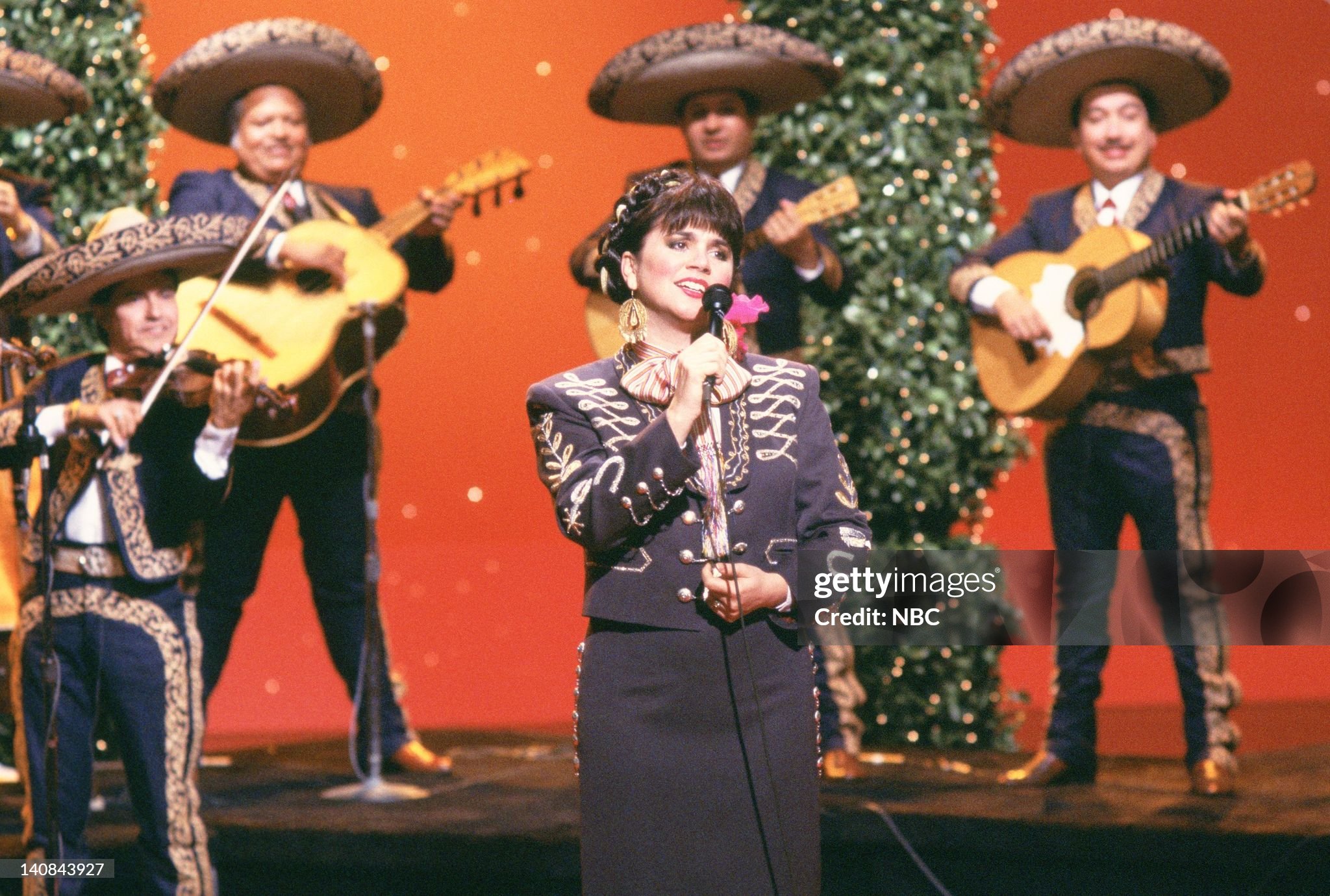
On “Por Un Amor”, Linda Ronstadt did far more than record a beloved ranchera. She turned Canciones de Mi Padre into a return to family memory, language, and the music that had always been waiting for her.
When Linda Ronstadt released Canciones de Mi Padre in 1987, it was not a novelty project, not a side trip, and certainly not a polite salute to her roots from a safe distance. It was a full-hearted act of return. By then, she had already conquered American pop and rock, moving with remarkable ease through country, soft rock, standards, and the California sound of the 1970s. Yet this Spanish-language album, built around traditional Mexican repertoire, revealed something even deeper than versatility. It revealed belonging.
At the center of that emotional homecoming sits “Por Un Amor”, one of the album’s most stirring performances. The song itself is a classic ranchera associated with the great emotional tradition of Mexican song, written by Gilberto Parra Paz. Its title means “For a Love,” and its lyric carries the old ache that rancheras know so well: love as devotion, love as wound, love as a force that leaves the heart marked forever. In lesser hands, that kind of song can become theatrical. In Ronstadt’s voice, it becomes intimate, dignified, and startlingly sincere.
The achievements around Canciones de Mi Padre were extraordinary. The album reached No. 42 on the Billboard 200, an impressive showing for a fully Spanish-language release in the American mainstream, and it later earned the Grammy Award for Best Mexican-American Performance. Over time, it also became recognized as the best-selling non-English-language album in U.S. history. Those facts matter, because they show how unusual this record was in its moment. But charts and trophies tell only part of the story. What made the album endure was the feeling that Ronstadt was not crossing into someone else’s music. She was coming back to her own.
That is why “Por Un Amor” resonates so powerfully on this record. Ronstadt was drawing from the Mexican side of her family history, particularly the musical world of her father and the Sonoran heritage that had shaped the household she grew up in. Even the album title, Canciones de Mi Padre—Songs of My Father—carries that intimate weight. This was not a marketing concept. It was personal memory set to melody.
And you can hear that truth in the way she sings. Ronstadt does not approach the song like a pop star trying on a genre. She enters it with reverence and discipline. Her phrasing is measured. Her Spanish is clear and lovingly handled. She allows the emotional line of the ranchera to breathe, never rushing toward effect. Around her, the mariachi arrangement gives the song its essential architecture: the swell of violins, the noble cry of trumpets, the grounding pulse of guitarrón and vihuela. The sound is formal, traditional, and beautifully unhurried. Nothing is overdecorated. Nothing feels translated for outsiders. That restraint is part of the performance’s power.
There is also something quietly brave about the timing. In 1987, an artist of Linda Ronstadt’s stature could easily have continued mining familiar commercial ground. Instead, she devoted an entire major release to Spanish-language songs that meant something to her family and to generations of listeners who had lived with this music long before the American pop industry took notice. That decision gave Canciones de Mi Padre a moral center. It was not asking permission to exist. It simply stood where it belonged.
In “Por Un Amor”, you hear the emotional essence of that decision. The song aches, but it does not collapse. It mourns, but it keeps its posture. That balance is one of the oldest truths in ranchera music: heartbreak is not merely sorrow; it is also endurance, memory, and identity. Ronstadt understood that. She sang the song not as an observer but as someone willing to trust the dignity inside its sadness.
What remains so moving, all these years later, is how naturally this performance carries both grandeur and intimacy. It sounds large enough for a hall and close enough for a family room. It belongs equally to the concert stage and to the inherited world of parents, grandparents, kitchens, celebrations, and evenings when songs said what ordinary speech could not. That is why “Por Un Amor” on Canciones de Mi Padre still feels so alive. It is not merely a beautiful track on a celebrated album. It is the sound of an artist stepping fully into lineage, singing with gratitude, and giving a treasured tradition back to the world with uncommon grace.
For many listeners, that is why this recording never fades into simple nostalgia. It continues to feel necessary. In a career filled with masterful performances, Linda Ronstadt’s “Por Un Amor” remains one of the clearest windows into who she was beneath fame: a singer of immense intelligence, yes, but also a daughter honoring the music that formed her long before the spotlight arrived.
