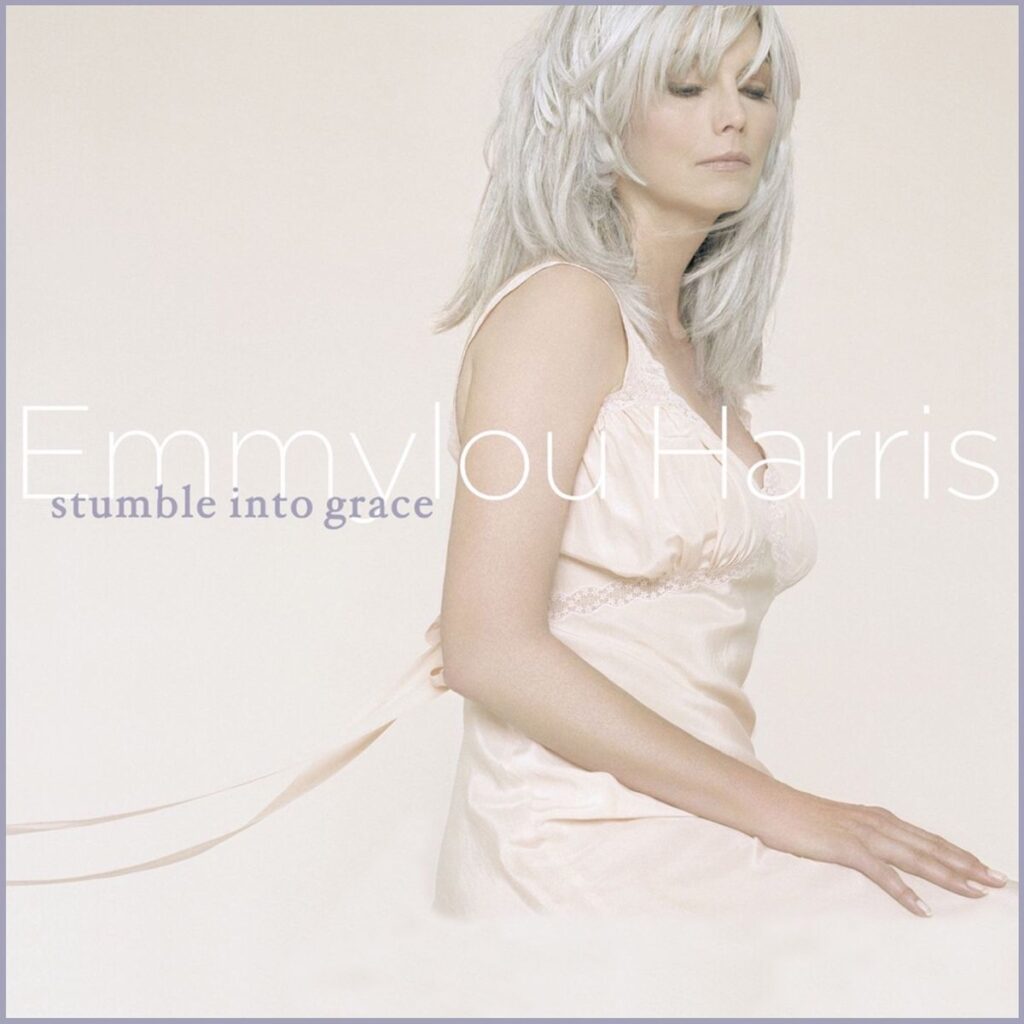
On Pieces of the Sky, Emmylou Harris sang “Coat of Many Colors” not as a showcase, but as a tender act of understanding—her way of honoring the autobiographical truth at the center of Dolly Parton‘s songwriting.
When Emmylou Harris placed “Coat of Many Colors” on her 1975 album Pieces of the Sky, she was making a statement that was quieter than a hit single but, in its own way, just as lasting. This was not a case of a rising singer borrowing a famous song for easy recognition. It was one great artist recognizing the emotional authority of another. Dolly Parton‘s original recording, released in 1971 on the album of the same name, had already climbed to No. 4 on Billboard’s Hot Country Singles chart and had become one of the defining autobiographical songs in modern country music. Harris‘s version was not released as a separate single, so it did not chart on its own, but Pieces of the Sky reached No. 7 on Billboard’s country album chart and helped establish her as a major force in American roots music.
That context matters, because Pieces of the Sky was more than an album title. It felt like the beginning of a second life. Emmylou Harris had already drawn attention through her work with Gram Parsons, and by 1975 she was stepping fully into her own artistic identity. The album introduced the full reach of her musical imagination: old-time country, folk tenderness, sorrow, grace, and a remarkable instinct for choosing songs that carried emotional history within them. In that setting, “Coat of Many Colors” fit naturally. Yet what makes it memorable is that she did not try to remake it in a flashy way. She understood that some songs are already complete in their meaning. The task is not to overpower them, but to receive them deeply enough that they can bloom again in another voice.
Dolly Parton‘s song, of course, came from one of the most cherished stories of her childhood. As she often explained, the lyric was inspired by the coat her mother stitched together from scraps of cloth when the family had very little money. The song is about poverty, but it is not really defeated by poverty. It is about dignity, imagination, maternal love, and the painful moment when a child discovers that the world does not always recognize the treasures of the heart. In one of country music’s most enduring reversals, shame becomes pride, and lack becomes abundance. The coat may be made of rags, but the song insists that love can clothe a person more richly than money ever could. That is why the lyric has endured for so long. It is specific, deeply personal, and at the same time almost universal.
What Emmylou Harris brings to that story on Pieces of the Sky is a remarkable sense of reverence. Her reading is not as earthy or homespun as Dolly Parton‘s original. Instead, it feels translucent, almost prayerful. Where Parton sings from inside the remembered experience, Harris sounds like someone carefully holding that memory up to the light. Her phrasing is gentle, unforced, and full of respect for the song’s emotional architecture. She never crowds the lyric. She lets it stand. That is the essence of a meaningful reinterpretation: not changing the truth of the song, but changing the emotional distance from which we hear it.
There is also something profoundly moving about the fact that Emmylou Harris, an artist building her own identity in a difficult and transitional moment, chose to honor another woman songwriter in this way. In the mid-1970s, country music still too often treated women as interpreters first and auteurs second, even when the evidence on record told a different story. By recording “Coat of Many Colors”, Harris was not merely selecting a beautiful song. She was implicitly acknowledging Dolly Parton as a writer of rare autobiographical power. That gesture carries weight. It says that this song was not just admired; it was understood as a standard of emotional truth.
Musically, the performance sits beautifully within the atmosphere of Pieces of the Sky. The album often balances country tradition with folk delicacy, and this track lives in that same graceful space. Nothing feels pushed. Nothing feels ornamental for its own sake. The arrangement supports the vocal rather than competing with it, which allows the story to remain central. That restraint is part of why the recording still feels so affecting. Some songs lose force when they are polished too brightly. “Coat of Many Colors” needs room for memory, room for humility, room for the ache that sits underneath its gratitude. Harris gives it exactly that.
In the end, her version endures because it understands what made Dolly Parton‘s songwriting so powerful in the first place. The song does not ask for pity. It offers a moral vision. It reminds us that the things handed down in love can become a lifelong inheritance, even when the world first mistakes them for signs of lack. By the time Emmylou Harris sings it on Pieces of the Sky, that truth has deepened. The song is no longer only Dolly‘s childhood memory; it has become part of a larger conversation between two artists about what country music can hold when it is brave enough to be plainspoken, personal, and tender.
That is why this recording still feels so special. It is a cover, yes, but it is also a salute, a listening act, and a bridge between two extraordinary voices. Emmylou Harris did not try to replace the original glow of “Coat of Many Colors”. She preserved it, softened it, and carried it into her own world. In doing so, she gave listeners one of the most graceful reinterpretations on Pieces of the Sky—a performance that honors Dolly Parton‘s autobiographical genius by refusing to stand between the song and the heart.
