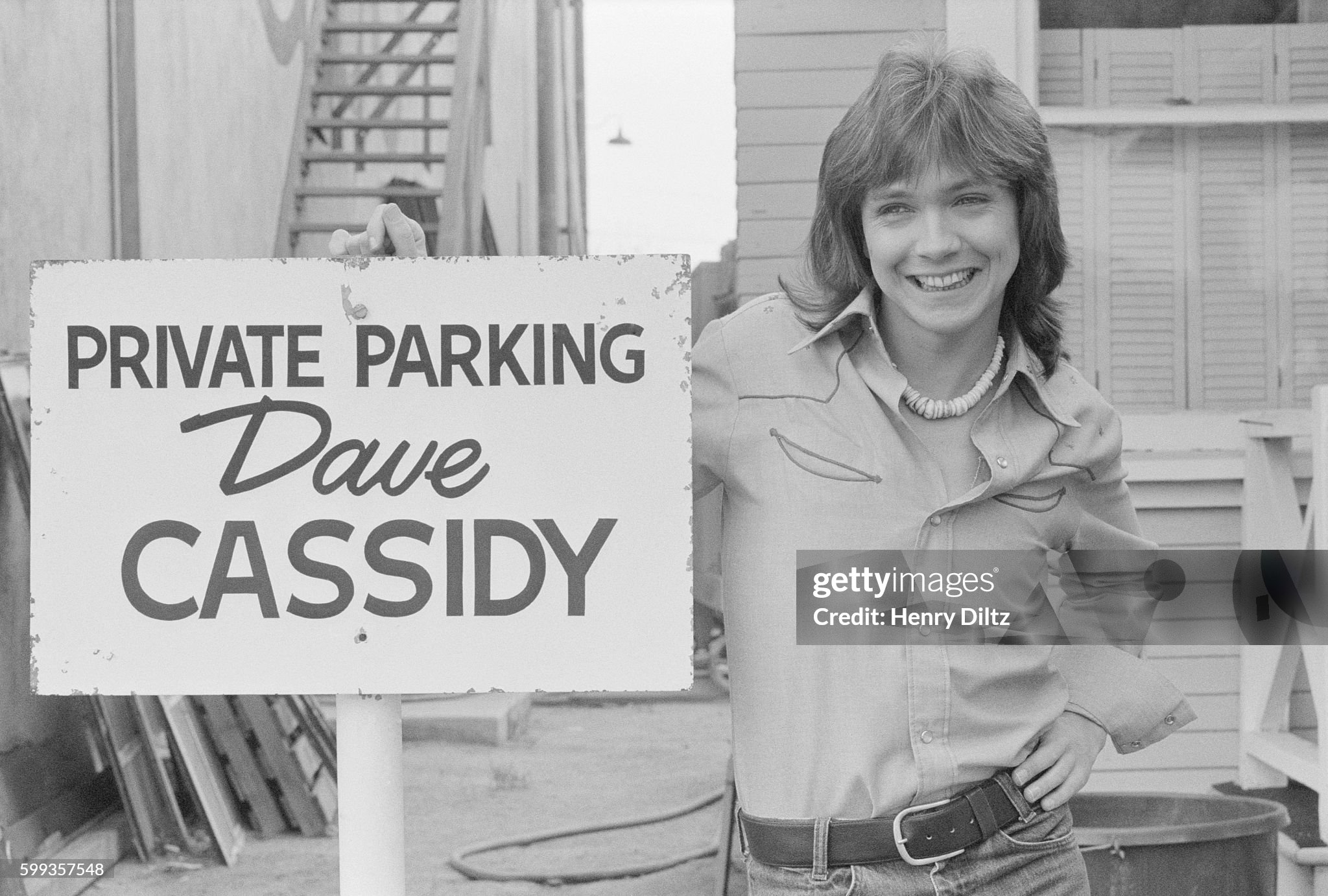
A tender pop fantasy on the surface, Daydreamer became one of David Cassidy‘s most revealing recordings because his voice carried far more longing than the lyric ever said out loud.
In 1973, David Cassidy was already one of the most recognizable young stars in the English-speaking world, but Daydreamer proved that the hysteria around him was not the whole story. Released from the album Dreams Are Nuthin’ More Than Wishes, the song rose to No. 1 on the UK Singles Chart in May 1973 and stayed there for three weeks, becoming his second British chart-topper. In the UK, the single was associated with The Puppy Song as part of its release history, yet it is Daydreamer that still lingers as one of the purest examples of Cassidy’s vocal appeal. Written by Terry Dempsey, it was not a grand dramatic statement. It was something more delicate, and in many ways more difficult: a romantic reverie sung with enough sincerity to make it feel personal.
That is why the record matters. At a glance, Daydreamer can seem like a gentle piece of early-1970s pop, bright and polished, the kind of song that floated easily across radio playlists. But the performance gives it its shape, its ache, and its identity. David Cassidy does not attack the song; he leans into it. His phrasing is soft, almost confidential in places, and he allows the melody to bloom gradually instead of forcing it into easy sentiment. There is a smoothness in the delivery, of course, but there is also restraint. He sounds as if he is reaching toward an idea of love that is still slightly out of reach. That emotional distance is what turns the song from a pleasant pop hit into a signature vocal moment.
By the time Dreams Are Nuthin’ More Than Wishes arrived, Cassidy was working in the strange space between mass adoration and artistic expectation. Millions knew his face from The Partridge Family, and his success in Britain was extraordinary even by pop-idol standards. Yet songs like Daydreamer reminded listeners that he had a genuine instinct for melodic storytelling. He knew how to place a line so that it sounded conversational, how to let a high note brighten without turning brittle, and how to keep sweetness from becoming emptiness. Many singers could have delivered this tune neatly. Cassidy delivered it intimately.
The song’s meaning is simple, but not shallow. Daydreamer lives in that old pop space where love is still partly imagined, where the beloved feels half real and half ideal. It is a song about yearning for someone who seems to exist just beyond ordinary reach, and that is exactly why it suited Cassidy so well at that point in his career. The title itself suggests imagination, longing, and emotional projection. He is not singing from certainty. He is singing from hope, from romantic anticipation, from the soft ache of wanting life to resemble the dream for just a little while. In lesser hands, that could have felt lightweight. In his voice, it feels wistful.
Listen closely to the way David Cassidy shapes the lines and one hears the real secret of the recording. His tone carries a boyish brightness, but underneath it there is a trace of fatigue, of maturity arriving early. That blend was one of his great strengths. He could sound accessible and glamorous at once, polished but never entirely protected. On Daydreamer, he uses that gift beautifully. The song does not depend on vocal fireworks. Its power comes from control: the breath held just long enough, the rise into the chorus without strain, the gentleness that never slips into weakness. This is precisely why the track remains so identifiable as a David Cassidy performance. It does not merely feature his voice; it depends on the qualities that made his voice unmistakable.
The chart success was real, but the afterglow has lasted for another reason. British audiences in 1973 did not simply hear a teen favorite releasing another single. They heard a record that matched the emotional weather of its time: romantic, melodic, hopeful, and touched with melancholy. Daydreamer belongs to an era when pop often carried a kind of polished innocence, yet the best records still allowed a little shadow to fall across the melody. Cassidy’s reading gives the song that shadow. He makes the dream sound lovely, but he also lets us feel how fragile dreams can be.
There is also something fitting about the song emerging from an album called Dreams Are Nuthin’ More Than Wishes. That title already hints at longing dressed as optimism, desire softened into something singable. Daydreamer feels like the emotional center of that mood. It is not cynical. It does not mock the romantic imagination. Instead, it treats tenderness as something worth preserving. Decades later, that may be the reason the record still lands so gracefully. It takes an ordinary pop sentiment and gives it shape through voice alone.
So when people remember Daydreamer as a 1973 UK No. 1, they are remembering more than a successful single. They are remembering a moment when David Cassidy sounded exactly like himself: warm, yearning, controlled, and quietly vulnerable. That is the part that endures. Trends change, chart runs fade into numbers, and pop images often lose their color with time. But a signature vocal performance survives. On Daydreamer, Cassidy left one behind.
