Empty-Handed Heart aches with the sound of love after illusion has burned away, and Linda Ronstadt’s shadowy harmony makes Warren Zevon’s loneliness feel even more exposed.
There are collaborations that arrive with fanfare, and then there are collaborations that change the entire emotional climate of a song almost without announcing themselves. Warren Zevon’s “Empty-Handed Heart”, from his 1980 album Bad Luck Streak in Dancing School, belongs to that second category. The album itself performed well, reaching No. 20 on the Billboard 200, but this particular song was never one of its chart-driven calling cards. It remained, instead, an album track in the richest sense of the phrase: something discovered slowly, lived with privately, and remembered by listeners who know that the deepest wounds in a record are not always the loudest ones. Part of what gives the song its lasting power is the haunting presence of Linda Ronstadt, whose vocal contribution does not overwhelm the performance, but deepens it from within.
That matters because Ronstadt was never just another guest singer passing through a session. By 1980, she had already become one of Zevon’s most important champions. She had recorded his songs, helped bring his writing to a broader audience, and recognized before many others did that beneath his sardonic wit and hard-boiled imagery was a songwriter of real tenderness. Her versions of “Poor Poor Pitiful Me” and “Hasten Down the Wind” had already shown how beautifully his writing could live in another voice. So when she appears on “Empty-Handed Heart”, the moment carries more than musical value. It carries history, trust, and the subtle electricity that comes when two artists understand one another’s strengths without needing to explain them.
Bad Luck Streak in Dancing School came after the commercial and critical impact of Excitable Boy, and that timing is important. Zevon was no longer merely the brilliant cult figure whispering at the edges of the California rock scene. He had already shown he could write songs with bite, intelligence, and broad appeal. But this 1980 album also revealed something bruised and reflective in him. The title alone suggests elegance colliding with misfortune, style meeting damage. “Empty-Handed Heart” fits that emotional terrain perfectly. It is not theatrical heartbreak. It is quieter than that, more adult, more resigned. It sounds like the moment after the argument, after the bluff, after the pride has drained away and a person is left holding nothing but recognition.
That, in many ways, is the song’s central meaning. “Empty-Handed Heart” is about emotional depletion, about arriving at love or memory stripped of illusion. In Zevon’s world, people are often caught between wanting connection and being too damaged, too restless, or too clear-eyed to believe it will last. This song lives in that painful middle ground. The title itself is devastating: not just an empty hand, as though something was lost, but an empty-handed heart, as though the very instrument of feeling has come up short. It is one of those phrases that feels both poetic and brutally plain. Zevon had a gift for that kind of writing. He could sound literary and conversational at once, as if he had distilled a lifetime of disappointment into one line you might mutter to yourself on the drive home.
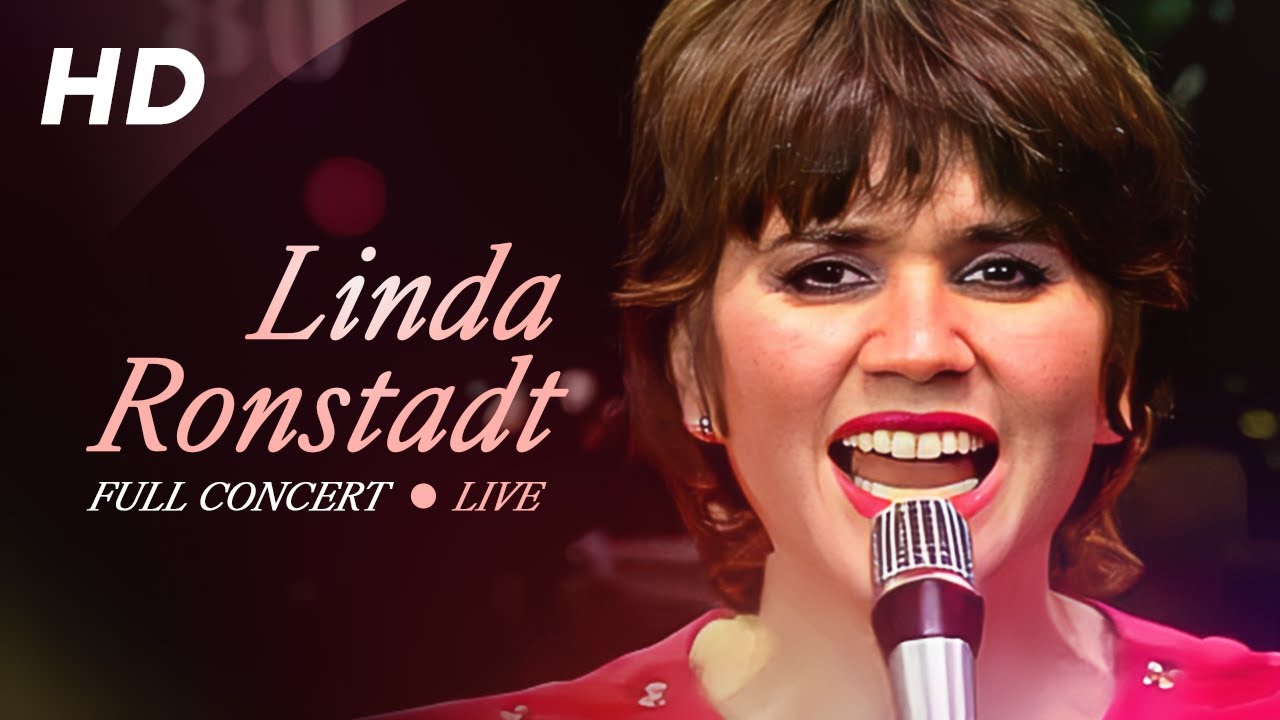
What Ronstadt adds is not decoration. It is atmosphere, ache, and contrast. Her voice enters the song like a remembered tenderness that refuses to fully return. She does not turn the performance into a duet in the grand, spotlighted sense. Instead, she hovers around Zevon’s lead vocal, softening the edges while somehow making the sadness more severe. That is the paradox of her presence here. Her tone is beautiful, but the beauty does not console. It reveals. It throws more light on the fracture line. If Zevon sounds like a man trying to hold himself together with irony and restraint, Ronstadt sounds like the feeling underneath the restraint, the ache he cannot quite say aloud.
And that is why the collaboration works so profoundly. Linda Ronstadt had one of the clearest, most emotionally direct voices of her era, but she was also a remarkably intelligent ensemble singer. She understood when to lead, when to answer, and when to leave just enough space around another singer’s phrasing. On “Empty-Handed Heart”, she practices that art of restraint. The result is haunting precisely because it is controlled. There is no grand moment of vocal fireworks, no attempt to wrest the song away from its author. What we hear instead is something more moving: an artist of enormous power choosing to serve the mood of the song, and in doing so making the song feel even more intimate.
Listeners who return to Warren Zevon often talk first about the sharp humor, the fatalism, the streetwise intelligence, the unforgettable characters. All of that is real. But songs like “Empty-Handed Heart” remind us that one of his deepest gifts was vulnerability disguised as composure. He could make emotional exhaustion sound elegantly written rather than melodramatic. Ronstadt seems to understand exactly that balance. She never pushes the song into sentimentality. She simply stands near it vocally, and that nearness changes everything. The loneliness becomes more dimensional. The regret becomes more human. The song begins to feel less like a solitary confession and more like the echo of a relationship that still lingers in the room.
There is also something quietly moving about the larger story behind this moment. The Southern California music world of the 1970s and early 1980s was full of cross-pollination, but not all collaborations were equally meaningful. Some were casual. Some were commercial. This one feels personal. Ronstadt was one of the rare stars who used her success to elevate songwriters she believed in, and Zevon was one of the rare songwriters who could accept that support without losing his own edge. Their artistic relationship was built on mutual regard, and “Empty-Handed Heart” captures that beautifully. You can hear it in the care of the arrangement, in the way the harmonies seem to appear from just beyond the lead vocal, and in the emotional trust required to keep the song this understated.
Maybe that is why the track lasts. Not because it dominated radio, and not because it was packaged as an obvious event, but because it reveals something true about collaboration itself. Sometimes the most memorable musical partnerships are not the ones that shout. They are the ones that listen. In “Empty-Handed Heart”, Warren Zevon gives us the weary intelligence, the bittersweet writing, the bruised self-awareness. Linda Ronstadt gives the song its ghostly second pulse. Together, they create one of the most quietly affecting moments on Bad Luck Streak in Dancing School—a song that feels less like performance than afterglow, less like a statement than a lingering bruise. It is a reminder that sometimes the saddest songs do not break down in public. They hold themselves together, and that is exactly why they stay with us.
