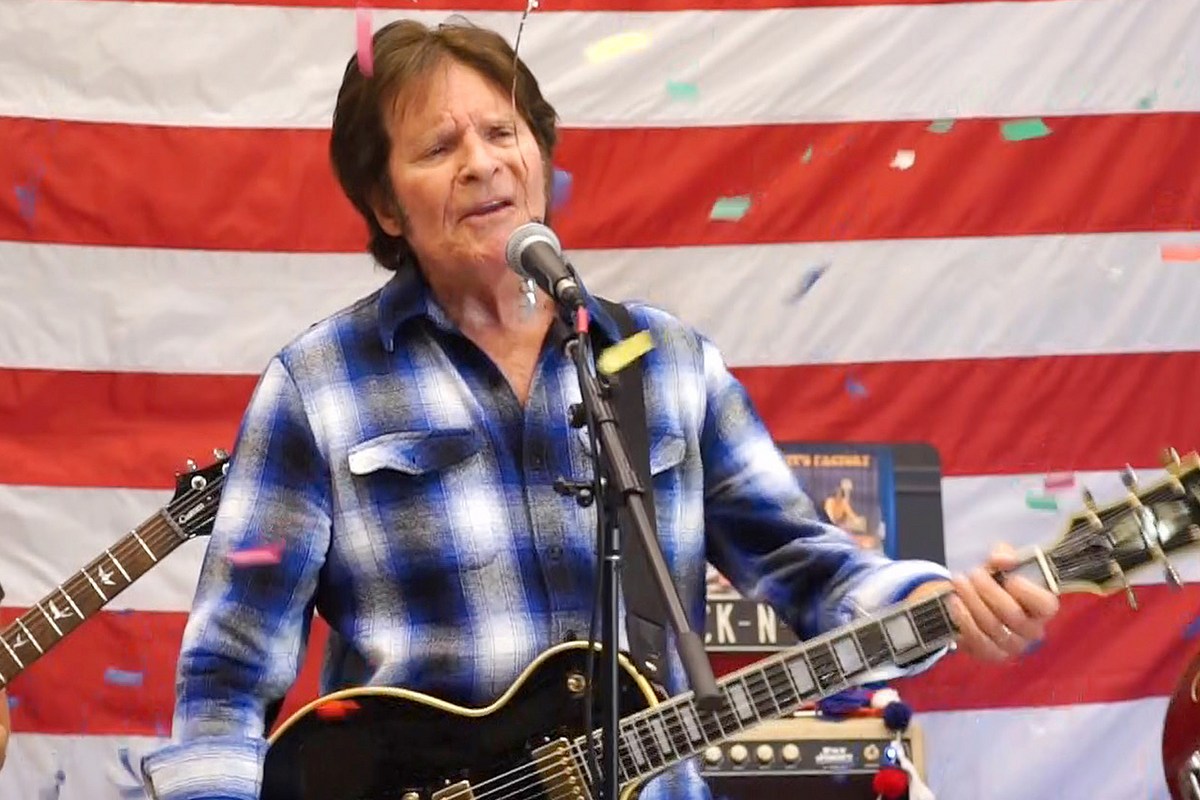
On Tombstone Shadow, Creedence Clearwater Revival turned dread, superstition, and hard luck into one of the most vivid hidden moments on Green River.
Released in August 1969, Green River arrived during the astonishing stretch when Creedence Clearwater Revival seemed to be moving faster than the rest of rock music. The album rose to No. 1 on the Billboard 200, and its signature singles, “Bad Moon Rising” and “Green River”, each climbed to No. 2 on the Billboard Hot 100. But albums like this are not remembered only because of the songs that dominated AM radio. They endure because of the deeper cuts that reveal a band’s inner weather. On that level, “Tombstone Shadow” is essential. It was not released as a hit single and did not have a standalone chart run of its own, yet it remains one of the clearest windows into John Fogerty’s darker imagination.
There is something deliciously uneasy about this track from the first seconds onward. “Tombstone Shadow” does not stroll in with the broad invitation of a singalong. It arrives like a warning. The guitar feels tense, the rhythm section moves with that hard, tight CCR discipline, and Fogerty sings as though he has already seen the bad sign and knows it is too late to pretend otherwise. In less than four minutes, the song summons omens, fear, and that old blues feeling that fate is not an idea but a presence standing just off to the side. That is why calling it a kind of dark fortune-teller blues feels exactly right. It is not simply sad, and it is not melodramatic. It is haunted by prediction.
John Fogerty wrote the song, and like so much of his best work, it turns familiar American imagery into something mythic. Creedence Clearwater Revival was a California band, yet Fogerty had a rare gift for creating a world that felt Southern, rural, humid, and ancient in spirit. On “Tombstone Shadow”, that talent becomes especially vivid. The lyric leans into superstition and pursuit, into the sense that a person can feel marked even before anything fully happens. One of the enduring powers of the song is that it never overexplains its own dread. Instead, it lets the title do much of the work. A tombstone shadow is not merely darkness. It is the idea of being followed by an ending, by a warning, by a shape that falls across ordinary life and changes its meaning.
That lyrical instinct connects the song to the deepest roots of the blues. Classic blues has always had room for crossroads bargains, unlucky signs, ominous dreams, and voices that seem to know too much. What Fogerty did was filter that tradition through late-1960s swamp rock, electric bite, and the stripped-down force of CCR. The result is neither revivalism nor parody. It is a modern rock band taking old fears seriously. The groove never gets sloppy, the arrangement never wanders, and that discipline makes the song stronger. The band does not decorate the darkness. They drive it.
That is an important part of why “Tombstone Shadow” remains such a rewarding album track. The hits on Green River are brilliant, of course, and deserved every ounce of their success. But a song like this reminds us that Creedence Clearwater Revival was never only a singles machine. They were also a mood band, a tension band, a band that understood how to build a whole emotional landscape in one quick, hard-charging performance. Listen to the way Doug Clifford and Stu Cook keep the floor steady beneath the unease, or the way the guitars feel clipped and urgent rather than grandiose. There is no wasted motion anywhere. That economy was one of CCR’s greatest strengths. They could imply a storm without stopping to describe every cloud.
Placed within Green River, the song also deepens the album’s character. The record is often celebrated for its swampy drive, its sharp hooks, and its compact brilliance, all of which are real. But “Tombstone Shadow” adds a more nocturnal shade to the picture. It suggests that beneath the confident stomp of the hits, there is also paranoia, folklore, and the old American fear that some unseen judgment may be drawing near. That emotional contrast helps explain why the album still feels so rich. It is not one-note nostalgia. It holds brightness and menace in the same hand.
There is another reason the song continues to speak so strongly to listeners who return to CCR after many years: it sounds like experience. Not polished experience in the modern sense, but lived-in experience. Fogerty does not sing “Tombstone Shadow” like a man trying on a spooky costume. He sings it like someone who understands that dread is often quiet, repetitive, and strangely practical. That is a very blues idea, and it gives the track its staying power. Even now, long after the radio established the official canon of classic rock favorites, this deep cut keeps whispering that the real soul of a band is often hidden one track away from the obvious choice.
In the end, “Tombstone Shadow” may not be the most famous song on Green River, but it may be one of the most revealing. It catches John Fogerty in a mode that was central to Creedence Clearwater Revival’s greatness: direct but mysterious, rooted in old forms yet crackling with modern urgency, dark without ever losing momentum. If the big singles on Green River showed how irresistible CCR could be, this song showed how unsettling they could be too. And sometimes, years later, that is the feeling that lingers longest.
