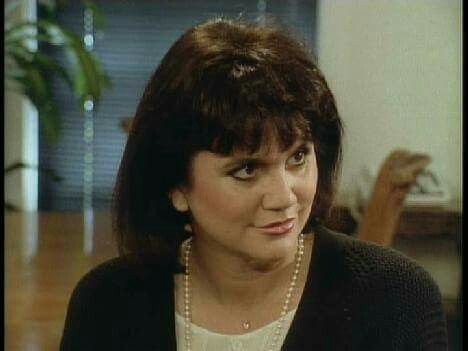
On Heart Like a Wheel, Linda Ronstadt took Little Feat’s Willin’ and turned a road song into one of the most tender, weathered moments of her career.
When Linda Ronstadt released Heart Like a Wheel in late 1974, the album changed her standing in American popular music for good. It became her first No. 1 album on the Billboard 200, and it carried major hit singles such as You’re No Good, which reached No. 1 on the Hot 100, and When Will I Be Loved, which climbed to No. 2. Yet one of the record’s deepest emotional truths was not one of its big charting singles at all. It was her version of Willin’, the Lowell George song first associated with Little Feat. Though Willin’ did not chart separately as a Ronstadt hit single, its place on a landmark No. 1 album helped secure its lasting power. And for many listeners, it remains one of the defining album tracks of the entire 1970s singer-songwriter and country-rock era.
That matters because Willin’ is not the kind of song that wins people over with obvious drama. It arrives quietly. It does not demand attention. It settles in, mile by mile, like a truck rolling through the dark with more memory than fuel left in the tank. Written by Lowell George, the song had already become one of Little Feat’s calling cards, admired for its plainspoken portrait of a weary driver moving through places like Tucson, Tucumcari, Tehachapi, and Tonopah. In just a few verses, George created a whole American map of labor, loneliness, stubbornness, bad habits, and endurance. The song’s famous line about hauling weed, whites, and wine gave it a rough realism that was far from polished pop. But the real strength of Willin’ was never shock value. It was compassion.
Linda Ronstadt understood that instinctively. On Heart Like a Wheel, she did not treat Willin’ as a novelty, a country-rock curio, or a footnote borrowed from a respected peer band. She sang it as if the bruised dignity at the center of the lyric deserved the same emotional seriousness as any grand torch song. That was one of Ronstadt’s great gifts as an interpreter. She could take material from different writers, styles, and traditions, then make each song feel as though it had been waiting specifically for her voice. In her hands, Willin’ becomes less a cult favorite and more a human confession set against an endless horizon.
The arrangement helps enormously. Ronstadt’s recording leaves room for air, distance, and ache. There is country texture in it, but not in a costume sense. There is rock in it, but without any push toward swagger. What remains is a beautifully measured performance that respects the song’s open road imagery while softening none of its fatigue. The sound feels western, American, and lived in. You can almost hear dust in the pauses. What Peter Asher, Ronstadt, and the musicians understood was that Willin’ should never be overcrowded. The song has to breathe. It has to move at the speed of thought, regret, and miles.
What makes Ronstadt’s reading so memorable is the way she changes the center of gravity without rewriting the song. Lowell George gave Willin’ its road-worn authority; Linda Ronstadt gave it a different kind of vulnerability. Her voice does not sound detached from the hard travel of the lyric. Instead, it adds a tenderness that makes the toughness more believable. She finds the ache beneath the bravado. She reminds us that people who keep moving are not always free; sometimes they are simply trying to outrun stillness, or history, or themselves. That emotional shift is subtle, but it is everything.
It is also one reason Heart Like a Wheel holds together so beautifully as an album. Records like this were never only about hit singles. They were about emotional architecture. The radio songs might pull listeners in, but the album tracks told them who the artist really was. On this record, Willin’ sits alongside heartbreak, longing, resilience, and restless motion. It deepens the album’s sense of American landscape, both geographic and emotional. If You’re No Good showed Ronstadt’s command and presence, Willin’ showed her empathy. If the chart hits proved she could dominate the airwaves, this track proved she could inhabit a song so fully that it felt less covered than reclaimed.
There is another reason the performance lasts. Willin’ belongs to a tradition of songs about working lives, highways, and the private cost of keeping on. Ronstadt did not romanticize that world too heavily. She did not turn the narrator into a mythic cowboy or a glamorous outlaw. She sang him as a person carrying weariness in his bones. That restraint gives the recording its grace. It does not beg for applause. It earns trust.
Looking back now, it is easy to understand why this version still means so much to people who return to Heart Like a Wheel as a complete listening experience, not just a container for famous singles. Albums of that era often revealed their deepest character in the songs that never dominated radio countdowns. Ronstadt’s Willin’ is one of those songs. It captures a performer at the height of her interpretive powers, choosing not the loudest route, but the truest one.
And perhaps that is why it continues to linger. In a career full of celebrated recordings, Linda Ronstadt’s version of Willin’ remains a quiet triumph: a song about distance that somehow brings the listener closer, a trucker’s lament that becomes a universal ache, and one of the most humane moments on a No. 1 album that had no shortage of greatness.
