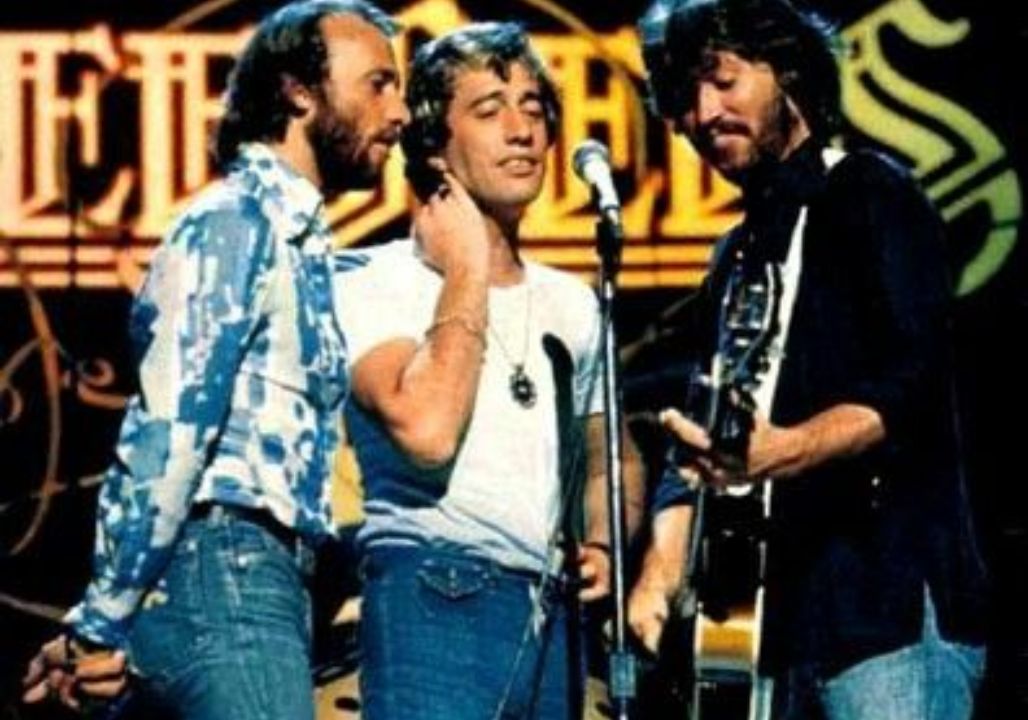
In 1991, Secret Love proved the Bee Gees were not living on memory alone; it was a sleek, tender song of hidden devotion that carried them back into the British Top 5.
There are chart hits that feel loud the moment they arrive, and then there are the ones that seem to glide in quietly before you realize what they have done. Bee Gees’ Secret Love belongs to the second kind. When it climbed to No. 5 on the UK Singles Chart in 1991, it was more than a respectable showing for a famous name. It was a reminder that the Gibb brothers still knew how to write a record that could live in the present tense. In Britain, where their history had already stretched from 1960s pop to 1970s phenomenon and beyond, this was a genuine chart milestone.
The single came from the album High Civilization, released in 1991, at a moment when the Bee Gees had already survived more reinventions than most groups could dream of. By then, they were not chasing youth, fashion, or old myths about who they had once been. They were writing as craftsmen who had lived through success, backlash, reinvention, and renewal. That is part of what gives Secret Love its quiet authority. It does not sound desperate to belong to its era. It sounds like three brothers who understood melody, emotional tension, and the long game of songwriting better than almost anyone.
The chart performance mattered for another reason too. Secret Love became the Bee Gees’ highest-charting UK single since You Win Again had reached No. 1 in 1987. That detail tells the story clearly. This was not a nostalgia footnote. It was a serious return to the upper end of the chart in a new decade, in a market that had changed dramatically. British pop in the early 1990s was moving fast, yet Secret Love still found its place. The song did not need to shout to compete. It carried its own elegance.
Written by Barry Gibb, Robin Gibb, and Maurice Gibb, Secret Love is built on one of the oldest and most enduring pop themes: love kept private, guarded from the world, perhaps because the feeling is too delicate, too complicated, or too precious to expose. But the Bee Gees never treated emotion like a simple slogan. In their hands, the song becomes something more mature than a teenage confession. This is not the thrill of a passing crush. It feels like devotion wrapped in caution, affection carrying its own burden, tenderness speaking in a lowered voice.
That is why the title itself still lingers. A secret love is not only hidden romance. It can also suggest the part of the heart that survives by staying protected. The song carries longing, but it also carries restraint. The feeling is real, even urgent, yet the performance never breaks into melodrama. That balance is one of the great strengths of the Bee Gees as writers. They understood that some of the deepest emotions are the ones expressed most carefully.
Musically, Secret Love wears the polished surface of its era: smooth keyboards, a clean rhythmic pulse, and a studio sheen that places it firmly in the early 1990s. But underneath that contemporary finish, the old Bee Gees gifts are unmistakable. The melody moves with grace. The harmonies carry the family signature. And the vocal delivery gives the song its emotional center, with Barry Gibb leading the line while that unmistakable brotherly blend adds warmth and ache around him. It is sophisticated pop, but never cold. The production glitters; the feeling remains human.
There is also something deeply moving about hearing a group with so much history continue to make records that still mattered on the charts. By 1991, the Bee Gees had nothing left to prove in a historical sense. Their catalog was secure. Their influence was already written into popular music. Yet songs like Secret Love show why legacy alone was never the point. They kept writing because songwriting was still their natural language. And when the public answered with a UK No. 5 placing, it felt like recognition of more than name value. It was recognition of craft still very much alive.
For listeners who encountered the song in real time, Secret Love had a special kind of emotional pull. It did not arrive with the fever of a cultural takeover. Instead, it slipped into the heart almost by stealth. That may be part of why it has aged so well. The song asks to be lived with, not merely noticed. In that sense, its chart success mirrors its meaning. It was a song about hidden feeling, yet it rose into public view. A private emotion became a very public milestone.
Looking back now, Secret Love stands as one of the most telling late-period Bee Gees singles. It joined the polished mood of High Civilization to the timeless emotional intelligence that had always defined their best work. And in Britain, its climb to No. 5 confirmed something that perhaps should never have been doubted: the Bee Gees were still capable of making a hit that sounded elegant, contemporary, and unmistakably their own. Not every chart milestone arrives with fireworks. Some arrive with poise, melody, and the kind of feeling that quietly stays with you for years.
