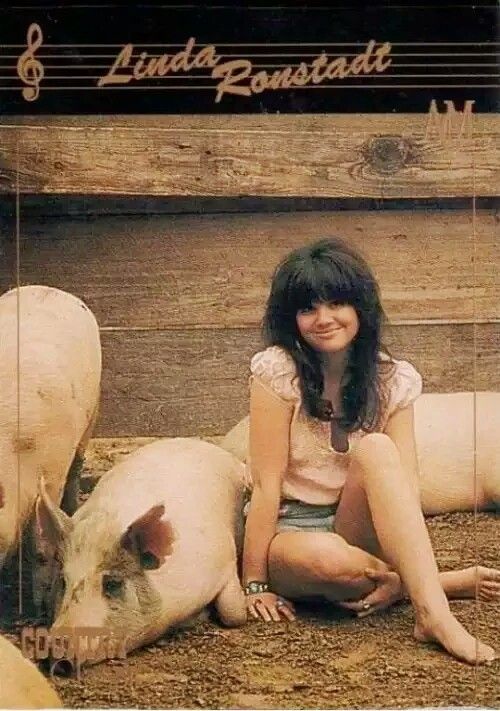
In Linda Ronstadt’s 1996 reading of Be My Baby, a song once built on teenage longing becomes something softer, safer, and far more intimate: a promise carried in the hush of a lullaby.
Linda Ronstadt had already lived several musical lives by the time she recorded Be My Baby for her 1996 album Dedicated to the One I Love. She had been a country-rock trailblazer, a pop star, an interpreter of standards, and a fearless traveler through Mexican song. That is exactly why this version matters. She did not approach Be My Baby as a singer trying to revive an old hit for easy nostalgia. She approached it as an artist in a different season of life, reshaping a beloved classic into something tender enough to live beside a crib, a lamp, and the quiet rituals of home.
The chart story, of course, belongs first to the original. Written by Phil Spector, Jeff Barry, and Ellie Greenwich, Be My Baby became a landmark hit for The Ronettes in 1963, reaching No. 2 on the Billboard Hot 100. It arrived with that famous opening drum figure and the full emotional force of Spector’s Wall of Sound, sounding at once huge, urgent, youthful, and immortal. Linda Ronstadt’s 1996 version was not a chart-driven single in that same way. Instead, it appeared as part of Dedicated to the One I Love, an album of lullabies and gentle reinterpretations that later won the Grammy Award for Best Musical Album for Children. That context changes everything. This was not radio competition. It was reinvention.
And what a reinvention it is. In the hands of The Ronettes, Be My Baby is a plea wrapped in grandeur. It aches with youthful desire. It reaches outward. In the hands of Linda Ronstadt, it turns inward. The pulse is softened, the emotional temperature lowered, the room suddenly made smaller and more personal. The giant architecture of the original gives way to warmth, breath, and stillness. What had once sounded like romantic urgency now carries the feeling of reassurance. The words are the same, but the emotional center shifts. That is the quiet genius of this performance.
Part of the power comes from where Ronstadt was in her life. By the mid-1990s, she was not chasing youth, fashion, or the next radio identity. She was making music from a more domestic, reflective place, and Dedicated to the One I Love grew naturally from that world. The album drew on songs from pop, folk, standards, and traditional music, but filtered them through a maternal and intimate sensibility. In that setting, Be My Baby stops being simply a pop declaration and becomes almost a cradle song. There is a kind of emotional re-parenting in the performance, as if a tune once associated with teenage yearning has been gently carried into another phase of life and asked to mean something new.
That transformation also says something important about Linda Ronstadt as an interpreter. Many singers can cover a song. Far fewer can reveal a second life inside it. Ronstadt had that gift throughout her career. She understood that a great song is not fixed in one arrangement, one decade, or one emotional age. With Be My Baby, she does not imitate Ronnie Spector, and she does not try to compete with the mythology of the original record. She sidesteps it. She chooses another doorway into the song entirely. That decision is what gives the recording its dignity. It never feels like imitation, only translation.
There is also something deeply moving in hearing a song so bound to the 1960s reappear in 1996 without irony. By then, many artists were revisiting older material through novelty, retro chic, or clever references. Ronstadt offered something more sincere. She treated the past as living material. She trusted that melody, memory, and emotion could survive if the arrangement changed. For listeners who had known Be My Baby as a towering pop monument, this quieter version can be disarming at first. Then it settles in. And once it does, its emotional honesty becomes hard to forget.
That may be the lasting meaning of this lullaby-era reinterpretation. Be My Baby is no longer just the soundtrack to young love standing at the door, hoping to be chosen. In Linda Ronstadt’s hands, it becomes a song about nearness itself: about comfort, presence, and the human wish to hold someone close against the noise outside. It is a reminder that songs can age with us if the right singer carries them forward.
So when people speak of Linda Ronstadt, they often remember the power, the range, the hit records, the sheer command of her voice. All of that is true. But recordings like this reveal something even rarer: wisdom in interpretation. Her 1996 Be My Baby does not try to relive the past. It listens to the past, lowers its voice, and answers it with grace.
