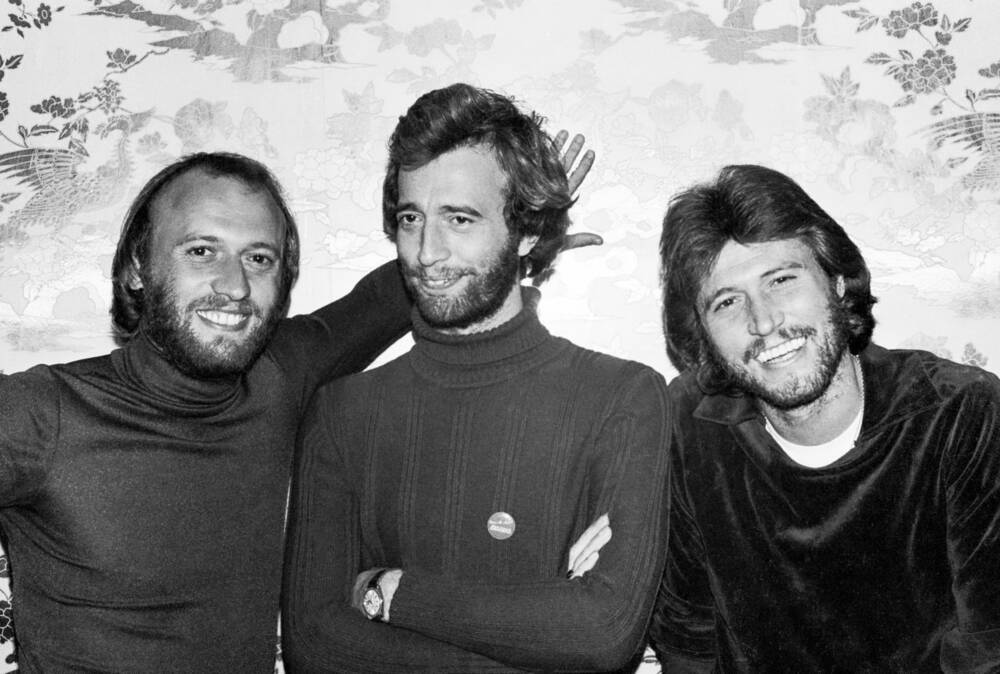
In 1993, For Whom the Bell Tolls reminded listeners that the Bee Gees were far more than a memory from one famous decade. It was a graceful, aching comeback record that carried maturity, regret, and old-world songwriting strength back into the UK Top 5.
When Bee Gees released For Whom the Bell Tolls from the album Size Isn’t Everything in 1993, the single rose to No. 4 on the UK Singles Chart. That chart peak was more than a number. It marked one of the clearest moments of the group’s later-career revival, a reminder that the brothers Gibb could still cut straight through the noise with elegance rather than volume. At a time when many casual listeners still reduced the Bee Gees to their disco years, this song arrived like a quiet correction. It said, with perfect confidence, that their real strength had always been songwriting, harmony, and emotional intelligence.
Issued as the second single from Size Isn’t Everything, and written by Barry, Robin, and Maurice Gibb, the song came during a period when the group was reasserting itself as a recording act of real substance. They had never stopped being respected inside the music world, but public conversation often lagged behind the truth. Too many people remembered the white suits, the falsetto, and the fever of the late 1970s, while overlooking the deeper legacy: these were craftsmen of melody, masters of melancholy, and among the most distinctive vocal arrangers in pop history. For Whom the Bell Tolls helped bring that fuller picture back into view.
What made the single so effective in 1993 was its refusal to chase fashion. There is no sense here of a veteran act trying to imitate younger trends. Instead, the record leans into what the Bee Gees did better than almost anyone else: layered harmony, melodic patience, and a feeling of emotional truth that grows stronger with each listen. The production is polished but never cold. The arrangement gives the song room to breathe, and the vocal blend carries that unmistakable mixture of tenderness and ache. It sounds adult in the best sense of the word. Not tired, not cautious, but seasoned.
The title itself carries literary weight, echoing the famous line from John Donne later made even more widely known through Ernest Hemingway. Yet in the hands of the Bee Gees, the phrase is not used as decoration. It becomes a signal of reckoning. The song is less about grand tragedy than about the intimate moment when love has already gone wrong and the truth can no longer be softened. That is why the record feels so haunting. It is not singing about fantasy heartbreak. It is singing about recognition, the painful clarity that comes after pride, distance, or misunderstanding has done its damage.
Lyrically, For Whom the Bell Tolls stands as one of the most emotionally mature songs of the group’s later catalogue. There is sorrow in it, but also restraint. The narrator does not rage. He reflects. He circles the wound, almost as if trying to understand how something precious slipped away. That emotional posture is one reason the song connected so strongly. Many love songs plead. Many breakup songs accuse. This one listens to its own silence. It lets regret speak in a low voice, and that quietness gives it enormous power.
The comeback-era importance of the track is impossible to separate from the album around it. Size Isn’t Everything may not always be the first Bee Gees album named in casual conversation, but for listeners who stayed with the group, it represents a crucial phase: a chapter in which the brothers proved they could still make contemporary records without surrendering their identity. Even the album’s title seemed to carry a dry kind of wisdom. Commercial scale was no longer the whole story. Craft, feeling, and durability mattered more. For Whom the Bell Tolls became the clearest symbol of that idea.
Its success in the UK was especially meaningful. Britain had long understood the Bee Gees in a broader way than the narrowest disco stereotype, and the song’s No. 4 placing showed that there was still a large audience for their more reflective side. In many ways, this was the ideal kind of comeback single: not loud, not desperate, not built on nostalgia alone. It earned attention because it was good enough to deserve it. The hit did not depend on a gimmick or a reunion headline. It depended on songwriting.
There is also a special poignancy in hearing the brothers at this stage of life and career. By 1993, they had already lived through shifts in style, changing critical fashions, and the strange burden of being both massively famous and regularly misunderstood. Songs like For Whom the Bell Tolls feel enriched by that history. The emotion lands differently when it comes from artists who have known reinvention, endurance, and the complicated weight of legacy. The performance carries that lived-in depth. Nothing is oversung. Nothing is wasted.
Today, the song remains one of the finest examples of the later Bee Gees: thoughtful, melodic, wounded, and beautifully composed. It deserves to be remembered not merely as a successful 1993 single, but as a moment when the public caught up again with what the brothers had always been capable of. For Whom the Bell Tolls was a comeback hit, yes, but it was also something better than that. It was proof that great songwriters do not need to repeat their past to reclaim the present. Sometimes all they need is one song full of grace, honesty, and the sound of truth arriving a little too late.
