The Cowboy’s Elegy: A Dance Between Myth and Reality
In 1964, amid the shifting sands of American music and culture, Marty Robbins released a song that captured the imagination of country music fans: “The Cowboy In The Continental Suit.” Nestled within the album Return of the Gunfighter, this track offered listeners a fusion of Robbins’ signature narrative style and an intriguing departure from traditional cowboy lore. Though it may not have scaled the heights of some of his other hits on the Billboard charts, it carved its own niche in the annals of country music, reflecting the ethos of a time when the cowboy mythos was both revered and questioned.
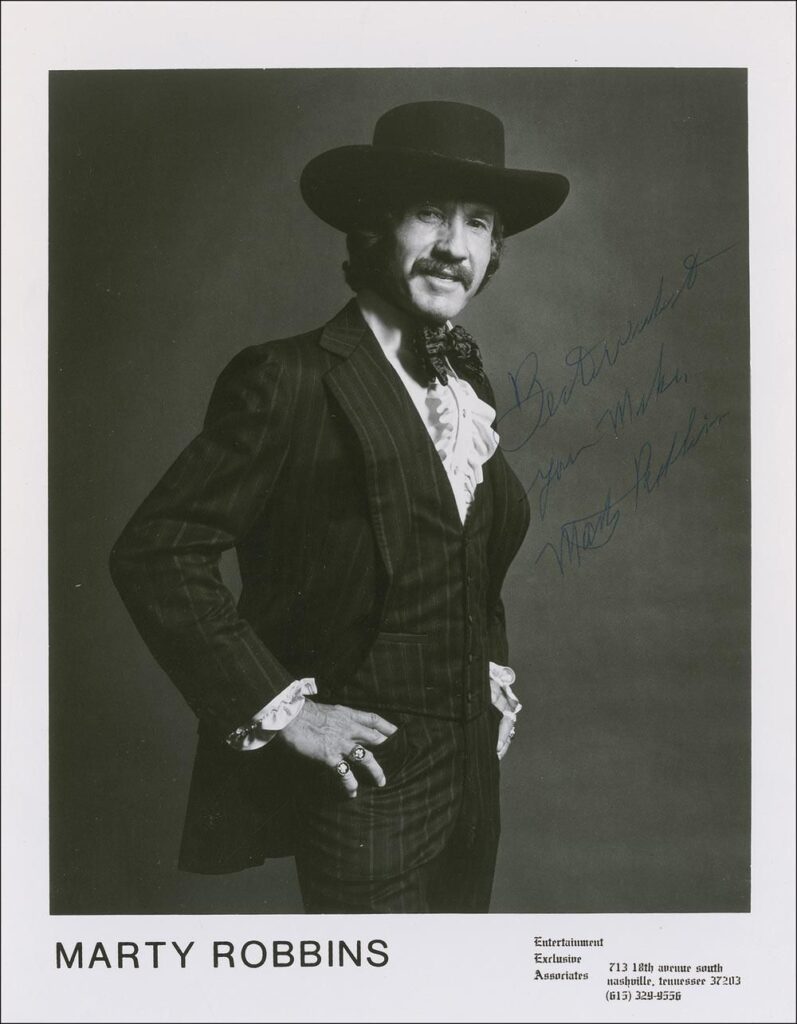
Robbins, already a celebrated figure for his storytelling prowess, drew upon a deep well of Western imagery and personal history to craft “The Cowboy In The Continental Suit.” By 1964, Robbins was no stranger to weaving tales that balanced the fine line between fact and fiction, as evidenced by his earlier successes like “El Paso.” The song tells the story of an enigmatic cowboy who defies expectations by appearing in a stylish continental suit—a sharp contrast to the rugged attire traditionally associated with men of the West. This sartorial juxtaposition becomes a metaphor for deeper themes: authenticity versus appearance, tradition against modernity.
Lyrically, Robbins paints a vivid picture of a rodeo scene, where seasoned cowboys doubt and dismiss this unconventional figure. However, as the narrative unfolds, it is this outsider who tames the untamable horse, turning skepticism into awe. The song’s brilliance lies in its ability to challenge preconceived notions about identity and skill. Robbins’ velvety voice adds layers of emotion to each verse, imbuing the story with tension and eventual triumph. This narrative craftsmanship allows listeners to experience not just a story but an exploration of what it means to defy stereotypes.
Musically, “The Cowboy In The Continental Suit” adheres to Robbins’ hallmark blend of traditional country sounds with Western influences. Its rhythm mirrors a galloping horse, propelling the listener forward through each twist and turn of the tale. The instrumentation provides a rich backdrop for Robbins’ voice—a tapestry woven with guitars that echo the vastness of open plains and drumbeats that mimic hoofbeats on hard-packed earth. Together, they create an auditory landscape that complements the story’s visual richness.
Within Robbins’ illustrious career, this song stands out as both a testament to his artistic versatility and a reflection on his era’s cultural dynamics. As America grappled with its identity during the 1960s—a period marked by civil rights movements and shifting societal norms—Robbins offered listeners a narrative that resonated beyond its Western setting. The cowboy in his tailored suit became a symbol of individuality, challenging audiences to reconsider their perceptions of strength and authenticity.
In many ways, “The Cowboy In The Continental Suit” is emblematic of Robbins’ broader impact on country music. His ability to tell stories that transcended simple entertainment solidified his status as one of the genre’s most profound voices. He was not merely recounting tales but inviting listeners to question and ponder—to step into a world where legends were born from unexpected places.
Even today, Marty Robbins remains an enduring figure in country music history. His songs continue to inspire new generations of artists who seek to blend narrative depth with musical excellence. “The Cowboy In The Continental Suit,” with its innovative approach to traditional themes, exemplifies why Robbins’ work endures: it captures the spirit of exploration and reinvention at the heart of both American folklore and personal identity.
Ultimately, this song is more than just a cowboy tale set against the backdrop of mid-century America; it is an eloquent reminder that beneath every exterior—whether clad in denim or continental flair—lies a story worth telling, one that challenges us to look beyond appearances and embrace the complexities within us all.
