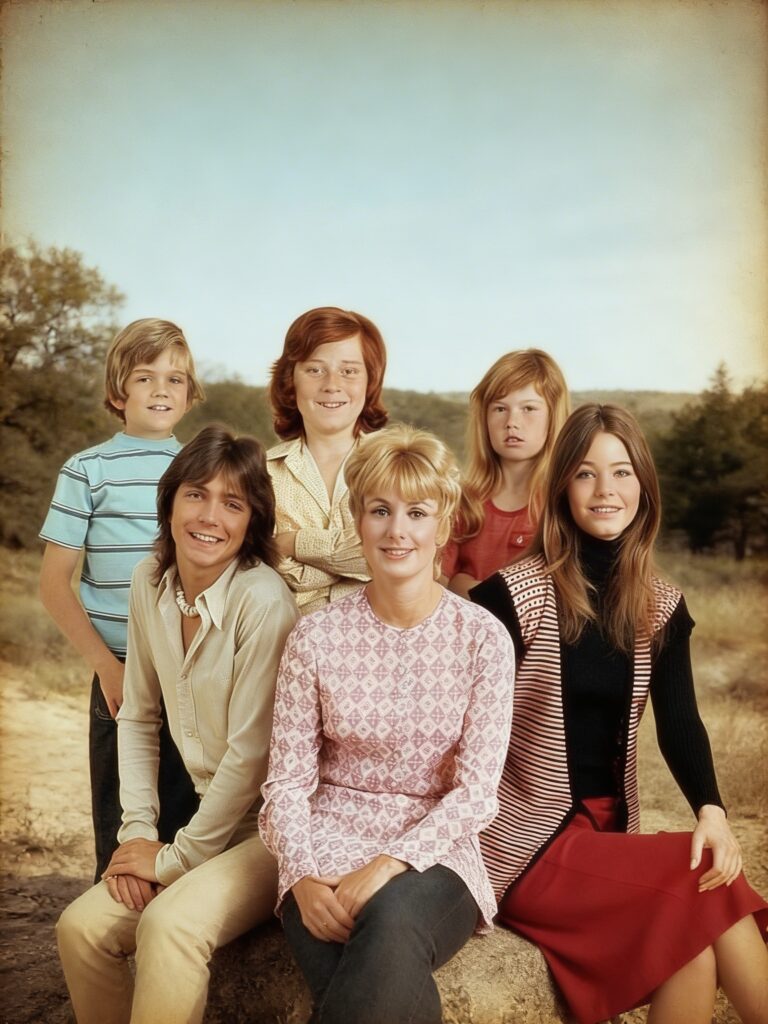
A bright 1971 hit with a lonely heart, Doesn’t Somebody Want to Be Wanted turned The Partridge Family‘s sunny pop into a plea for affection, reassurance, and connection.
There was something quietly vulnerable hiding inside The Partridge Family‘s biggest records, and Doesn’t Somebody Want to Be Wanted may be the clearest example of it. Released in 1971 and featured on the album Up to Date, the single climbed to No. 6 on the Billboard Hot 100 and reached No. 1 in Canada, confirming that the family band from television had become a genuine force on AM radio. On the surface, it was exactly what the era wanted: catchy, bright, immediate, and easy to sing along with. But beneath that polished pop sheen was a line of feeling that has helped the song endure far longer than many disposable hits of its day.
The title itself almost sounds like a thought blurted out before pride can stop it. Doesn’t Somebody Want to Be Wanted is not elegant in the formal sense, yet that is part of its power. It does not speak in poetry. It speaks in yearning. The lyric is built around one of the simplest and most universal needs in human life: to be noticed, chosen, and loved by someone who means it. That directness gave the song an emotional honesty that listeners could feel immediately, even as the record moved with the crisp efficiency of early 1970s pop.
It also arrived at a fascinating moment in the story of The Partridge Family. The television series had already created a vivid fantasy world: a cheerful musical family, a brightly painted bus, a household where songs seemed to solve what ordinary conversation could not. Yet the records themselves were crafted with real professional skill. Much of the instrumental backing came from top Los Angeles session players, while David Cassidy carried the emotional center of the vocals, supported by Shirley Jones. That blend of television image and studio precision was part of the group’s special chemistry. The songs were accessible enough for the pop audience, but they were made with a level of care that helped many of them survive their original moment.
If the song still feels vivid today, much of the credit belongs to David Cassidy‘s performance. His voice gave teen pop a touch of restlessness. He did not sound detached, and he did not sound cynical. He sounded as if he meant the question. Even the famous spoken opening, which some listeners remember with affection and others find wonderfully dated, gives the single its own unmistakable personality. It places the song firmly in its time, yes, but it also reveals the record’s emotional premise before the melody fully takes over: this is not about swagger, conquest, or cool distance. It is about wanting an answer from the world.
That may be why the song has always felt a little more fragile than its packaging suggested. In the early 1970s, The Partridge Family represented a kind of clean, television-friendly optimism. But Doesn’t Somebody Want to Be Wanted carries a question that no amount of commercial brightness can fully soften. The singer is not asking for glamour. He is asking for human warmth. That makes the record more touching than many people remember. Heard now, the song can sound like the inside voice of adolescence set against a pop arrangement determined to keep moving forward.
There is another layer to its lasting fascination: the tension between the image of David Cassidy as a teen idol and the more complicated artist he was already becoming. Cassidy would later seek greater artistic independence and more mature material, and that history casts an interesting light back on songs like this one. You can hear the machinery of hitmaking around him, but you can also hear a young singer trying to bring sincerity to material designed for mass appeal. That tension does not weaken the song. If anything, it gives it a deeper aftertaste. The record smiles for the radio, but there is a little ache beneath the smile.
Compared with some of the group’s sunnier hits, Doesn’t Somebody Want to Be Wanted lands differently. I Think I Love You captured the rush of confusion and excitement that comes with first love. This song, by contrast, sounds like what comes after the room grows quiet. It is less about discovery than about longing. Less about excitement than uncertainty. That emotional shift is part of what makes it memorable. It understands that pop music does not have to be solemn to touch something tender.
For listeners who first met the song through a transistor radio, a television speaker, or a spinning 45, its charm is still immediate. The arrangement is compact, melodic, and unmistakably of its era. But nostalgia alone is not enough to explain why it still works. The reason is simpler than that. Doesn’t Somebody Want to Be Wanted endures because its central feeling never went out of style. Nearly everyone, at some point, has asked some version of that question.
And perhaps that is the quiet triumph of The Partridge Family. Behind the bright colors, the easy choruses, and the clean television image, they occasionally slipped real emotion into the bloodstream of popular music. This song did exactly that. It gave loneliness a beat, gave uncertainty a hook, and turned a very vulnerable thought into one of the group’s most lasting records. Decades later, it remains more than a period piece. It is a reminder that even the sweetest pop songs can carry a little sadness, and that sometimes those are the ones that stay with us the longest.
