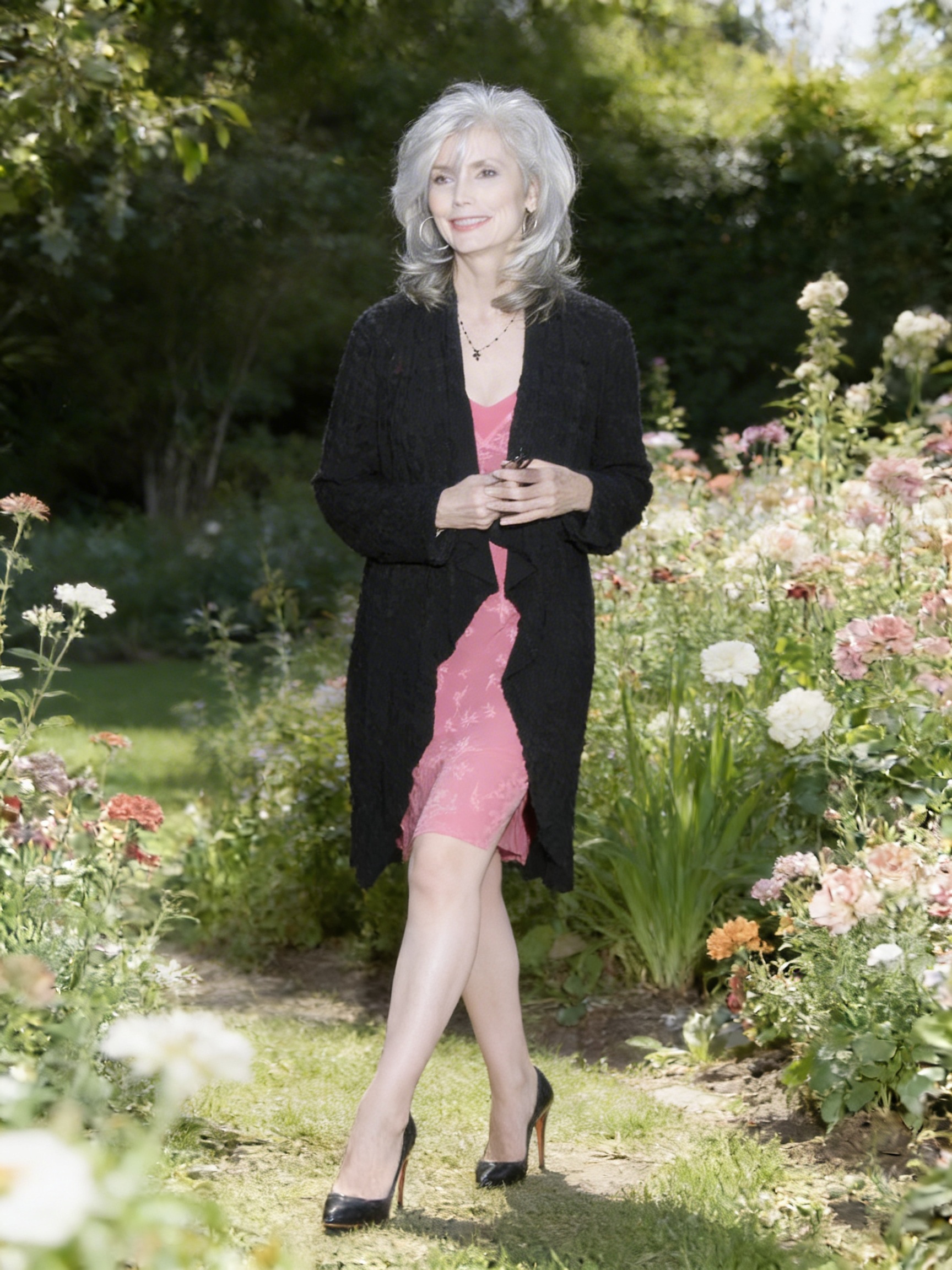
On Roses in the Snow, Emmylou Harris made bluegrass feel quick, bright, and fully alive, and I’ll Go Stepping Too is the place where tradition breaks into a grin.
Released in 1980, Roses in the Snow marked one of the clearest acoustic statements in Emmylou Harris‘s career, and her version of I’ll Go Stepping Too sits at the heart of what made the album feel so fearless. The song was already associated with Lester Flatt and Earl Scruggs, two names inseparable from the shape and drive of postwar bluegrass. By bringing that number into her own album, Harris was not simply borrowing a standard. She was placing herself inside a living line of American music, where old songs travel by being sung again with new breath.
Roses in the Snow arrived at a moment when mainstream country was often leaning toward smoother production, pop-friendly polish, and a gentler radio surface. Harris had already shown that she could move between country, folk, rock, and older rural forms with uncommon grace. But this album, produced by Brian Ahern, leaned decisively into acoustic textures: close harmonies, mandolin brightness, fiddle lift, guitar rhythm, and the lean forward motion that gives bluegrass its physical force. It was not an exercise in costume or imitation. It sounded like a woman with a deep record collection and a deeper instinct deciding that the old language still had urgent things to say.
That is why I’ll Go Stepping Too matters in the album’s larger emotional design. Roses in the Snow contains songs of pilgrimage, devotion, memory, and sorrow, but this Flatt & Scruggs cover brings a different kind of spark. It moves with a sly grin and a quick step. The lyric carries the familiar country logic of romantic retaliation: if one lover is going out stepping, the other can step out too. In another singer’s hands, it might simply be comic bravado. With Harris, it becomes something sharper and more elegant. Her voice does not push the joke too hard. She lets the song’s confidence come through with poise, as if the answer has already been decided before the first chorus arrives.
The performance works because Harris understood that bluegrass speed is never only speed. In the best traditional recordings, the tempo is tied to nerve, wit, discipline, and release. The instruments do not merely decorate the singer; they carry the song like a current. On I’ll Go Stepping Too, that current gives Harris room to sound both respectful and fresh. The arrangement keeps faith with the Flatt & Scruggs spirit, but it does not freeze the song in the era from which it came. Instead, it lets the number behave the way good bluegrass has always behaved: as communal music, adaptable music, music that can pass from one set of hands to another without losing its edge.
Part of Harris’s gift in this period was her ability to make tradition feel intimate rather than ceremonial. She did not approach older country and bluegrass material as if it belonged behind glass. She sang it as if it were still useful, still conversational, still capable of carrying humor, disappointment, pride, and motion. That quality shaped much of her finest work, but Roses in the Snow concentrated it with unusual clarity. The album gathered songs that looked backward in source but forward in spirit, proving that acoustic roots music could stand in the modern country marketplace without being softened into nostalgia.
I’ll Go Stepping Too also reveals how carefully Harris balanced reverence with personality. Covering Flatt & Scruggs meant stepping into a tradition defined by precision, masculine drive, and ensemble authority. Harris did not try to out-muscle that tradition. She altered the center of gravity by singing with clarity, timing, and a cool emotional intelligence. The song’s playful threat becomes more interesting when delivered by a voice known for tenderness. There is laughter in the performance, but also self-possession. She sounds light on her feet, not because the song is slight, but because she knows exactly how much weight to give it.
In the context of the full album, this matters. Roses in the Snow helped affirm Harris as more than a country-rock interpreter or a singer with exquisite taste. It showed her as a curator of musical inheritance, someone capable of connecting the high lonesome past with the open-eared present. The album’s success also pushed back against the idea that acoustic bluegrass-rooted music had to remain in a narrow lane. Harris made it feel spacious enough for country listeners, folk listeners, and anyone drawn to songs that carry dust on their boots without sounding trapped in the past.
Hearing I’ll Go Stepping Too now, the pleasure is partly in its directness. Nothing about it feels overworked. It runs, smiles, and lands cleanly. Yet beneath that ease is a larger artistic choice: Harris bringing Flatt & Scruggs into her own defining bluegrass album not as a museum tribute, but as proof of continuity. The old tune still had legs. The rhythm still had a road under it. And in Harris’s hands, the song did exactly what its title promised. It stepped out, bright and sure, carrying tradition forward one quick measure at a time.
