A Tale of Justice and Balladry, Told in Steel and Dust
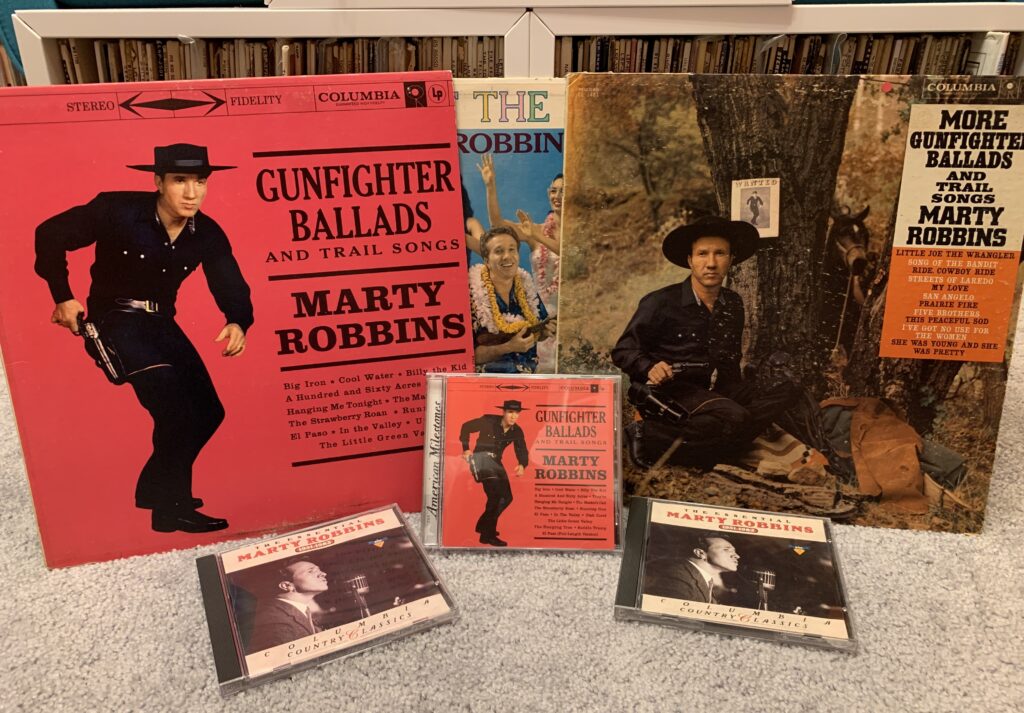
In 1959, Marty Robbins released a song that would etch itself into the annals of country music history: “Big Iron,” from the album Gunfighter Ballads and Trail Songs. This album stood as a testament to Robbins’ ability to weave vivid narratives that capture the imagination and spirit of the American West. The album reached No. 6 on the Billboard 200, while “Big Iron” itself became a quintessential example of storytelling in song form, embodying the ethos of cowboy balladry.
Robbins, known for his rich baritone and diverse musical influences, found his niche in the Western storytelling genre with “Big Iron.” The track is set in a small Arizona town and recounts the arrival of a stranger, a lawman determined to bring down an outlaw named Texas Red. With a sense of inevitability, Robbins leads listeners through the sunlit streets of a frontier town where fate and justice intersect. This narrative style, evocative of Old West folklore, showcases Robbins’ lyrical prowess and his deep understanding of the genre’s historical roots.
The creative inception of “Big Iron” likely draws from Robbins’ fascination with Western themes, influenced by his upbringing in Arizona—a land steeped in cowboy lore. Unlike many contemporary country songs that focus on modern life or personal introspection, Robbins’ work transports listeners to a bygone era where honor and reputation were guarded with life itself. His voice imbues each verse with authenticity, painting a picture so vivid one can almost feel the dust settle as the duel unfolds.
Musically, “Big Iron” stands apart with its galloping rhythm and sparse instrumentation, allowing Robbins’ voice to command attention. The arrangement mirrors the tension within the lyrics—each strum echoing the heartbeat of both gunslinger and outlaw as they face their inevitable showdown. The song’s melody is simple yet compelling, its cadence reflecting the relentless advance of time toward an unavoidable climax.
In terms of thematic depth, “Big Iron” examines timeless motifs of justice, bravery, and mortality. It reflects the archetypal battle between good and evil, rendered through Robbins’ detailed narrative. Yet beneath this classic confrontation lies a subtle exploration of identity; both the ranger with his titular “big iron” and Texas Red are defined by their reputations and their weapons—symbols of their roles in society’s moral drama.
Within Robbins’ illustrious career, “Big Iron” signifies not just artistic achievement but cultural resonance. It embodies the transition from traditional country music to a more cinematic soundscape that paved the way for future storytelling in song form. The track underscores Robbins’ impact on shaping what would become a significant movement within country music—melding narrative depth with melodic simplicity.
The song’s enduring popularity attests to its profound emotional impact. In its essence, “Big Iron” is more than just a tale; it is an auditory journey into an era where valor was tested under the harsh desert sun. Listeners are drawn not only to its narrative but to its embodiment of an idealized past where men were measured by deeds rather than words.
As we reflect on Marty Robbins’ legacy through songs like “Big Iron,” we witness how music transcends mere entertainment—it becomes history narrated through chords and verses. Through his artistry, Robbins preserved a piece of Americana that continues to resonate across generations—reminding us of a world where stories are etched not just in memory but in melody.
In capturing this essence, Robbins didn’t merely sing about cowboys and outlaws; he immortalized them in sound—a legacy carried forward on every spinning vinyl that echoes his name.
Enjoy this Song
