A Celebration of Life’s Simple Pleasures Amidst the Bayou’s Warm Embrace
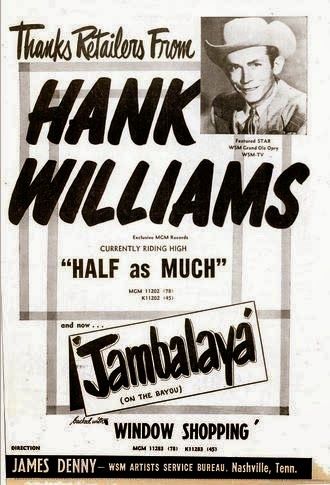
When Hank Williams released Jambalaya (On the Bayou) in 1952, it quickly resonated with listeners, soaring to the pinnacle of the country music charts and cementing its place in the canon of classic American music. Featured on his album Honky Tonkin’, this song exemplifies Williams’ ability to weave together storytelling, melody, and emotion in a manner that feels both timeless and authentic.
Jambalaya (On the Bayou) is a musical portrait painted with vivid strokes of cajun culture. Inspired by the vibrant life surrounding the Louisiana bayous, Williams crafted a song that celebrates community, love, and the simple joys of life. With its infectious rhythm and evocative lyrics, the track captures a snapshot of rural Americana, inviting listeners into a world where joy is found in the shared experience of music, food, and friendship.
The creation of Jambalaya reflects Williams’ deep connection to the Southern landscape and its cultural tapestry. While there are various accounts about the song’s origins, what remains consistent is its authenticity—a hallmark of Hank Williams’ songwriting prowess. The title itself refers to a traditional Creole dish, a symbol of the region’s rich culinary heritage and communal gatherings. In this way, Jambalaya becomes more than just a tune; it is an invitation to partake in the celebration of life’s everyday pleasures.
Musically, Jambalaya (On the Bayou) is built on a simple yet captivating melody that mirrors the song’s lyrical themes. The upbeat tempo and lively instrumentation transport listeners straight to a Cajun dance hall where fiddles sing and toes tap on wooden floors. It’s as if one can almost feel the humid air of the bayou and hear the distant call of laughter and chatter.
Lyrically, Williams’ narrative prowess shines through with imagery-rich verses that evoke scenes of fishing boats gliding over water, banjos strumming by fireside gatherings, and joyous reunions with loved ones. There’s an undercurrent of longing mixed with contentment—a yearning for simplicity and connection that feels universal despite its specific setting. The refrain is almost like a chant or mantra, repeated with gusto as if to ensure its message resonates deep within our souls.
Culturally, Jambalaya has left an indelible mark on American music. Covered by numerous artists across genres—from country to pop—it serves as a testament to its universal appeal and enduring legacy. Even decades after its release, it continues to be celebrated for capturing the spirit of a place and time while speaking to broader human experiences.
In essence, Jambalaya (On the Bayou) is more than just a song; it is an emblematic ode to life’s quintessential moments—the gatherings that nourish our spirits as much as any meal could nourish our bodies. Through Hank Williams’ masterful storytelling and melodic genius, we are reminded that joy often lies in simplicity: in good food shared among friends, in love both given and received, and in the music that binds us all together across time and space.
